THE NOVEMBERS OF MY LIFE
MEMORABLE MOMENTS FROM BYGONE DAYS
One of my favorite writers, the extraordinarily prolific Palmetto poet and scribe, Archibald Rutledge, chose Those Were the Days as the title for one of his 50-plus books. I’ve always thought it was a wonderfully expressive title with simple words evoking warm, winsome memories. As I enter the November season of my earthly years, and I’m enough of a realist to understand that such is the case, I look back on this time of year with ever-increasing fondness.
As a dear lady friend of mine who is almost exactly my age (10 days older, to be precise, and I take a bit of perverse delight in reminding her of that fact from time to time) recently said: “You know, Jim, we are lucky to be alive, have sound minds, and still be independent enough to do things and enjoy life.” She’s exactly right, although I would add that one prime aspect of enjoying life involves relishing the past. There are things I’m no longer able to do in the present—hike a long way to a deer stand or for that matter anywhere else, climb a ladder into a deer stand, perform arduous manual chores that once seemed almost child’s play, or go along from day to day with never so much as a thought about a hurting back or sundry other aches and pains.
But I can still “dream and scheme,” as Grandpa Joe liked to put it. There are dreams without end from yesteryear to be revived along with all sorts of little “schemes” to be plotted in the form of plans about literary undertakings or trying out some new recipe that has been shared with me or that I’ve conjured up. For present purposes though, let’s concentrate on some those wonderful dreams that can be called back from yesteryear. When it comes to those mental walks down leaf littered lanes into Novembers gone by, maybe the simplest approach to it list a small sampling of those recollections. In doing so, I sincerely hope you will find ones that form part of your past as well, because if you do you have some dandy experiences behind you. Here are some of the treasures from my personal storehouse of November memories.
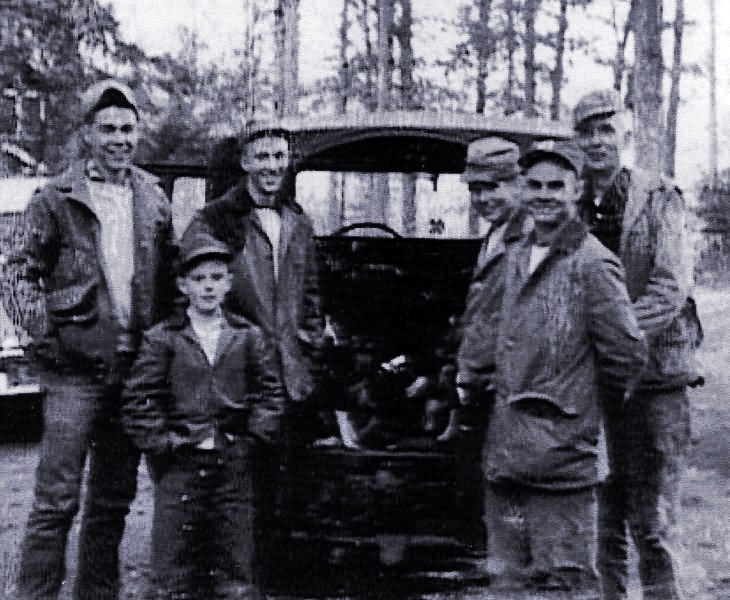
*Fond recollections of boyhood rabbit hunts with a bevy of human and canine companions. The early weeks of November were for me as filled with eager anticipation as were those immediately preceding Christmas. It may seem strange, in today’s world, to think of a boy getting excited about the opening day of rabbit season, but for me it was a truly special time. The season always opened on Thanksgiving Day. We’d have a short outing that day (after all, gustatory delight awaited atop a groaning table at Grandma Minnie’s), but come Saturday and for three months of Saturdays to follow, along with some weekday hunts during Christmas, there was wonder to be had in trudging fields and fence rows while listening to the hallelujah chorus of beagles anytime we jumped a rabbit.
*Culinary joys associated with Thanksgiving, with baked chickens, chestnut dressing, and enough side dishes, relishes, pickles, and desserts to test the mettle of the hungriest of greedygut boys.
*Still, chill mornings with a frost so heavy that, as a dear departed friend named Ken Roper put it, “You could track a rabbit in it.” I would submit to you that his description, and it is one I heard often as a youngster, captures the essence of a November morning. Think back and I’m guessing you’ve known November days, lots of them, when frost melting as the sun’s rays hit it and turned an overgrown, abandoned pasture or piece of farm land run to broom sedge into a place of wonderment where a million diamonds sparkled in a fashion no ring on a fair maiden’s hand could ever hope to match.
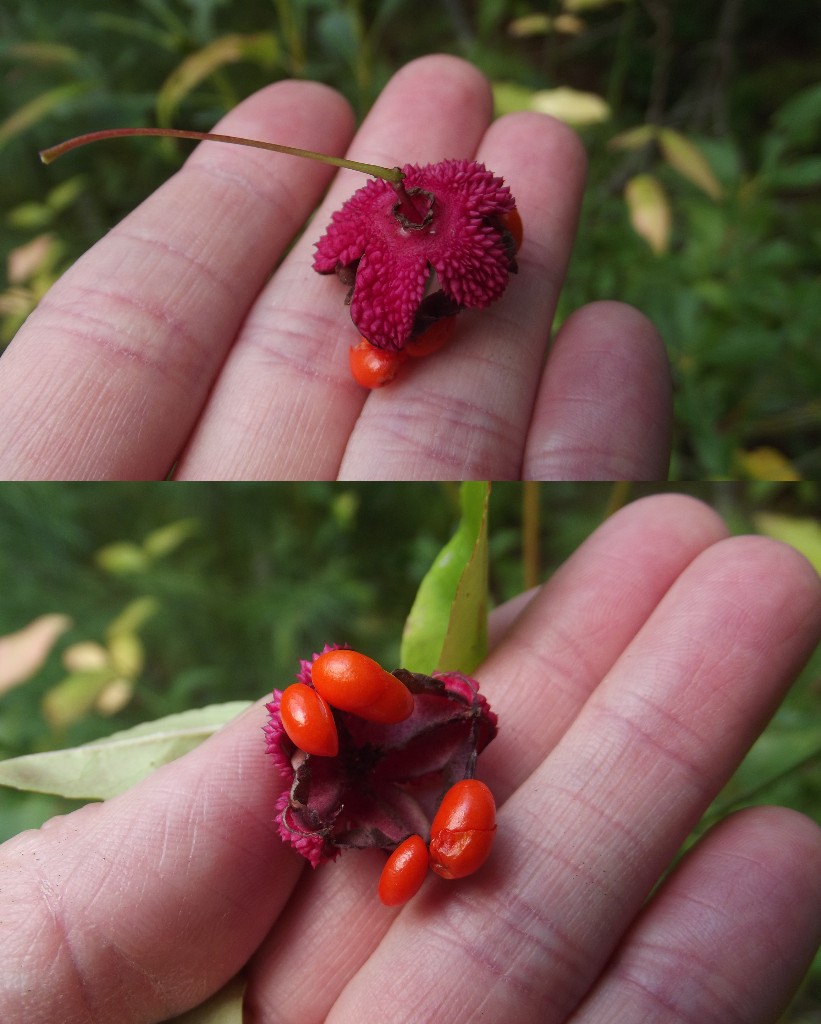
*Leaf fall and a distinct change in the landscape. Those who confine all their walking and wandering to warmer months miss something, because woodlands shorn of their leaves provide a different and delightful perspective. You don’t have to worry about blundering into a rattlesnake or copperhead or making a painful intrusion into a yellow jacket nest. What is far more significant though is the fact that you notice things which are all but invisible in spring and summer. Signs of one-time human presence, distant vistas which had been blocked by vegetation, sprightly plants such as galax or partridge berries which pass largely unnoticed, maybe the red seed pods of hearts-a-bursting-with love or jack-in-the-pulpit, and many more sights offer a feast for knowing November eyes.
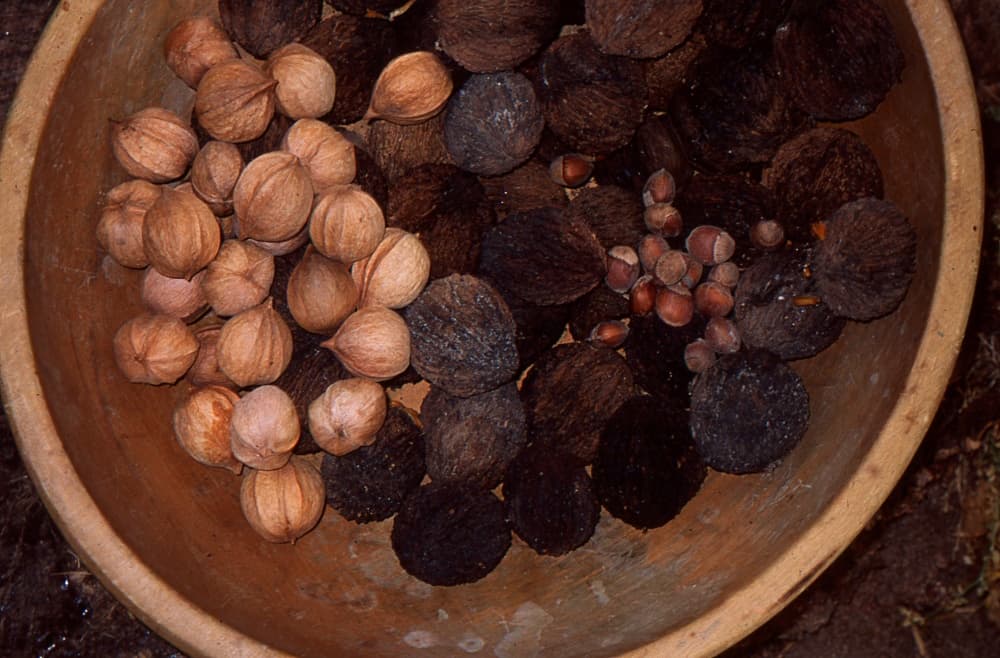
*November means nutting. A century ago that meant gathering chestnuts, but today the focus, depending on where you live, is on pecans or black walnuts. The latter were what I knew and relished as a boy. Black walnuts are wonderfully tasty treats but require plenty of gumption in what Grandpa Joe would have called “the getting.” You’ve got to gather them, let the husks rot away, allow the nuts to dry and cure a bit, crack them, and then hull out the meats. It’s a passel of work, but the rewards are worth every ounce of effort.
While you are working on some step of that rather protracted process, maybe giving some passing thought to the walnut’s rich place in American history might help. It has always been a cherished wood, one which lends itself to things such as lovely gunstocks or beautiful pieces of furniture. The hulls once provided a key raw ingredient for dyeing cloth and leather, and the inedible portions of the nut, hard as an opinionated mountain man’s head, have commercial uses for polishing. I never look at a walnut tree without thinking about my Grandpa Joe, because he could not pass a walnut tree without commenting: “Son, that’s a grandchild’s tree.” When asked for an explanation he would note that black walnuts were slow growing and required three generations to reach the point where they were ready to be cut for saw logs. He was right, because on the old home place where he and Grandma Minnie lived, some of the black walnuts which lined the path leading to the chicken house and the pig pen now have reached a point where, if harvested, they would provide two (and in a couple of cases three) saw logs from which 12-inch boards could be cut.
One other thought comes to mind when musing on black walnuts. They are an excellent signpost for one-time human presence. While existence of a mature walnut tree in a remote area of woodland, national forest, or national park doesn’t guarantee that folks once called the site home, it’s mighty suggestive in that regard. Walnuts are a hardy tree, and their nature is such that not a whole lot of competing vegetation springs up where they are found, so the knowing eye can pick them out in the November woods without much trouble.
I always kept a keen eye out for walnut trees as a boy (and still do today), although I must admit that gathering nuts was not the primary reason I sought the tree. Rather, if there was a tree at the edge of a field or along a fence row, something easily spotted when a party of us took to the fields on a rabbit hunt, there was always the possibility of a squirrel or two being nearby. I’d give the limbs a thorough look-see, searching for a tell-tale budge or something that looked a bit out of place. Occasionally I would be rewarded and a bushytail would add a comforting bit of heft to the game bag of my hand-me-down Duxbak hunting coat.
*Thoughts of that old hunting coat, and Duxbak attire in general, strike a nostalgic chord with me. In the 1950s and 1960s Duxbak was THE choice when it came to field clothing. Camo attire was unheard of, but the stiff, sturdy, enduring nature of Duxbak was another story entirely. To my knowledge today’s world of outdoor clothing has nothing approaching it in terms of combined cost and durability. I know that I would no more have thought of going afield without Duxbak pants, vest or jacket, and cap than I would have skipped a Saturday rabbit hunt to hang out in the local drug store or even visit my girl friend of the moment. One did, after all, have to have priorities. Duxbak has gone the way of so many other fine America-made products, but I’m guessing that anyone who reads these words is on the upper side of 50 years of age, and hunted as a youngster will remember the brand with fondness. I knew that on a personal level such was the case, and it was a sad Christmas when my gifts didn’t include one of four things—Duxbak attire of some kind, a new knife, a box of shotgun shells, or new long handle underwear.
To me, then and now, those truly were the days. I didn’t need mossy-horned deer to get me excited. Just a shotgun, some simple gear, a pocket full of shells, and countless carefree days afield gave me a start down a glorious sporting road which still leads out before me. It also kept me out of trouble, and I never felt deprived because we didn’t have a television, it took an act of Congress for me to get permission to drive the sole car the family owned, our phone was on a party line and wasn’t for adolescent chit-chat. Chores were a given, and it wasn’t until I went off to college that I realized my family was poor. After all, we always had plenty to eat, there were new clothes at the beginning of each school year, and life was filled with fun. Robert Ruark’s personal life set anything but a good example, but he was squarely on target when he suggested that a youngster who hunted and fished didn’t have to worry about becoming a juvenile delinquent. Like me, such kids were far too busy having fun.
That’s enough for this month, although the temptation to go on at length about the joys of Thanksgiving fare is mighty tempting. At least you can get some hints of the season’s culinary joys in the recipes below, all of which focus on one type of nut or another. Have a great Thanksgiving, and whatever you hunt in the delightful days of November, shoot straight and be a straight shooter.
SPECIAL BOOK OFFERS

As will be further detailed in the “Doin’s” section below, I have been advised on the release dates for the three forthcoming books that have been mentioned periodically in this newsletter for the last year or so. I want to offer an opportunity for readers to make advance purchases with a bit of a saving as an incentive (and thank you for being loyal followers). If you pre-order I’ll tote the load when it comes to postage, and I’ll mail the books as soon as they come to hand and I have a chance to sign copies. The first volume scheduled for release is A Taste of Appalachia: Recipes and Remembrances of John Parris. Parris was THE chronicler of North Carolina mountain days and ways over an impressively long career. For 42 years he wrote, three times a week, a column titled “Roaming the Mountains.” It appeared in the pages of the main newspaper for the region, the Asheville Citizen-Times, this was in a time when newspapers were infinitely more important than is the case today. The book offers a selection of his columns, focusing exclusively on those dealing with food, along with a hearty helping of recipes. Some of the recipes come from Parris, but most of them provide my cooking details for a subject he covered in words. Tipper Pressley, my webmaster and the woman with whom I co-authored an earlier book on the region’s culinary wonders, Celebrating Southern Appalachian Food, provided invaluable help to me on multiple fronts. Most notable of these was her photographic work in connection with images of individual recipes. The book will sell for $24.95 and is scheduled to be out on February 16.
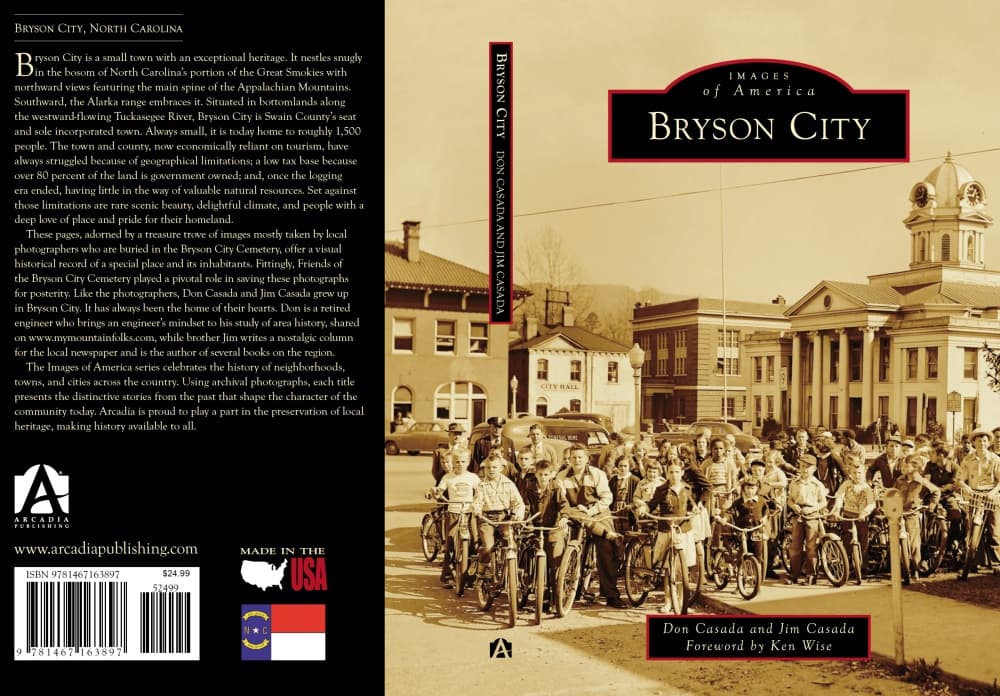
A second book is scheduled to appear on April 20. This is a volume in the “Images of America” Series published by Arcadia Publications on the place where I grew up and the location that remains the home of my heart, Bryson City, North Carolina. Co-authored with my brother, Don, who has become the leading authority on local history and who lives in the old home of our boyhoods, this is an image rich collection of vintage photographs showing the town and Swain County as they were in yesteryear. The book is available in two formats—paperbound ($24.99) and hardbound ($34.99).
Finally, there’s a book I consider one of the most important I’ve ever written. That’s a product of various factors including having known 15 of the 36 individuals covered, the geographical setting in the Great Smokies, the decades I’ve invested in the researcher underlying the work, and because it means so much to me personally. Profiles in Mountain Character from the University of Tennessee Press is scheduled for an April 27, 2027 publication date. It’s a hefty work—320 pages—with profiles of 36 interesting and intriguing exemplars of various aspects of mountains ways in yesteryear and lots of vintage photographic support. In the words of a publicist, “readers will get to know these folks” and adds that “Casada, with a reporter’s eye and a neighbor’s affection, brings to life men and women who shaped—and were shaped by—the Great Smoky Mountains.” I hope this description is an accurate one, and certainly the mention of “a neighbor’s affection” reflects my approach to the book. Its list price is $27.95.
To order pre-publication copies of any, or for that matter, all of these books just send payment by check or money order to: Jim Casada, 1250 Yorkdale Drive, Rock Hill, SC 29730. It is my fond hope that you’ll derive some small degree of the pleasure I’ve had in being involved in these undertakings.
JIM’S DOIN’S
October was an exceptionally busy month for me. Of course it marks the opening of modern gun season for whitetails locally, and that has been the focus of a lot of hours in a stand. There’s meat in the freezer but not nearly as much as I’d like to be the case, so I’ll be spending plenty more time in the cathedral of the woodlands between now and January 1 (the last day of the season). Early in the month I attended the annual meeting of the S. C. Outdoor Press Association (SCOPe). I was one of the founding members and the organization is closing in on 40 years of existence (founded in 1988). This year’s meeting, hosted in splendid fashion by the City of Greenwood, was a dandy. That was in no small part thanks to the graciousness of our host city and its many delights. I had been there several times before, and knew it as the home stomping grounds of legendary turkey callmaker, Neil Cost; as the location of Lander University from back in my soccer coaching days at Winthrop University; and the site of a prime fishing destination, Lake Greenwood. What I didn’t know that it has a delightful downtown area, is recognized as a “bee city” because of its wealth of pollinator plants, and has impressive cultural and historical appeal. I would encourage anyone who takes delight in destinations with a multitude of appealing features to check out the city’s website, www.DiscoverGreenwood.com.
There were several past presidents in attendance at the conference, including all of those from SCOPe’s first six years of existence. On a personal level I was especially delighted to see a longtime friend, Gene Smith. Gene served as the editor of Turkey Call magazine for many years and was, without question, one of the finest editors I’ve ever been privileged to work with. Interestingly enough, the current president of the organization, Joey Frazier, is another individual who falls squarely into that select category. We ate good food, enjoyed some fine Gospel music, had an impromptu storytelling session that was one of the gathering’s highlights for me, and learned quite a lot from seminar speakers on Saturday.
The concluding event of the conference is always the auction and awards banquet. In recent years a highlight of the awards presentations has been recognition of prize-winning essayists in a contest SCOPe cosponsors with what has long been a dominant force on the conservation front, the Harry R. E. Hampton Fund. I had the opportunity to meet and talk briefly with each of the three winning essayists and their families. Let me assure you it is uplifting to talk with neatly dressed, polite, and well-spoken young folks who are clearly, to put it in the fashion that was common in my youth, being “raised right.”
As I later told my daughter, I guess “there’s still a bit of literary spark in the old man’s engine,” because I was fortunate enough to win four awards. One of these was the Terry Madewell Award. It recognizes the single best hunting story from the previous year and is among the most keenly competitive of all the awards categories. The recognition was doubly gratifying because it was for a piece I wrote on my turkey-hunting mentor titled “Parker Whedon: The Last of the Old-Time Turkey Hunters” in “Sporting Classics Daily.” Other recognition came in the form of third place for “Best Blog” (for three selections from this newsletter), second place in the most competitive of all the categories (magazine features) for “The Vanishing Art of Storytelling” in South Carolina Wildlife, and first place in the newspaper category for “My Favorite Christmas Story” in the Smoky Mountain Times.
I continue to plug along as a writer and recently published pieces include weekly contributions to the Smoky Mountain Times, “Autumn: A Season of Timeless Glory” in the autumn issue of Carolina Mountain Life, pp. 71-72; “Arnold Gingrich: Well-Tempered Angler and Editor,” Sporting Classics, Summer, 2026, pp. 75-78; “Loafer’s Glory,” Columbia Metropolitan, October, 2026, pp. 32-36; and ”America’s Greatest Gun Writers and Their Books,” Sporting Classics Daily,” Oct. 1, 2026.
RECIPES
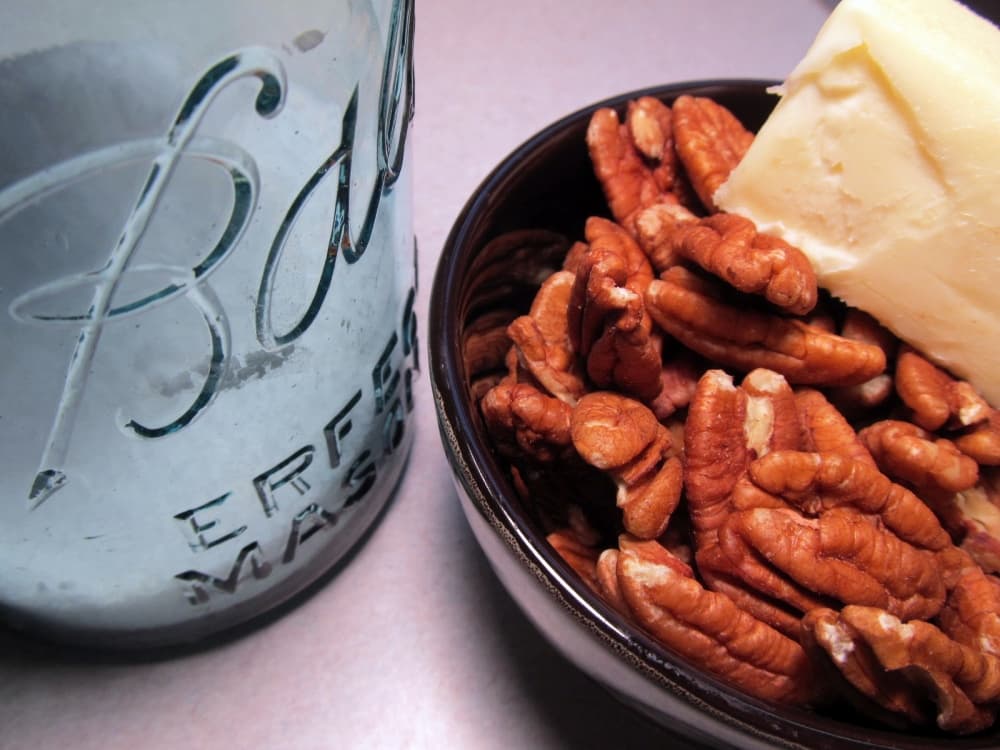
While pecans in my boyhood were, strange as it may seem, somewhat exotic (they don’t grow in the Smokies of my youth), in adulthood I have found myself in a part of the world where this delicious nut thrives. Accordingly, three of the recipes below feature this great member of the nut family. Then there’s a multi-generational recipe for chestnut dressing (you have to substitute the meats of Chinese chestnuts for those of the long vanished American chestnut, and in a pinch you can substitute pecans), and a tribute to the culinary delights of the black walnut.
CHOCOLATE-DIPPED PECANS
1 ounce semi-sweet chocolate
12 pecan halves
Melt chocolate in a cup set into very hot (but not boiling) water. Dip nut halves into chocolate, remove with a fork, and place atop waxed paper. Refrigerate to harden chocolate. Serve with fruit and cheese for a dessert, as an appetizer, or atop vanilla ice cream. You can make much larger quantities multiplying the basic amounts listed above.
TOASTED PECANS
4 cups pecan halves
1/3-1/2 cup butter, melted
½ teaspoon salt or to taste
Place pecans in a jelly roll pan (do not use a dark-colored pan). Drizzle butter over the nuts. Stir until the next are well-coated. Sprinkle with salt. Bake at 325 degrees for 30-40 minutes or until lightly toasted. Stir frequently (at least every 10 minutes) and watch carefully to prevent pecans from getting too brown. Place on paper towels to drain. Store in an air-tight container.
PECAN CRUNCH SWEET POTATOES
1 stick butter or margarine
2 eggs
2 teaspoons vanilla
1 cup sugar
3 cups cooked, mashed, sweet potatoes (you can also use pumpkin or cushaw)
Combine butter, eggs, vanilla and sugar. Add to mashed sweet potatoes. Place in a baking dish.
TOPPING
1/3 stick butter, melted
1 cup packed brown sugar
2 tablespoons flour
1 cup finely chopped pecans.
Mix topping ingredients and crumble over potatoes. Bake at 350 degrees for 25-30 minutes or until bubbly and golden brown.
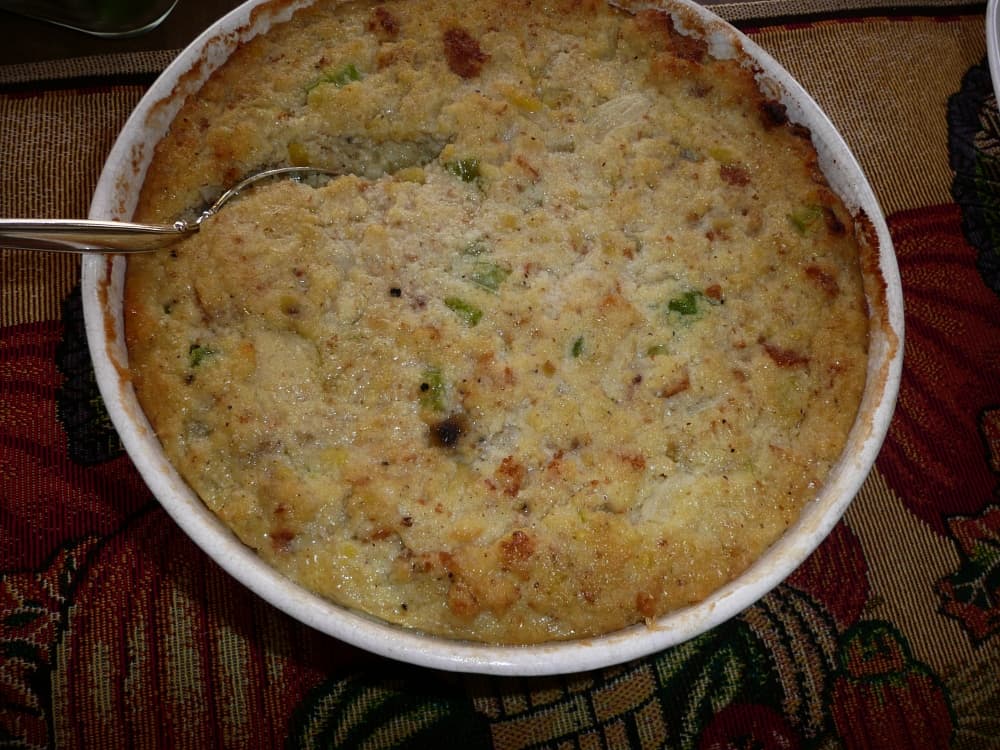
CHESTNUT DRESSING
½ cup butter or margarine
1 cup finely chopped celery
1 cup finely chopped onion
1 cup cooked, chopped chestnuts (you can substitute pecans)
6-8 cups cornbread crumbs (homemade is better)
1 egg, beaten
2 (or more) cups chicken or turkey broth
Salt, pepper and sage to taste
Melt butter in skillet and sauté celery, onion, and nuts. Cook slowly over low heat for 10 minutes; stir frequently as this burns easily. Add to cornbread crumbs in mixing bowl. Add beaten egg and broth, mixing well. Dressing must be VERY moist; add more liquid if needed. Season to taste with salt, pepper and (sage (omit sage if you wish, which I do). Bake in casserole dish at 350 degrees for 30-45 minutes or until golden brown.
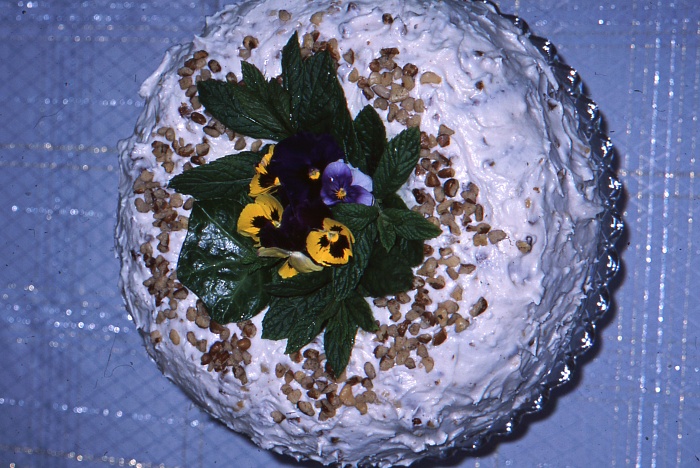
BLACK WALNUT POUND CAKE WITH FROSTING
1 cup butter (the real thing)
½ cup shortening
3 cups sugar
6 eggs
3 cups sifted flour
1 teaspoon baking powder
1 ½ cups finely chopped black walnuts
1 teaspoon vanilla
1 cup half-and-half or whole milk
Cream butter and shortening thoroughly. Gradually add sugar; cream until light and fluffy. Add eggs one at a time, beating well after each. In a separate bowl, sift flour and baking powder and add chopped black walnuts to flour. In measuring cup, add vanilla to half-and-half. Blend and mix well (beating is the secret to a good pound cake). Pour into a prepared 10-inch tube pan. Bake at 325 degrees for 1 hour and 15-25 minutes or until done. Cool for 10 minutes and remove from pan. Frost with recipe below.
BLACK WALNUT FROSTING
1 stick butter melted
1 (16 ounce) box powdered sugar
Half-and-half or whole milk
1/4 to ½ cup finely chopped black walnuts
Blend melted butter and powdered sugar. Add enough half-and-half to reach desired consistency. Fold in walnuts and frost cooled cake.