MEMORIES OF OCTOBER MAGIC
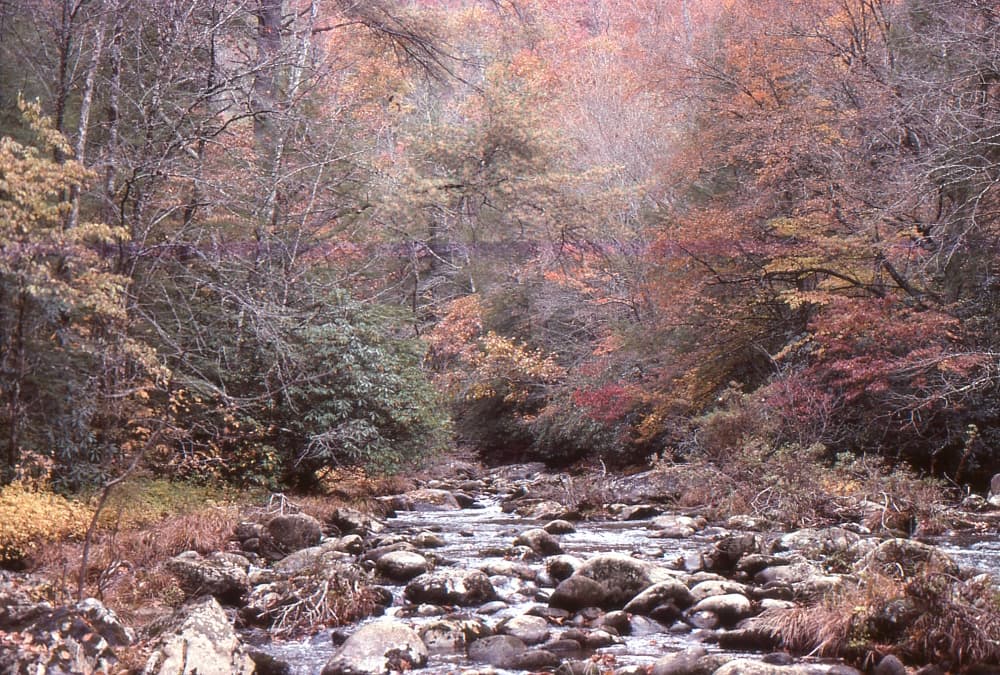
As I began working on this month’s newsletter, I decided to go back and check what I had written in past Octobers. Indeed, much of the main body of the newsletter that appears below is extracts from previous offerings. But what really surprised me was discovering, thanks to newsletters being archived from the beginning, that I started doing this appreciably earlier than I thought. I somehow had in mind I was closing in on 20 years of newsletters. In reality, I reach that mark in 2024, since the inaugural one dated from September, 2004. Strangely, and maybe it’s a good thing, it seems as if it was just a year or two ago when I started out.
The newsletter began at the urging of a fellow sporting scribe whom I had met through a national writers’ organization. We were talking at a convention and she suggested I give it a try. This was at a point when things like blogs and vlogs were unheard of, and even the sort of thing I launched was pretty new. It’s not that I’ve ever been on the cutting edge of technology. Quite the opposite is the case, and those who know me well will tell you what I readily acknowledge. I may not be a “know nothing,” but when it comes to computers, social media, and today’s means of communication I’m most assuredly a “know very little.”
When that first webmaster decided to retire, I was blessed by finding a wonderful and wonderfully talented replacement—my current webmaster Tipper Pressley. Pretty much anything that happens in regard to you getting this monthly missive, other than the actual writing, is thanks to her. She even provides photographic support quite frequently and we’ve done an award-winning book, Celebrating Southern Appalachian Food, together. I’ve watched her, and done so with great delight, progress from a budding communicator to something of a superstar. If you doubt this, just check out her daily offerings at www.blindpigandtheacorn.com. She has a morning blog and an evening vlog (on YouTube). As I’ve said to her on more than one occasion, I started out as her mentor and now find myself a little milkweed spore drifting in the whirlwind of the communicator she’s become. As you can probably tell, I’m passing proud of her and all she has accomplished.
The newsletter has never been a success if measured in terms of the number of folks receiving it (right now that number is just under 1400) or income it produces (I sell some books but nothing approaching the total that would be required to justify the effort if measured solely on return in dollars for hours of work), but it has paid rich rewards in other ways. One splendid example was your response to a request for funds supporting the Marianna Black Library Expansion in the little town of Bryson City where I grew up and where Mom was librarian for many years. Then there are the comments offered over the years following the appearance of each issue. Every one of them is cherished and offers a fillip to my outlook when read. There’s been gratification aplenty when someone let me know they had tried a particular recipe and it was a real success. On one occasion a loyal reader’s wife made a traditional applesauce cake that came from a favorite family recipe and, since Pamela and her husband Rob live fairly close by, they delivered a hefty portion of it to my door. Talk about a combination of culinary heaven and calling back yesteryear! That was a moment of pure gustatory glory.
Life has a way of tossing little fillips of this sort one’s way, or at least that’s how I look at it. You just need to sample, savor, and appreciate such serendipity when it comes along. Just yesterday, for example, an eBay purchase of several Archibald Rutledge books led to an actual meeting with the seller. Turns out she lives quite nearby and asked if she could deliver them in person rather than by mail. Given the vagaries of the Postal Service and the fact that mailing costs were saved, it was a boon for both of us. But what proved a far greater blessing was that this lady had known Rutledge when she was a child and her father had been a good friend of “Old Flintlock.” The two men hunted arrowheads together and she even brought along a lovingly framed selection of arrowheads with a note on the back indicating they had been collected by Rutledge. Talk about conversational joy—for me this was the essence of such interchanges.
Add to things such as these the fact that every newsletter finds me drifting back to my boyhood, remembering long gone loved ones or departed friends, and realizing that I was blessed to be writing about the outdoors in the latter part of the golden era of hook-and-bullet writing and the end result is realization that surrounding this newsletter has been a mighty hefty serving of pure pleasure. Rest assured I’m thankful and deeply appreciative.
I know many of you have subscribed to this newsletter for years, and I’d love to know how many folks have received it for a long time—say more than 10 years, more than 15 years, or from the beginning. I’d love to hear from longtime subscribers about any memories they have of when they first started getting the newsletter or some particular piece of musing or recipe that struck your fancy. That’s enough musing along those lines. It’s time to turn attention to October.
From my perspective, it’s a toss-up when it comes to the grandest month of the year. There’s a great deal to be said for April, which brings blooming wildflowers, greening up time, gobbling turkeys, and the end to any lingering miseries associated with cabin fever. Then too, May has its special appeal. Trout rise readily to dry flies, bedding bream tear up anything offered to them in and around that month’s full moon, you can enjoy wild delicacies like ramps and poke salad, and the weather stabilizes to be just plain out dandy.

When all is said and done though, I’m inclined to give my personal tip of the hat to October. Anyone who watches a harvest moon turn the eastern horizon golden orange has to be enchanted, big bucks are moving into the rut, big brown trout are beginning their spawning runs, and chill mornings giving way to Indian Summer days take me back to my boyhood in a fashion which never loses its magic no matter how often I think about it.
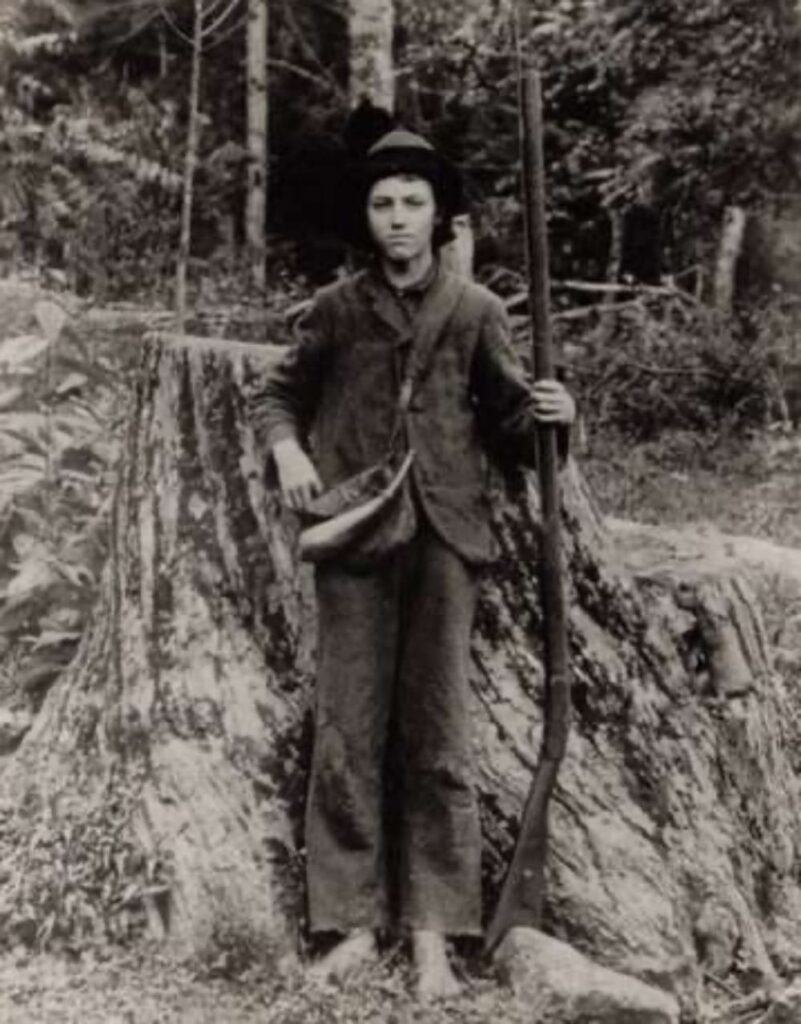
Yesterday, as I sat in a deer stand with squirrels raining down hickory nuts from trees on the ridge above me, my thoughts did some time travel back to the 1950s. Dad had brought me along patiently as a hunter, and there’s no telling how many squirrel outings I either ruined or at the very least reduced his game bag through restlessness and the irresistible curiosity which is part and parcel of every youngster’s makeup. Finally though, when I was nine years old, he decided I was ready to have a go at the bushytails on my own rather than just sitting at the base of a tree with him.
He borrowed a little single-shot .410 from someone, and I fired it a few times at paper targets. The darn thing kicked like an obstreperous mule, or at least that’s how it seemed at the time, and it was choked so tightly that up to 25 yards it was not all that far removed from shooting a rifle. The biggest difficulty, however, was cocking the darn thing. It had an incredibly tight hammer, so much so that I literally could not pull it back into firing position with one thumb. I had to employ both thumbs, and that meant awkwardness in handling the gun as well as the potential for a lot of extra motion and commotion when the moment of truth finally came.
That glad moment occurred on a chilly morning in late October, and I’m pretty confident I could still, all these many years later, climb a high ridge in the Nantahala National Forest and find myself within 50 yards of where I shook hands with pure magic. Dad and I parked, walked perhaps half a mile in the dark, and when we got to the crest of a ridge he whispered: “I remember from last year that there are several big hickories just up there, and every tree I’ve seen is covered with mast this year. You find a log to sit down on somewhere among those hickories, and I’ll be just across from you on the other side of the ridge.”
I eased along the ridge until I spotted what looked like a good log, barely visible through the fog of approaching dawn, and had a seat. The woods were quiet, eerily so as is often the case just before night gives way to light, and I shivered a bit while body heat built up during the hike in began to vanish. The mournful, somewhat scary sound of a great horned owl nearby troubled me as well, and anyone who hasn’t whistled or sung to himself while walking home in the lonely gloaming either hasn’t lived or has far more courage than I did as a boy. I wondered a little bit about exactly where Dad was, and I wondered if I would be equal to the task if a bushytail came within range.
Once settled down, I broke the gun open quietly, eased the long, slender .410 shell holding number 6 shot into the chamber, and did my best to close the gun silently. I was unsuccessful, and in the dead calm woods the click sounded inordinately loud. Nothing happened for what seemed forever, although in retrospect I doubt if more than a quarter hour passed. Whatever the length of the wait, the morning’s silence was broken by a soft but tell-tale scratching of the sort a squirrel makes when it is easing along the trunk of a tree. I looked in the direction of the sound and sure enough, a big old boar bushytail was easing down the side of a hickory about 20 yards away. Somehow I got the gun cocked, held steady for a shot, and pulled the trigger.
The moment remains one of the most treasured of all the many wonderful experiences stashed away in my storehouse of memories. I think that today’s youngsters actually miss a lot when they start out with deer or wild turkeys. There’s too much instant gratification and too little in the way of a learning curve. In the latter regard, incidentally, there’s no finer way to acquire the skills of woodsmanship than through squirrel hunting. The sport teaches stealth, patience, full use of one’s senses, marksmanship, how to read sign, and much more. To my way of thinking, it is the perfect way for a young hunter to get a start.
For me, that first squirrel was the start of a lifelong love affair with hunting bushytails, and over coming years I would rush home from school, change clothes quickly, grab a piece of cold cornbread or a baked sweet potato for a snack, and head for the woods. Dusk would find me headed home, usually with the tails of two or three squirrels proudly sticking out of the pockets of my Duxbak jacket. Much of my hunting involved walking right through the main street of the little North Carolina mountain town where I grew up, and no one gave a second thought to a boy carrying a gun. Today it would occasion calls to the police and who knows what else. That’s how much our world has changed.
Yet memories of squirrel hunting joys are but one facet of the magic I’ve known in October. Here are a bunch of other magical moments and memories.
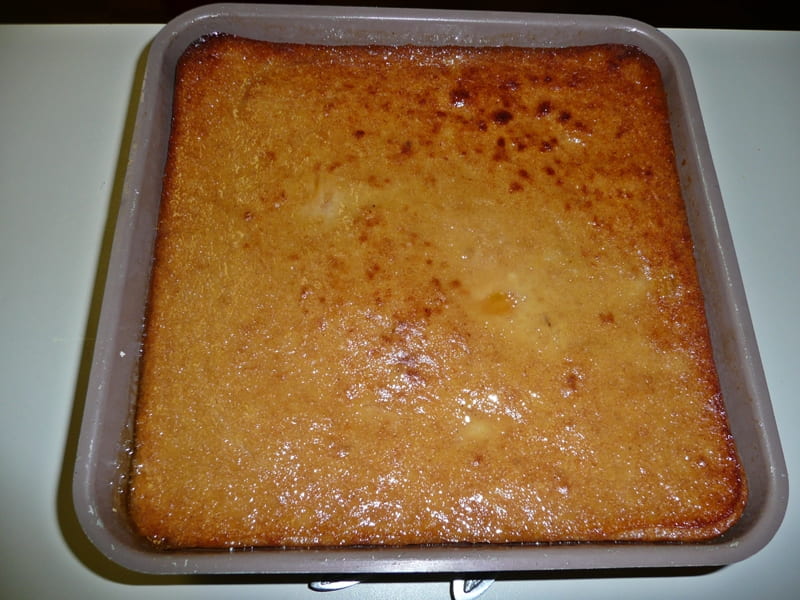
*The delights of a properly made persimmon pudding.
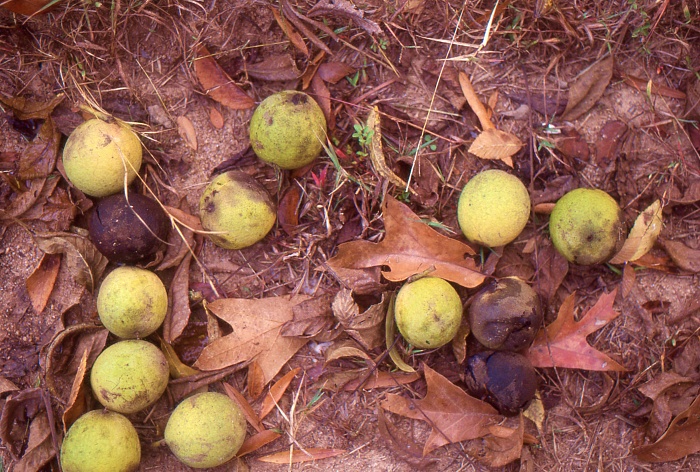
*Gathering black walnuts for treats in the form of cookies, apple sauce cakes, and black walnut cakes during the holiday season.
*Munching on chinquapins while walking through the woods.
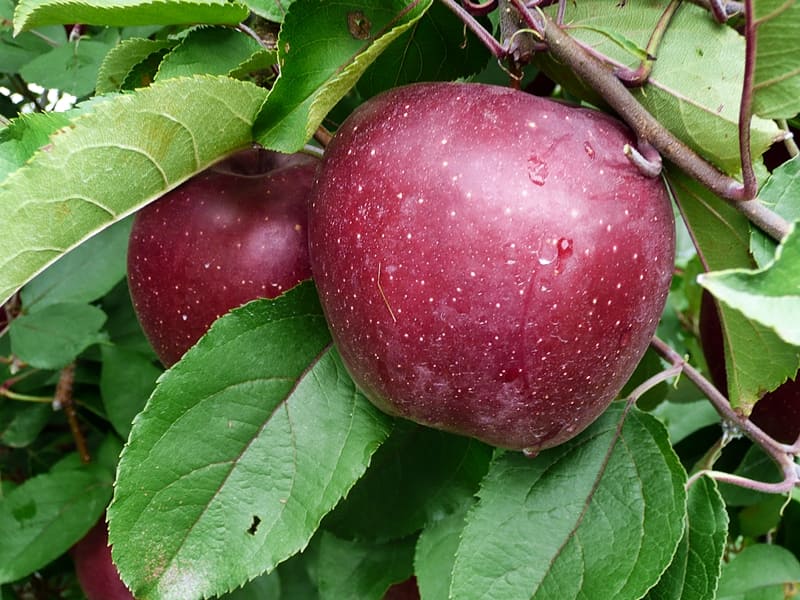
*Chomping into a red or golden delicious apple, so juicy moisture inevitably ran from your mouth and so cold in the morning dew that it made your teeth hurt.
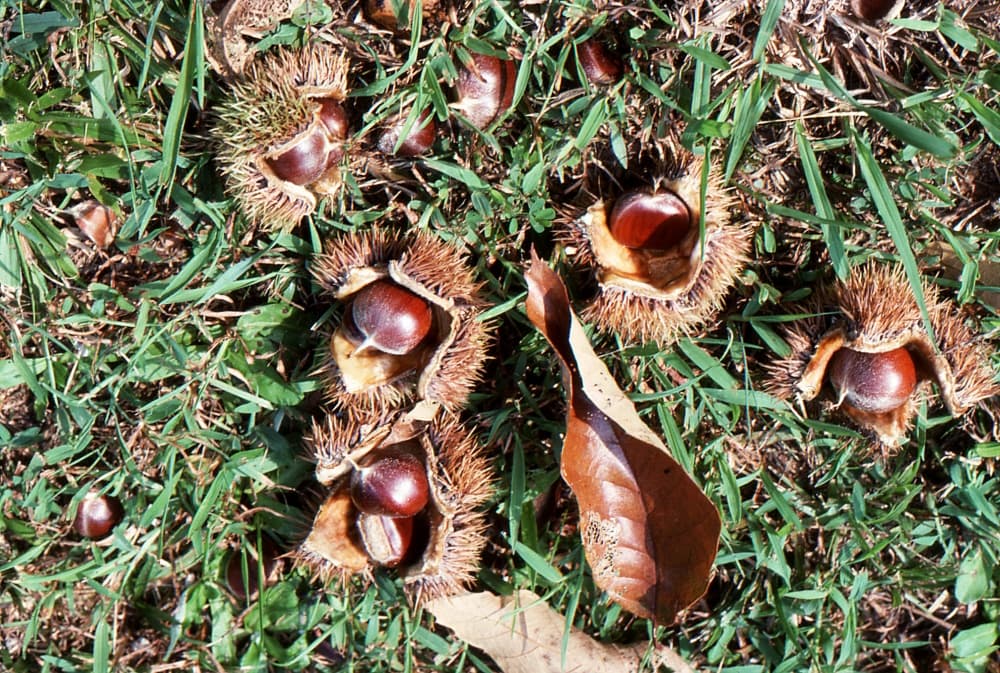
*Gathering Chinese chestnuts from the trees in our yards and listening to Dad and Granddad reminisce about October days when the American chestnut was king.
*October beans withering on the vines in corn fields.
*Gathering those October beans and thrashing them atop old sheets to separate the beans from the husks.
*Going out into the fields to get in pumpkins and candy roasters for winter storage in the basement.
*The occasional chance to kill a grouse which walked by or was flushed when out squirrel hunting.
*Putting away fishing gear until next April—no one fished for trout in the fall when I was a boy.
*Enjoy the bounty of the season’s first wild game as Mom graced our table with baked squirrel, fried squirrel, or squirrel and dumplings.
*Taking our beagles out for training runs (rabbit season didn’t open until Thanksgiving) in the cool of a Sunday afternoon.
*Just walking through the woods, carrying a gun to be sure but really doing nothing more than wandering in the aimless way which is the special privilege of the young and elderly. I guess I’m easing into the latter category, because I find I seem to enjoy walking and piddling more with each passing year.
BOOK SALES
With the opening day of muzzleloading season for deer having already arrive in my home stomping grounds, that’s a reminder to me that Christmas, or at least Christmas shopping, is already at hand. I’d encourage you to check out the relevant sections of my website and hope you might find items there—cookbooks (always a good gift selection), Rutledge anthologies, original books I have written centered in my beloved Great Smokies, or others—you think would make fine gifts. Of course I’m more than happy in personalize, inscribed, and sign books.
JIM’S DOIN’S
Recent weeks have featured quite a bit of scrambling in connection with books I have in press, but right now everything is in order and I can enjoy the eager anticipation of waiting for proofs and the other “short rows” aspects of the overall process of seeing a book reach published fruition. I got to spend one afternoon in a dove field using Daddy’s old 12 gauge double-barrel Ithaca, and it didn’t take long to ascertain two things—it kicked like an irate mule and neither my reflexes nor my marksmanship are what they once were. Never mind—deer hunting doesn’t require quickness, and I’ve got patience aplenty. I relish October and the opening of deer season, and I plan to spend plenty of time enjoying the wonders of the whitetail world.
A real highlight of September was a reunion (the 66th year) of my high school graduating class. Our numbers have shrunk dramatically and those of us who are left most assuredly aren’t the starry-eyed innocents we once were, but all who were in attendance reckoned we are mighty blessed to have old friends (listen to the Willie Nelson and Roger Miller rendition of this song that I’m pretty sure the latter wrote) and to have come of age in the bosom of the Great Smokies.
As usual, I continue pumping out a weekly column for the Smoky Mountain Times, and recent magazine or on-line pieces include “Autumn: A Season of Timeless Glory” in the autumn issue of Carolina Mountain Life, pp. 71-72; “Arnold Gingrich: Well-Tempered Angler and Editor,” Sporting Classics, Summer, 2026, pp. 75-78; “Loafer’s Glory,” Columbia Metropolitan, October, 2026, pp. 32-36; “It’s Versatile? Very!: The Lovely Blueberry,” Smoky Mountain Living, Aug./Sept., 2026, pp. 6-9; “My First Gun,” Columbia Metro, September, 2026, pp.64-68; “Joseph Thomson: Mystery Man of Africa,” “Sporting Classics Daily,” Aug. 26, 2026; and “Fred Selous: Heart of Steel, Frame of Iron,” “Sporting Classics Daily,” Sept. 8, 2026.
RECIPES: THE BEAUTY OF BUTTERMILK
My late father, Commodore Casada (Commodore was a title from naval service—it was his given name), was a grand teller of tales. He had stories without number, and a goodly portion of them came from his boyhood days. As is true for most of us, I suspect, looking back with longing meant a great deal to him. In that regard, and as a sort of an aside, do yourself a treat and access Boxcar Willie’s song, “The Wind of Yesterday,” on YouTube. One of the favorite stories Daddy shared, time and again, was how, as a youngster, he would sneak off to the springhouse that cooled milk and butter and in general served as his family’s equivalent of a refrigerator. There was always a small crock of buttermilk cooling in the spring water coming straight out of the mountain, and evidently his mother caught him sampling it on numerous occasions. She would forthwith administer meaningful, painful doses of hickory tea, but the draw of buttermilk remained irresistible.
Today’s cultured buttermilk is a bit of a pantywaist pretender in comparison to the traditional by-product of butter making, but it still retains some of the tangy delight the “real McCoy” once brought to mountain palates. Buttermilk, far from merely being a satisfying beverage or key component in certain types of baking, is in reality a sort of cross between a condiment and an ingredient that can provide culinary delights on many fronts. The recipes below are but a sampling, and anyone who likes to experiment a bit in the kitchen will find buttermilk a staunch companion with potential uses in baking, marinades, dressings, and more.
TRADITIONAL CORNBREAD
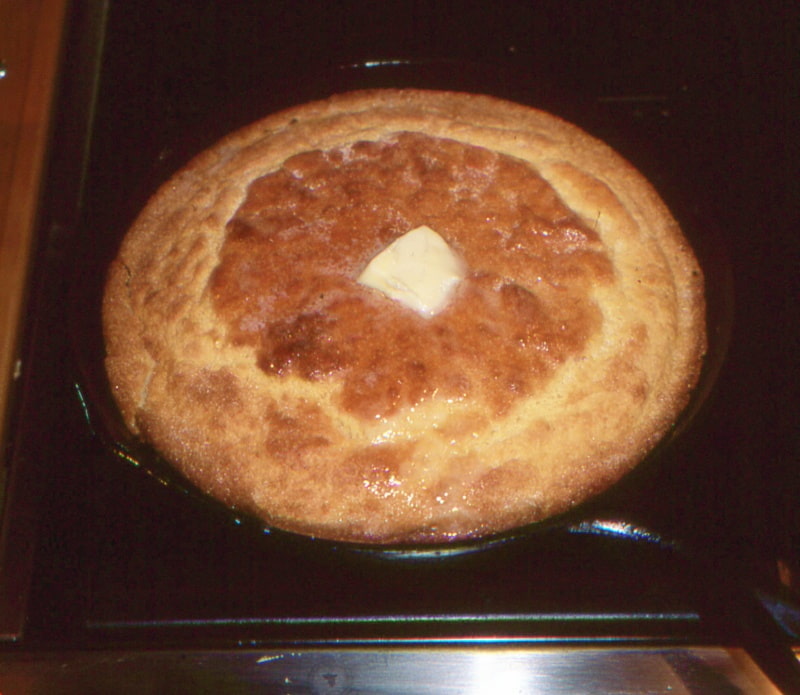
The key folks from whom I inherited my love of traditional Appalachian foods and knowledge of how to prepare them, my mother and paternal grandmother, cooked countless pones of cornbread and endless pans of biscuits over the course of their years. Both did so without measuring, but buttermilk was always a key ingredient with just enough being added to the mix to attain the proper consistency before the dough was popped into the oven. Here’s a cornbread recipe, with specific measurements, that closely approximates their approach. Although I have no way of knowing for sure, I suspect the recipe pretty much represents what has long been standard among the folks of southern Appalachia. Some key points, however, before we even get to the recipe, are: (1) Cook in a well-greased cast-iron skillet. (2) Grease the skillet with a piece of streaked meat or bacon before you pour in the batter. (3) Use stone-ground cornmeal. Store-bought stuff is ground too fast and the heat involved in the grinding process hurts flavor. Also, if you like a bit of crunch in your cornbread, and I do, stone-ground meal, even if sifted, has more “body” to it. (4) Use buttermilk, not sweet milk. This recipe makes just the right size pone for a standard nine-inch cast-iron skillet.
1 extra large or 2 small eggs
1 1/3 cups buttermilk
¼ cup bacon drippings
Pinch of baking powder (a pinch would equate to about ¼ teaspoon)
Pinch of baking soda
2 cups stone-ground corn meal
Mix all the ingredients in a large bowl and whisk until thoroughly blended. Preheat your oven to 400 degrees and place the pan in it for a few minutes before adding the batter. Then pour the batter into the pan, return to oven, and cook until golden brown (watch closely, because it won’t take long—15-20 minutes in most ovens).
Tips:
If you have access to cracklings, add a handful to the batter when you stir it up and cut back just a tad on the bacon drippings.
For a bit more moisture and a nice texture surprise, add a third cup of frozen corn kernels (thaw them in advance) to the batter. Better still, if it’s summertime and you have access to fresh corn, grate the kernels from a cob or two and add them. That’s a particularly good way to use corn just past its “in the milk” prime and beginning to turn starchy. You can make blackberry or huckleberry cornbread in the same fashion.
When you remove the cooked pone from the oven, place a couple of pats of butter atop it and, as they melt, spread them across the crust.
BUTTERMILK AND RAMP BISCUITS
Buttermilk biscuits are a favorite item of interest for fast-food operations and there’s no question that properly prepared ones made at home, never mind that my personal preference goes to the simplicity of two ingredient self-rising flour and cream for this staple in the breakfast line, are the stuff of culinary wonder. But this recipe goes in a quite different direction, blending that quintessential springtime Appalachian delicacy from nature’s larder, ramps, with buttermilk and other ingredients to produce a biscuit of real distinction.
If you hail from pretty much any part of rural Appalachia, you’ll be familiar with the tasty but decidedly pungent wild vegetable known as ramps. Consumed in the raw form, while mild to the taste, ramps will make a skunk slink away in shame at the inferiority of his smell or, to put it another way, anyone who has eaten raw ramps redefines halitosis. Fortunately, once cooked the tasty treat from spring wildwoods loses its aftereffects but not its taste appeal. Ramps have become increasingly prominent in high-class restaurants, but this recipe will take you several steps beyond anything they can offer.
1 tablespoon active dry yeast
½ teaspoon granulated sugar
¾ up buttermilk at room temperature
1 ¾ cups all-purpose flour, divided
½ cup semolina flour
2 teaspoons baking powder
1 teaspoon salt
½ teaspoon baking soda
Big bunch of ramps (maybe a third of a pound)
10 tablespoons unsalted butter (8 cold and cubed and 2 melted)
8 tablespoons corn oil or vegetable shortening (you can use the equivalent of real lard or saved bacon drippings if you wish)
Mix yeast, sugar and 4 tablespoons of the all-purpose flour. Add buttermilk and whisk thoroughly. Cover with a dish towel and let sit for 30 minutes—at that point you should see a bit of foam on the surface
Wash and dry the ramps then rough chop both the light green and the white parts and mince in about 2 tablespoons of the dark green upper leaves.
In a mixing bowl combine the remaining flours, baking powder, baking soda, and chopped ramps. Add butter and shortening and use an electric mixer on medium high until pebbly.
From a well in the middle of the resultant mixture and pour in the yeast. Mix gently by hand until just combined.
Using floured hands, turn out the dough, which will seem sticky and wet, onto a floured surface and knead gently. Once the dough has a bit of “bounce back” to it form into a ball and then mash it (by hand) into a disc about ¾-inch thick. Cut out circles with a biscuit cutter.
Brush with melted butter and let rest, uncovered, for an hour.
Preheat oven to 400 degrees and place biscuits on a treated baking sheet (or one lined with parchment) and bake until brown (18-20 minutes).
This is a time-consuming process but rest assured the end result is pure delight.
BUTTERMILK PIE
If the buttermilk ramp biscuit recipe is complex, here’s one that is the essence of simplicity with the actual prep time being less than a quarter of an hour. It’s also flat-out delicious. I remember it being brought to gatherings such as family reunions or Decoration Day when I was a boy, and you could guarantee there wouldn’t be any leftovers. Using buttermilk as a key ingredient in an old-time sweet treat might seem counterintuitive, but in truth, and as this recipe exemplifies, it’s just a testament to its versatility as well as the adaptability of old-time cooks.
1 ½ cups sugar
½ cup unsalted butter
1 cup buttermilk
3 large eggs
3 teaspoons all-purpose flour
1 teaspoon vanilla extract
¼ teaspoon ground nutmeg (optional)
1 (9-inch) pie crust
Preheat oven to 350 degrees. Beat sugar and butter together in a large mixing bowl until smooth. Then mix in eggs, flour, and vanilla. Pour the filling into the pie shell and sprinkle with nutmeg if you like the flavor. Bake until the crust is golden brown (50 minutes to an hour). Allow to cool on a pie rack before attempting to serve. Any leftovers should be refrigerated, although rest assured there will be folks wanting seconds.
CORNBREAD SALAD AND BUTTERMILK
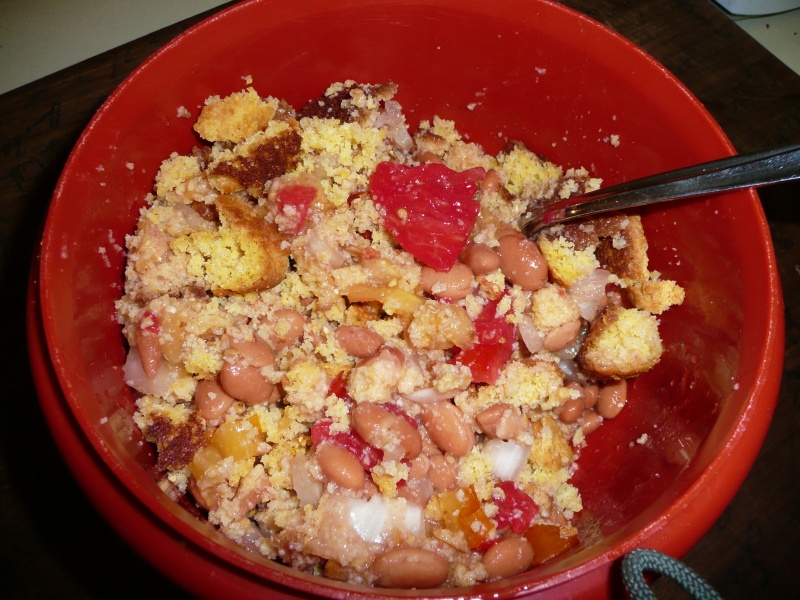
Many an old-timer, and lots of modern folks as well, reckon that a glass of buttermilk and cornbread sits well towards the top of the “comfort food” list. Yet there’s a simple, scrumptious way to take this tried and true treat a step further—by using buttermilk to top off a bowl of cornbread salad. Should you perchance have lived a life of culinary deprivation and be unfamiliar with cornbread salad, it’s a dish fit for an Appalachian king or queen. Just take a pone of cornbread (or leftovers, which was traditionally more common) and crumble by hand in a big bowl. Then add raw or cooked vegetables to your fancy or using whatever might happen to be available—diced tomatoes, chopped onion, bell or hot peppers, leftover crowder peas, cooked green peas, cooked limas, raw or cooked corn, raw squash or zucchini—indeed pretty much whatever strikes your fancy. Stir it all together and it’s ready to be adorned with dressing. There are many options but for hearty goodness in keeping with fine mountain fare, nothing is better than buttermilk. Just pour it over the whole bowl or an individual serving and dig in for a feast. It pretty much amounts to a complete vegetarian meal and if you’ve got to have a bit of meat, crumble fried bacon or streaked meat atop the dressed salad.
BUTTERMILK DRESSING
Buttermilk dressing can be readily found on store shelves and, for that matter, the basis of ranch dressing is buttermilk. That immediately poses the question: “Why not make your own buttermilk dressing.” It’s a good way to use buttermilk that has been in the refrigerator for a while or to include ingredients you find particularly appealing.
½ cup buttermilk
½ cup mayonnaise
1 tablespoon finely chopped fresh chives or green onion
1 tablespoon sour cream (not essential but adds richness)
1 tablespoon dried parsley flakes or fresh parsley
½ teaspoon garlic or onion powder
½ teaspoon salt
½ teaspoon freshly ground black pepper
2 tablespoons white vinegar or lemon juice
Whisk together the buttermilk, mayonnaise, and sour cream until smooth and then add the herbs, garlic powder, salt and pepper. Add lemon juice or vinegar and mix everything together with a spoon or whisk. If you like a bit of heat, add some paprika or cayenne pepper. This dressing will keep refrigerated for several days.