SEPTEMBER’S SWEET SONG
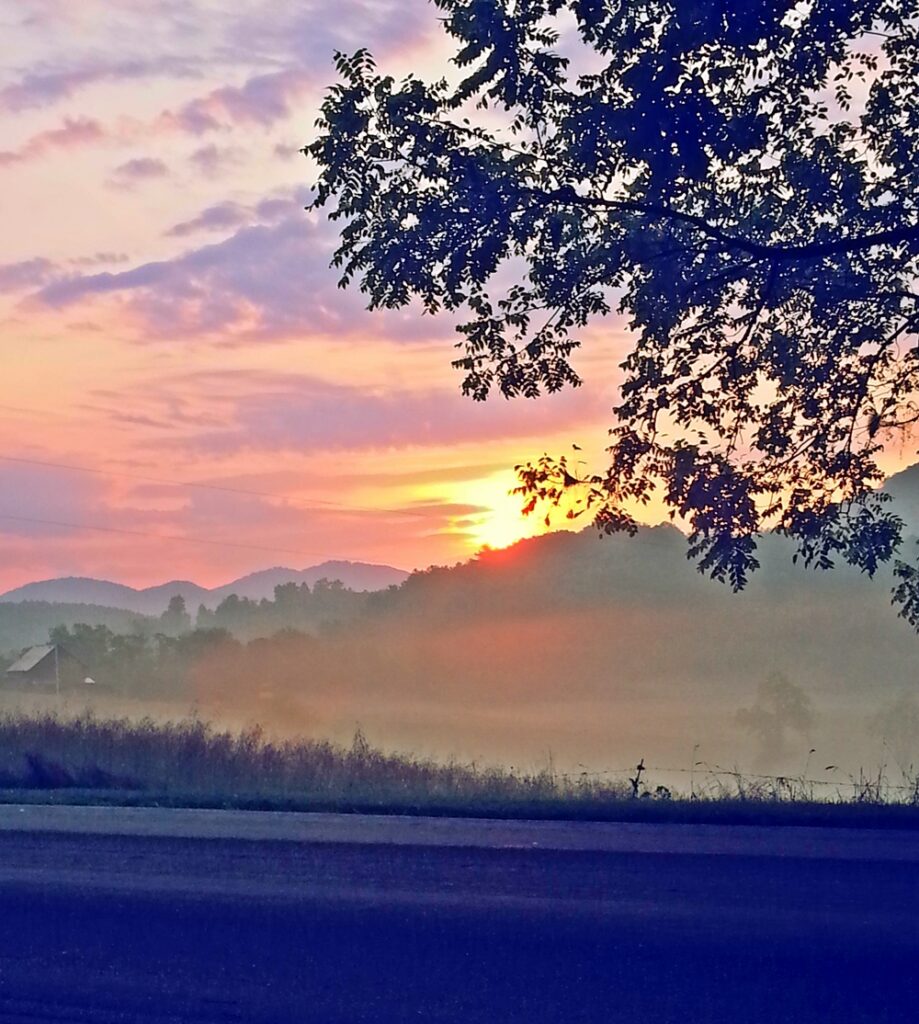
To me, September sings a mighty sweet song. There is literal music in the air from the wondrous cricket chorus, with the volume seeming to reach its highest level of intensity as the heat of day yields its way to a welcoming bit of cool with approaching night. Grasshoppers carry the biggest part of the load through the middle hours of wakening time, while birds seem desirous of bidding the season of fecundity a fond farewell with a swelling tide of song reminiscent of spring. Hummingbirds zip busily around, mixing sips of nectar with unending chases to establish territoriality while bands of soon to migrate birds bustle about with endless chatter.
There’s more to this month of gladness, much more, but for me, this time around, there’s also a distinct element of sadness. For years every time the latest issue of this newsletter went out I could count on contact from a reader in East Texas, Craig Stripling, coming in two forms. First would be an e-mail with a hand-scribbled note attached. These were unlike any e-mails I’ve ever received and I eventually concluded, quite possibly erroneously since I think Craig’s mastery of technology was pretty much on a level with mine, that he was writing out his comments, having his secretary or legal assistant photograph them (he was a lawyer by profession), and attaching them to the e-mail. Then, a couple of days later, there would be a phone call and I knew a pleasant interlude was in the offing because Craig always had a tale or two to tell, some thoughts on food preparation to offer, and something connected with a whole bunch of shared passions to discuss. We never met, but our interactions were such that I felt like he was a good friend.
I watched and listened to him deliver a splendid eulogy for his close buddy, the boxer George Foreman; received multiple little surprise packages of some kind of foodstuff he wanted me to try; was gifted a splendid fixed-blade knife he had had crafted as one of five from an old saw blade; and reluctantly turned down a bunch of invitations to travel down his way for an annual day of celebration he hosted with horseback riding, fine food, and what I’m sure was fellowship at its best. I’ll miss the man and will always consider his presence in my life, never mind that it was only at a distance, a grand blessing.
With that note of sorrowfulness that I felt compelled to share, and I’m of an age where losses of this kind become increasingly a reality in my existence, let’s turn to the ample joys the month of September offers. Although I don’t know that I ever heard him put it in precisely that fashion, unquestionably Grandpa Joe would have suggested that one of the best things about September was that it meant October was just around the corner. Musing of that sort likely would have taken place as we wandered through his corn patch gathering cull pumpkins to feed fattening hogs or pulling up red-rooted pigweed with the same purpose in mind. We’d pause now and then to snack on ground cherries, and all the while he would be discussing the growing season coming to an end or talking about how it would be time to hunt squirrels in just a few more weeks. He loved to hunt (and eat) squirrels, and he had some wonderful stories associated with the sport. Most of them revolved around bushytails feasting on the nuts as September gave way to October and how some specimens of that one-time monarch of Appalachian forests were so tall his shotgun was ineffectual when they were working on nuts in the top of the tree.
Those thoughts often left him maudlin for a short time, but Grandpa was too upbeat, too much of an optimist, to stay down in the dumps for long. He’d shake off the mollygrubs after having reminisced on how this time of year once meant falling chestnuts and gathering that one-time monarch of Appalachian forests for human consumption (raw, roasted, in chestnut bread, as a thickener for soup, use in cornbread dressing, and the like), as well as being the most wonderful way imaginable to fatten hogs into the promise of some prime ham and bacon come hog-killing time in November.
Soon enough though we’d be talking about things such as what the signs portended for coming winter, where we might find a wasp nest to provide bait for a summer’s end fishing expedition, or what the year’s apple crop looked like. It was a grand time and one I should have cherished even more than I did, but at least I can celebrate some of those memories through sharing them. Here’s a sampling of what September meant, still means, and is like through the eyes of a son of the Smokies grown old.
September sort of eases up on a fellow. One day it’s hot, humid, and generally miserable. Then an evening storm front moves through and next morning you awaken to briskly comfortable temperatures and see forever blue skies. There’s little of the fanfare of October, with its colorful leaves heralding a clear change of the seasons, but it’s a mighty fine time to be alive.
September is a time of transition, a splendid opportunity to look, listen, and learn. Mornings in particular have a tale to tell and joys to delight the eyes. Sometimes you awaken to a world embraced in fog. Towards month’s end there’s often an edge to the air. Not exactly a chill but enough for a long sleeve shirt or light sweater to be most welcome. By noon the fog will be gone, warmth will have returned, and grasshoppers and crickets will be in full chorus. Yet the morning has already let its secret slip. Summer is leaving, and at night an open window makes for mighty soothing sleep.
The woodlands know as much. Already sassafras, poplar, and hickory are putting on colorful garments, and the scarlet of dogwoods and sumac is stunning. Along trails and creek banks fall flowers are abloom, and the rich, intense green of summer’s height has changed to a perceptible degree. The forests sort of hold their breath as if getting a second wind for what has come annually since time immemorial.
Though not so much anymore, September used to be a month of hard work, what with laying by crops and fields; canning, pickling or drying summer’s garden bounty; fattening up hogs for coming slaughter; gathering and working up apples; readying corn for the crib; and making sure the cannery was full and the smokehouse in good order for what lay ahead. If all was well the “tater house” would hold not only potatoes but cabbage, winter squash, and “keeper” apples. Folks knew winter was a-coming and wise ones got ready as their forebears had done for untold generations.
Animal behavior shows changes as well. Squirrels and chipmunks seem extra busy. There is a purpose among birds far removed from the courting time of spring or nesting in late spring on into summer. Bees are busier, more bothersome, and more numerous than in previous months.
September heralds the coming of hunting season. By month’s end squirrels are cutting on hickories and black walnuts, humans have to hustle to beat the bushytails if they want to gather hazelnuts, and the observant eye can notice scrapes and rubs heralding the coming whitetail rut.
School has commenced, of course, giving teenage boys an opportunity to “scout” any new girls and for those of both sexes to participate in a sort of annual adjustment ritual as cliques form, romances spark, teachers smile or frown, and the whole ritual of going to classes settles into place.
There are the first elusive aromas of wood smoke drifting through the air and the heady perfume of the first drops of what will become a steady rain laying dust on sere fields recently turned under. There’s a bright buckeye just dropped to the ground and popped out of its shell, waiting for the wanderer to pocket it as a good luck charm and folk remedy against the woes of arthritis sure to come with the arrival of cold, wet weather.
For all these and countless other characteristics September is sweet and it’s sublime. For the thinking observer, it’s among the most evocative of months. October gets (and merits) more attention, but September is a harbinger. Maybe quieter and a bit less showy, but a fine time to pay attention and contemplate. If you possess the right mindset, a single leaf loosened by an afternoon thermal and watched as it drifts to the ground can be as moving as a whole mountainside ablaze in color a month later.
September whispers to those who will listen. It tells of what lies ahead—completion of another cycle of the seasons, heat in retreat, and summer bidding farewell. Thus things have been for untold ages, and for those at peace with themselves and the world about them, it’s a month of surpassing sweetness.
*********************************************************************************
JIM’S DOIN’S
Recent weeks have been especially busy ones for me. Of particular note is a mixed sense of relief, anticipation of what is to come, and feeling of accomplishment, inasmuch as all three of the book projects I have been working on in concerted fashion over recent months have reached important points in their development that translate to each of the works being in the short rows. Profiles in Mountain Character is now being readied for production with the University of Tennessee Press. There have been back-and-forth exchanges, mailing of thumb drives with potential illustrations, trying to deal with matters of pixels, tiff vs. pdf images, and other things pretty much beyond my ken in connection with these supporting photographs. There’s also the impatience, something I possess in abundance, of waiting for a response from one collection where the original image sent to me was of too low resolution for suitable reproduction. Thankfully the folks with whom I’m working at UT Press are both highly professional and admirably patient with this troglodyte.
I just this week received word that I’ll soon have copyedited text back from The History Press on a second book. A Taste of Appalachia: Recipes and Remembrances from John Parris, will soon be in my hands for the key stage of proofreading prior to the book going to press. My most capable friend, Tipper Pressley, the webmaster who gets this newsletter to you monthly as well as tolerating with admirable good grace my profound ignorance on any and all technological matters, has helped out a bunch by providing photography. Once I’ve gone over everything with a fine-tooth comb, and that’s after a reader with the publisher has done the same thing, the book will be ready for printing.
The third book, Bryson City, is a volume in the hands of Arcadia Publishing and its long-established, extensive series, “Images of America.” It has been something of slog, although my brother, Don, whose understanding of computer technology is about as extensive as mine is minimal, has carried the bulk of the load. This is a “picture book,” with vintage photographs being the heart of the effort. The book will contain over 200 photos, the vast majority of them pre-1960, of Bryson City and Swain County, the place where we grew up. There is accompanying narrative material and of course detailed captions with individual images. The finished manuscript is with the editor, and final approval for the book’s cover has been given. The next step will be the proofreading that has already occurred for the UT Press book and is in the near offing for the culinary collection linked to John Parris. I’ll keep you updated on all three of the endeavors and once things reach a stage where I have a firm date of publication, I’ll begin taking preliminary orders.
Seeing those three projects well along towards fruition (and with the hard work completed) has allowed me to get back to Archibald Rutledge. This past week I prepared a proposal or prospectus for a sixth volume anthologizing his work to join five previous ones—Hunting and Home in the Southern Heartland: The Best of Archibald Rutledge; Tales of Whitetails: Archibald Rutledge’s Great Deer Hunting Stories; America’s Greatest Game Bird: Archibald Rutledge’s Turkey Hunting Tales; Bird Dog Days, Wingshooting Ways: Archibald Rutledge’s Tales of Upland Hunting; and Carolina Christmas: Archibald Rutledge’s Enduring Holiday Stories. The work I have in mind and that has been submitted to the University of South Carolina Press, the publisher of all five of the just named collections, carries the working title “Phantoms and Poltergeists; Devils and Demons: Scary Tales from Archibald Rutledge.” The proposed book will go through the normal routine followed by academic presses. An in-house committee of folks actually working with the press will review the proposal. If they think it has merit the proposal then goes to two or three outside readers for their thoughts and critique. If they deem the concept of sufficient merit there’s then the final step of approval by the outside committee making decisions on what books the press will publish. Details differ a bit from one university press to another, but that’s the essence of things.
All this may seem slow and cumbersome, and rest assured that the seemingly endless waiting period is trying for potential authors. On the other hand, the process becomes more understandable if you realize that in the end manuscripts that survive have been thoroughly vetted, it avoids costly mistakes in terms of publishing works that never deserved to see the printed light of day, and overall it involves a lot of plain old common sense (something I might add is not always a readily available commodity in the world of academe; and keep in mind I moved in that world during the heart of my career). I’ve been involved in pretty much all sides of what I’ve just described—many times as an author anxiously awaiting the hoped for approval for a concept, as a reader for half a dozen academic presses that sent me manuscripts for my reviews and judgment on whether they are worthy of publication, and even in a few cases involvement from the “inside” in connection with works published by Live Oak Press (an adjunct of Sporting Classics magazine). This little trek into what is involved in the background before a book comes to your hands may have left you nodding , trying to stay awake, and with any and all hints of insomnia having magically vanished. Still, I thought at least some readers might want to know more about the background to the emergence of a book as seen through an author’s eyes.
Along with submission of the Rutledge anthology proposal I have resumed work, in earnest, on a full-scale biography of the man. I expect to have coverage the life of an icon of writing on sport, poetry, Southern literature, and South Carolina (he was the state’s Poet Laureate for over 30 years) at a point where I submit a formal proposal within the next two months. I’ve been at the project off and on for decades, and other than plenty of writing and organizing still to be done, the only other major task ahead of me is some concerted research on Rutledge papers held in the South Caroliniana Library’s collections in Columbia. I’ve got a time frame in mind for that.

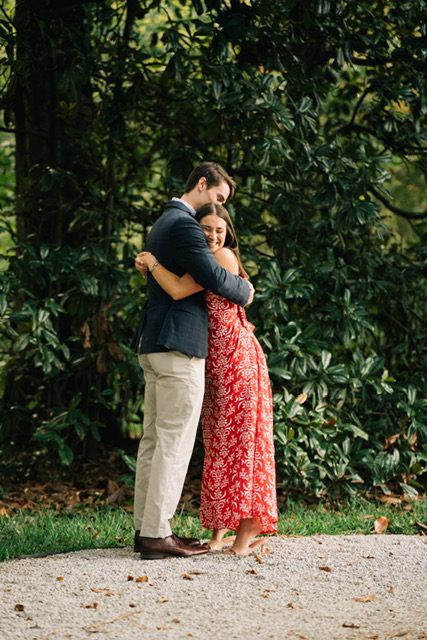
That’s a pretty full update on my work life. On top of it comes the exciting news, on a personal level, of my only grandchild becoming engaged to the guy who has been her longtime boyfriend going back four or five years to her undergraduate days in college. Over that time period she’s completed a graduate degree in occupational therapy and now works in that capacity with pre-school kids. He’s in the later stages of law school studies. This all happened over Labor Day weekend with a whirlwind of the engagement, the surprise appearance of her mother and step-father in the immediate aftermath of the proposal (her fiancée knew and orchestrated the whole thing), a grand celebratory dinner where she walked into the room to a surprise greeting and huge hug from her Mom, tailgating prior to the LSU-Clemson football game, and attendance at the game. He’s in law school at LSU so this all played out in Baton Rouge. I think it fair to say there was a mighty high level of excitement on the part of all those involved (and that included a grizzled old grandfather who was privy to all of this in advance and who was kept up to date from afar as matters progressed). I even managed to get some photos and view a short video of the key moment of surprise through a cell phone I barely know how to operate. Exciting times for sure!
As is usual, there are a few recent publications to report. My column continues to appear in the Smoky Mountain Times on a weekly basis. Recently I’ve been writing about the role of corn in mountain life and one outgrowth of this is shared in the regular recipes section below. Articles to appear in recent weeks include ”Frank Young: An Angler for the Ages,” “Sporting Classics Daily,” July 2, 2026; “The Grandfather Factor,” “Sporting Classics Daily,” July 7, 2026;“The Literary Legacy of W. Robert Foran,” “Sporting Classics Daily,” July 27, 2026; “It’s Versatile? Very!: The Lovely Blueberry,” Smoky Mountain Living, Aug./Sept., 2026, pp. 6-9; “My First Gun,” Columbia Metro, September, 2026, pp.64-68; “Joseph Thomson: Mystery Man of Africa,” “Sporting Classics Daily,” Aug. 26, 2026; and “Fred Selous: Heart of Steel, Frame of Iron,” “Sporting Classics Daily,” Sept. 8, 2026.
RECIPES
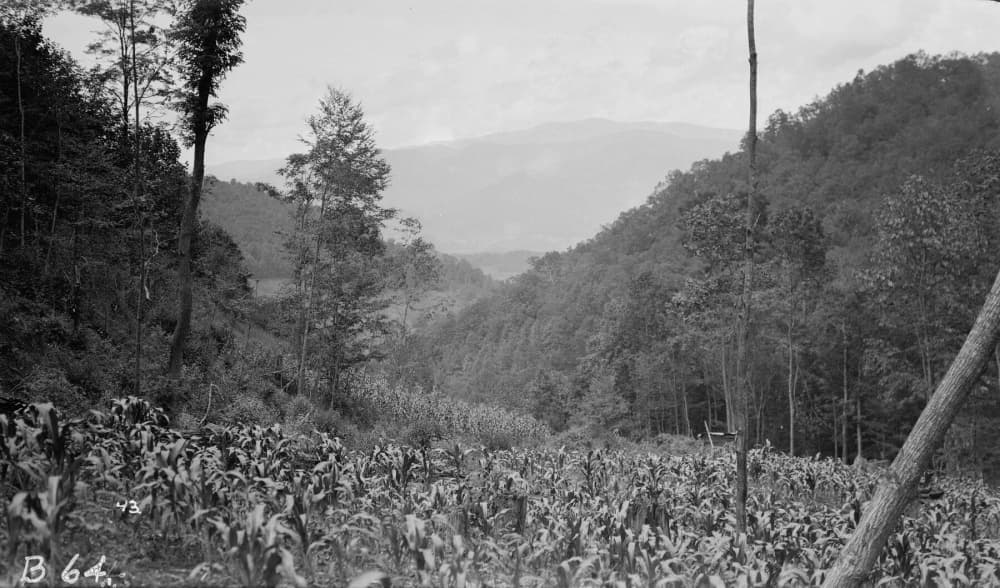
Southern Appalachian Digital Collections – Photographer, “Doc” Kelly Bennett (1890-1974)
After paying a bit of tribute to Craig Stripling at the outset that alludes to the way we wandered through the wonders of food and cooking, as you will have read above in this month’s newsletter indulges in fond memories of wandering through Grandpa’s corn patch. The prominence of corn in everyday diet during his life and the small world in which he existed shouldn’t come as any great surprise to those familiar with the Southern past. For many, and that certainly included Grandpa Joe and the family he and Grandma Minnie raise, corn was THE staff of life. Capable of being grown pretty much anywhere space could be scratched out, from fertile bottomlands to steep hillsides, it was a wonderfully versatile crop.
Corn could be ground for meal, and cornbread was the main bread of the mountains. It could be cooked as mush, made into fritters, served as hoe cakes, prepared as hominy, enjoyed fresh from the field on the cob, eaten as creamed corn, stewed, fried, and consumed by humans in dozens of other ways. Yet that was only part of the culinary picture. When dry, corn was easily stored in cribs and even came with its own protective layer or husk. As long as it remained dry, after having been allowed to “cure” in the field at this season of the year as sunny days gradually removed any vestiges of moisture while the husks kept out the rain and dew, corn kept for many months until ready for human consumption or for feeding chickens or livestock.
CREAMED CORN
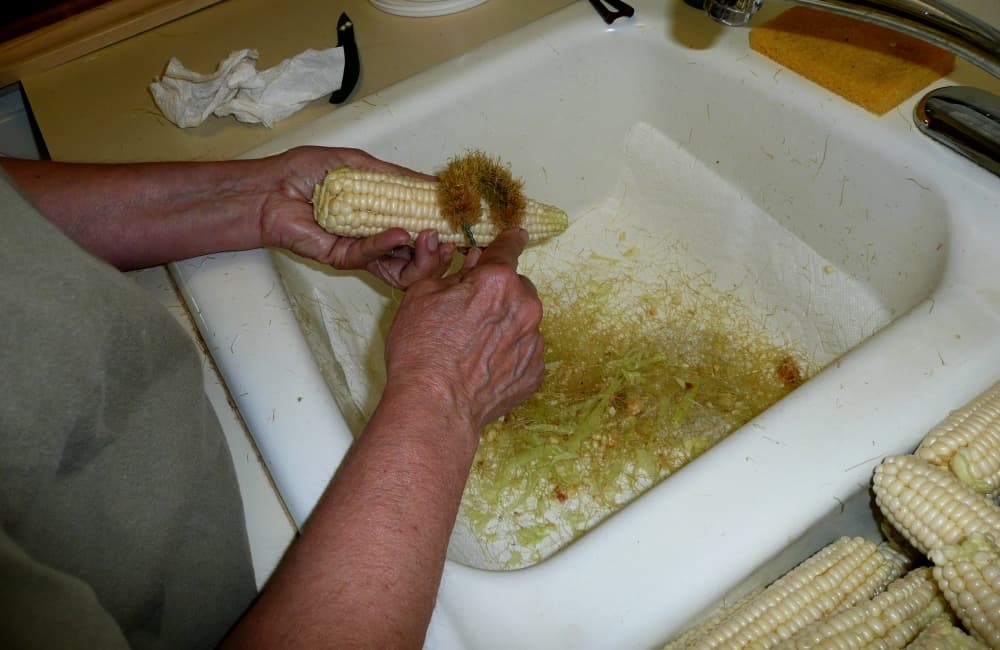
If you asked me to make a choice between a fine ear of Silver Queen corn picked at the peak of perfection, shucked, silked, and plunged into boiling water for just the right amount of time (not for long, and in truth eating it raw is delicious—if you doubt me make up a fine cornbread salad and use raw corn as one of the ingredients) and creamed corn, I’d be mightily tested to come to a decision. Both define the word scrumptious. Preparing creamed corn is almost as simple as corn on the cob, with the only real difference being that you have to cut or grate it from the cob. Once you have done this (it you cut with a knife be sure to follow with the back of the knife to push the heart of each kernel away from the cob), add enough whipping cream or half-and-half (yep, it’s caloric, but we aren’t running a slimness sweepstakes at the moment) to make a smooth, thick, and slightly liquid bowl full of corn. Add salt and freshly ground black pepper and stir that in. Put the mixture in a large skillet, stir as it heat to just the point of bubbling, and remove. If you wish add a few pats of butter atop the creamed corn after you put it in a serving bowl. As that melts it’s time to get down to some serious eating business.
FRIED CORN
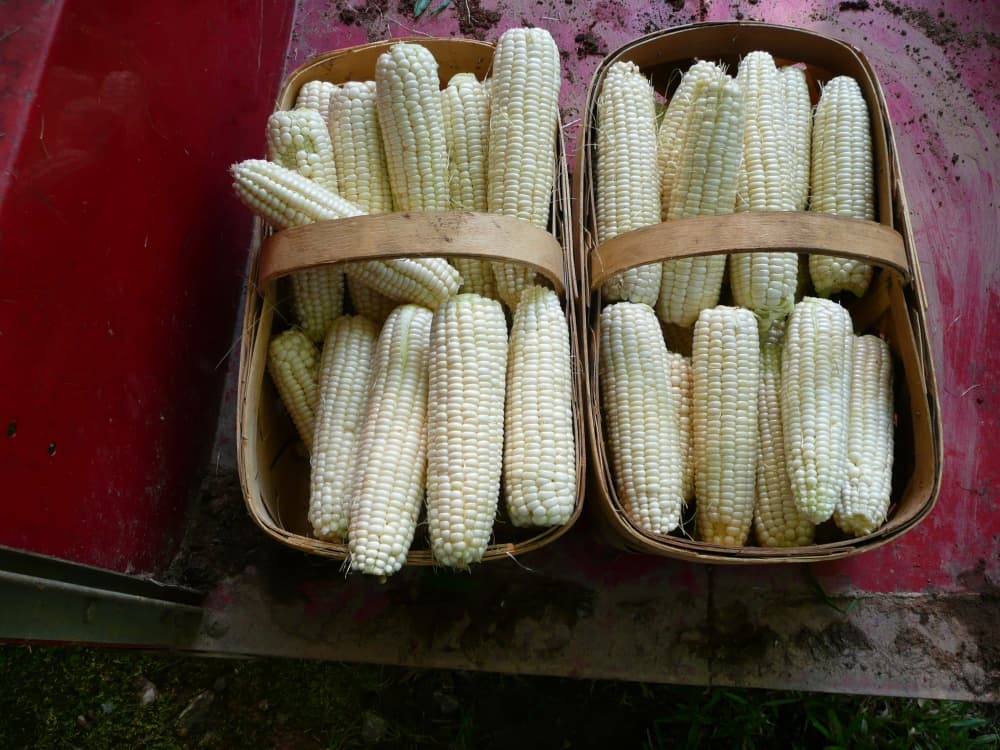
Fresh corn on the cob is difficult to beat when a perfectly boiled ear is slathered with butter, adorned with a bit of salt and pepper, and eaten fresh from the pot. Yet corn didn’t stay in the roasting ear stage full of milk and sugar for long. It would soon begin to turn to starch. Yet far from meaning potential enjoyment had come and gone all too quickly, this just opened the door for other types of preparation treat. Foremost among these was what I’ve always known as fried corn. It was cooked in a frying pan with some grease save from bacon frying or perhaps from a couple of pieces of streaked meat. Incidentally, that streaked meat, which would have been set aside, made a mighty tasty partner for the results once a big bowl of fried corn was served.
GRITTED BREAD
Then there’s gritted bread—not really bread at all but more of a fried fritter. Like fried and creamed corn, it required cutting from the cob. Once again though, that somewhat arduous process is worth every bit of the effort. Gritted bread, which I haven’t had in many a year, uses corn that if still soft enough to cut from the cob but has already advance a bit beyond the fried corn stage. Just cut the corn from the cob (it will be moist but not juicy), mix with some flour, salt, a small pinch of baking soda, some grease from bacon or streaked meat,, and cook in a cast-iron pan. It can be baked in the oven or cooked atop the stove. Either way it is delicious. When hot and adorned with a pat of butter gritted bread is a true treat, while cold gritted bread graces a glass of sweet milk or buttermilk in a heavenly fashion in the same fashion as leftover cornbread.
CRACKLIN’ CORNBREAD
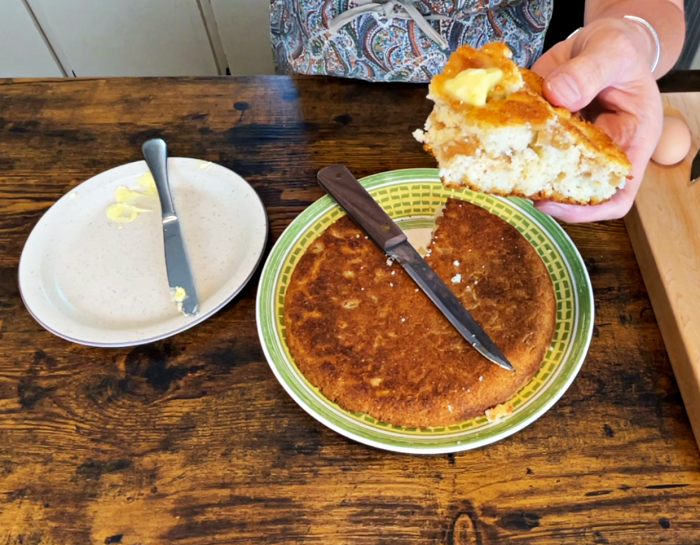
Speaking of cornbread, in the bygone days of my youth would, just weeks down the road at this time of year, this staple of mountain diet would take on a new and delightfully different dimension, This came in the aftermath of November’s annual hog killing. A scrumptious side benefit of working up hogs and rendering the lard was cracklings. These tidbits skimmed from the rendering process were canned in quart jars with the lard being used to cover and seal them. Cornbread laced with a bunch of tasty cracklings, while doubtless a cholesterol nightmare, was in a culinary sense the lace on a bride’s pajamas. Here’s a recipe for it (if you can find decent cracklings).
1 pint cracklin’s
1 quart slow ground cornmeal
1 pint buttermilk
1 teaspoon baking soda
Generous pinch of salt
Use a rolling pin to crush the cracklin’s into small bits. Make a dough of cornmeal, buttermilk, baking soda, and salt. Heat the cracklin’s in a frying pan and then stir them into the dough, which should be fairly stiff. Shape into small cakes or bake the entire batch of batter in a well-greased pan. TIP: Heat the cracklin’s in the pan you plan to use to bake the bread and it will be nicely greased. Cook at 375 degrees until golden brown.
**********
That’s it for this month. I think I’ll go fix me an ear of corn to be enjoyed along with a sort of venison gruel featuring deer meat along with carrots and barley!