MUSINGS ON AND MEMORIES OF MARCH:
A MONTH OF MYSTERY
March as I have known it as a boy and man, living for lengthy periods of time in two states, North Carolina and South Carolina, and for shorter stretches of a few years in two other states, Virginia and Tennessee, has always seemed a bit elusive in comparison with any other month. It never bangs on the front door or shows any great consistency in terms of weather. That’s all too typical of March and why I term it something of a month of mystery. At times it can be somewhat shy, hinting at better days to come with a nod to warmth and the occasional morning when you know the truth of English poet William Wordsworth’s lines: “Bliss it was in that dawn to be alive, but to be young was very heaven.” Generally speaking though, bliss will have to wait a few weeks, and for yours truly the grand days of being young are a distant memory.
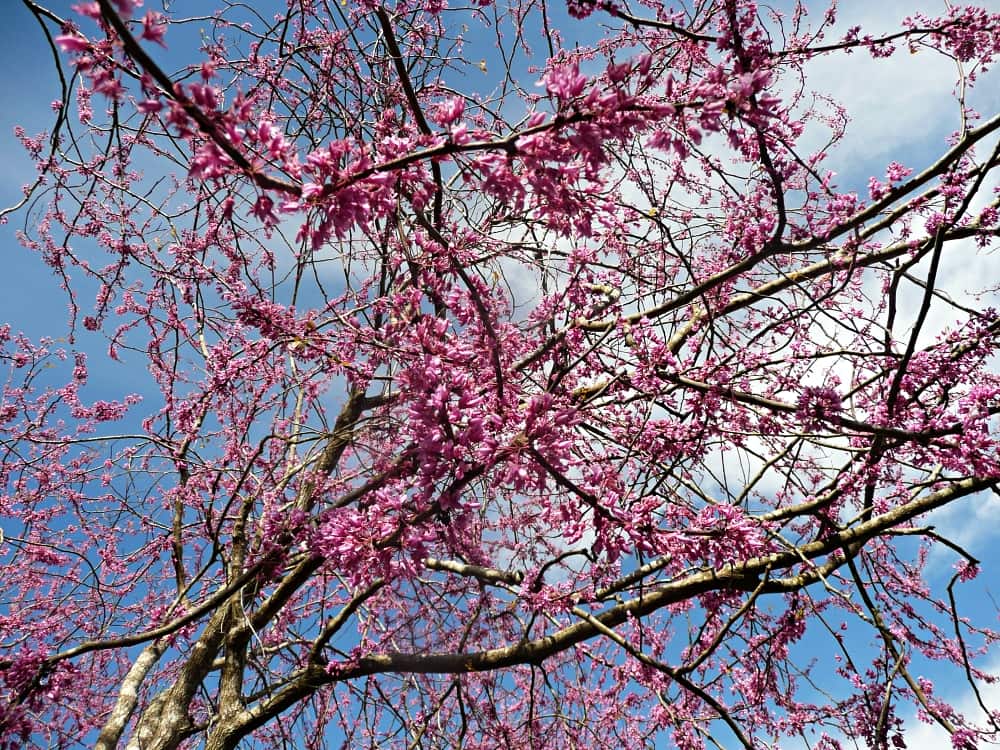
January and February are honest months—harsh; cold; and sometimes cruel, grim, and grey. March, on the other hand, revels in being unpredictable. The weather can change remarkably over the course of two or three days. For example, one day last week temperatures here threatened the 90 degree mark; two days later I awakened to 32 degrees and a substantial frost. As I’m wrapping this up with some proofreading it’s pouring rain with temperatures predicted to plunge well below freezing tonight. Just when everything seems glorious, sunny and sublime one day, with hints of greenery beginning to show on trees and redbuds sporting their spring finery, along comes a bitter cold snap (sometimes called Redbud Winter) a couple of days later. March snow is by no means unheard of in this part of the world and flurries are predicted later today just a 100 miles to the west in the North Carolina mountains.
Yet take a walk on one of those bright days March always seems to have, although they are invariably rationed out, and you’ll see signs of coming spring while savoring earth’s reawakening. Creek water sparkles in the sun as clear as newly cleaned glass, with riffles chuckling softly and long runs, dark and thoughtful, beckoning the fisherman. All around the woods whisper secrets, and it’s a grand time to wander off trail to call back yesteryear. Members of my family have often done just that, making a country-mile long hike from the falls on Juney Whank Branch in the Great Smoky Mountains National Park to the old homestead that was the most powerful of Dad’s memories of boyhood and a place he cherished from that point onward for all his 101 years.
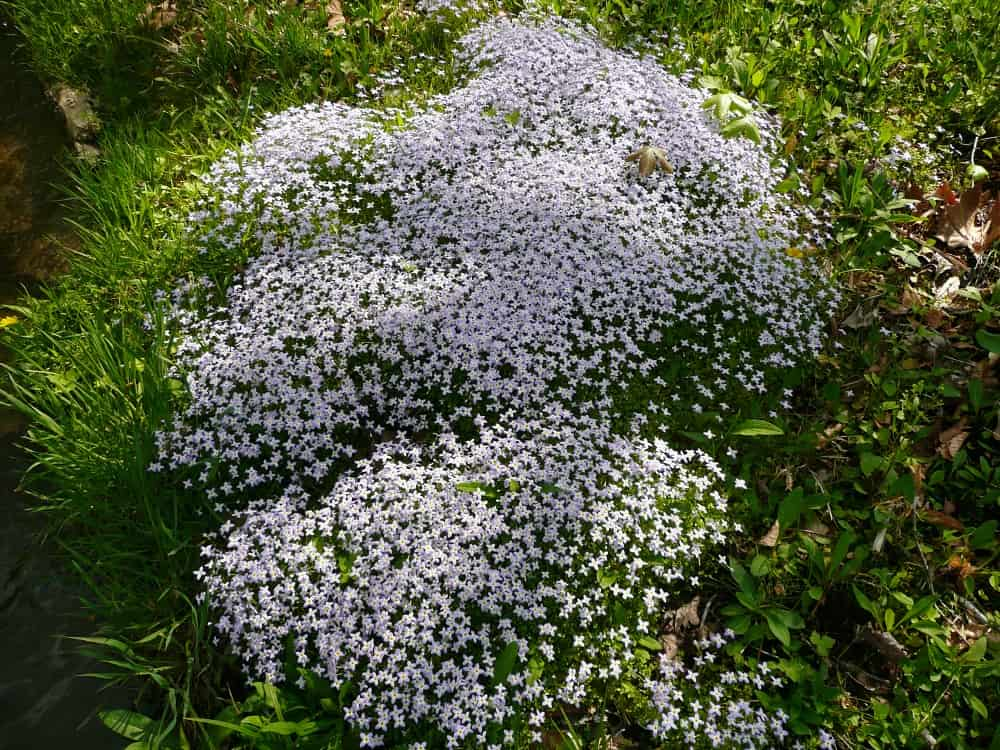
En route on your personal wayfaring path, wherever you might be in the South, it’s likely you’ll notice early wildflowers such as dainty bluets and delightful violets. Maybe your footsteps will wander by old home places where the knowing eye will spot hints of pink on japonica buds and swelling gold of yellowbells. Or if you are wandering in a national forest, chances are pretty good there will be some daffodils reminding you that someone once called the spot home and took simple, yet lasting, steps to give it brightness and beauty. There’s no better time of year for an off path bit of woodland wandering than March.
March isn’t just a feast for the eyes. At times the earth itself seems to whisper secrets with its voice being carried on gentle breezes. Of course the month can also roar, with whistling, biting winds bearing the sound of a runaway locomotive while the chill cuts to the bone and reminds one that winter’s not quite gone.
There’s a certain loneliness to the month too, but that’s not all bad. At times it’s good to be alone. You aren’t lonesome, you’re just lonely, and the contemplative soul knows there’s a difference. Beauty is often best enjoyed without an audience—maybe in the form of a spectacular sunset after the passage of a strong cold front or a sunrise where you can see fog shrouding distant mountains. When you are by yourself there’s no need to rush, no reason to worry or hurry—a body can just saunter along, savoring the world about you while doing so.
March doesn’t make a spectacle of itself. Sure, there’s the flame of swelling maple buds and the muted, wonderfully varied greens of a land graced by the under garments of its reawakening. Towards the end of the month, as days lengthen and the sun begins to strengthen, you can almost feel the earth stretching as it shakes off its winter of sleep, yawning and getting rid of winter’s torpor while transitioning to another cycle of greening-up time. The mystique and at times a ration of meanness are there. But there’s also the quiet, sure certainty that winter’s grip is loosening, that the good earth endures, and that once more the land will keep its tryst with ever-returning spring.
*********************************************************************************
As a sort of supplement to the material above, I thought I’d share some memories of March when I was a boy, wondering as I do so if you have any similar ones. Hopefully that is the case.
*”Sledding” on big pieces of cardboard on broom sedge-covered slopes. On a dry day, and March tended to be one of the drier months in the Smokies of my raising, you could attain remarkable speed on these ersatz sleds when hurtling down a steep hillside. The only problem was stopping—no brakes, no method of slowing down other than maybe the ground leveling out, and no steering mechanism. Rides often ended in a briar patch or a ditch, but to kids heedless of scratches and bruises such things weren’t even worth consideration.
*Gathering poke sallet when the first sprouts began to appear towards the end of the month. The first “cash money” I ever earned was through selling a #8 poke (mountain talk for a paper bag, with the #8 referring to size) of poke to my second grade teacher, Mrs. Emily Davis. She paid me a quarter, big money to a small boy in 1949.
*Worrying the dickens out of Mom to let me go barefooted the first day the temperature edged into the 70s. She never did, saying “you’ll catch your death of a cold.” In her book of regulations, and it was wise to obey them unless you had a hankering for a hefty dose of hickory tea, barefoot season didn’t open until May.
*Watching, absolutely enchanted, as a local black man (one of a community of perhaps 100 African-Americans living where I grew up—there aren’t a handful today) plowed our garden and the one of our next-door neighbor and then “harr’d” (harrowed) them. I was fascinated by his control of the mules and the way they reacted to “gee,” “haw,” and “whoa.”
*Playing pickup basketball outside with friends at a hoop Daddy had affixed to a homemade backboard sitting atop a sturdy 4 x 4 post.
*Getting my first exposure to sports on television in 1957 when Daddy’s best buddy, a fellow named Claude Gossett with whom he hunted and fished on a regular basis, got a TV set and somehow managed to connect with a station out of Asheville that carried both the NCAA semi-finals and finals. UNC’s Tar Heels, under Frank McGuire’s tutelage, won both games in triple overtime, first against Michigan State and then against “Wilt the Stilt”-led Kansas. The term “March madness” came much later, but I doubt if the annual hoops hooplah has ever furnished more excitement. I can still name UNC’s starting five today and actually got to watch them perform in person earlier in the 1956-57 season. They traveled to nearby Cullowhee, NC to inaugurate Western Carolina’s new gymnasium. For me, like all of my high school basketball buddies (I’m actually in the Swan High Athletic Hall of Fame because one of the team’s I played on was outstanding, never mind that I did little more than keep the boards of the bench nice and slick because that’s where my behind normally rested), Lenny Rosenbluth, the UNC star and national player of the year, was our hero.
*Planning, with no small degree of angst, just how to go about asking a girl of whom I was exceedingly fond (never mind that she had dumped me as her “steady” a few months earlier for the perfectly good reason I had idiotically proven less than steady in terms of romantic single-mindedness). I managed the campaign by riding home on a bus driven by a classmate to spend the night with him. The girl of my fancy, name of Joyce (and I’ll say no more because I’m sure it would embarrass her to know my wandering mind remembers such things many decades after the fact), accepted. That meant spending the remainder of March and part of April figuring out how I could get enough money on hand to rent a white sport coat and buy an orchid to adorn her prom dress. Add the considerable additional burden of convincing Daddy to let me have the family car for the night and you had all the makings of awkwardness that are so much a part of being a teenager. I can’t resist adding that things have changed a great deal on this front in multiple ways. I don’t think “going steady” is in the vocabulary of today’s teenagers, and I know for sure that having a car to drive is about as common as pig tracks in a hog lot.
*A different kind of teenage planning, wonderfully exciting in its own way but nowhere near as anxiety-laden, came with readying equipment for the upcoming opening day of trout season.
As Mary Hopkin sang in a lovely song from the 1960s (and Archibald Rutledge chose the same title for a book decades before the tune was popular, “Those Were the Days.” They were days to remember and relish, although like most carefree youngsters I thought, to borrow lyrics from the song, “they’d never end.” Then along came that inconvenience known as adulthood, and with it responsibilities, marriage, a child, a job, and yes, an end to innocence. That time of being “young and sure to have our way” vanished like the elusive perfume of honeysuckle carried on a spring breeze. Yet one of the joyous wonders of being old is that reality gives way to recollection, and if you are fortunate, truly blessed, you have sustaining memories comparable to mine. In that sense the days of youthful delight never leave us.
***********************************************************************************
JIM’S DOIN’S
Recent weeks have been fairly productive ones as I did some modest revisions on my upcoming book, “Profiles in Mountain Character,” worked on a number of magazine articles, wrote my weekly newspaper column, and did some thinking about projects I want to undertake in coming months. I plan to have work finished (and the contracts require it) on two upcoming books in the next two or three months, and at that juncture it will be time to settle down in earnest to my long promised biography of Archibald Rutledge. A fair amount of the book is written in a first draft form, but I still have some research to do and plenty more writing as well.
I was pleased, late last month, to get word from a fellow writer, Corky Pugh, that his book, Turkey Hunting Tactic, had been published. I wrote the Introduction for the book, and it’s a dandy, coming from a man who loves the sport and studies it as if he was a Ph. D. candidate honing in on the written and oral examinations preceding work on his dissertation. He’s a thinking turkey hunter—to me that’s one requisite for anyone wishing to acquire a decent mastery of the sport—and he knows how to share his thinking and experiences. If you want to know more about the book or acquire a copy, visit turkeyhuntingtactics.com and check it out.
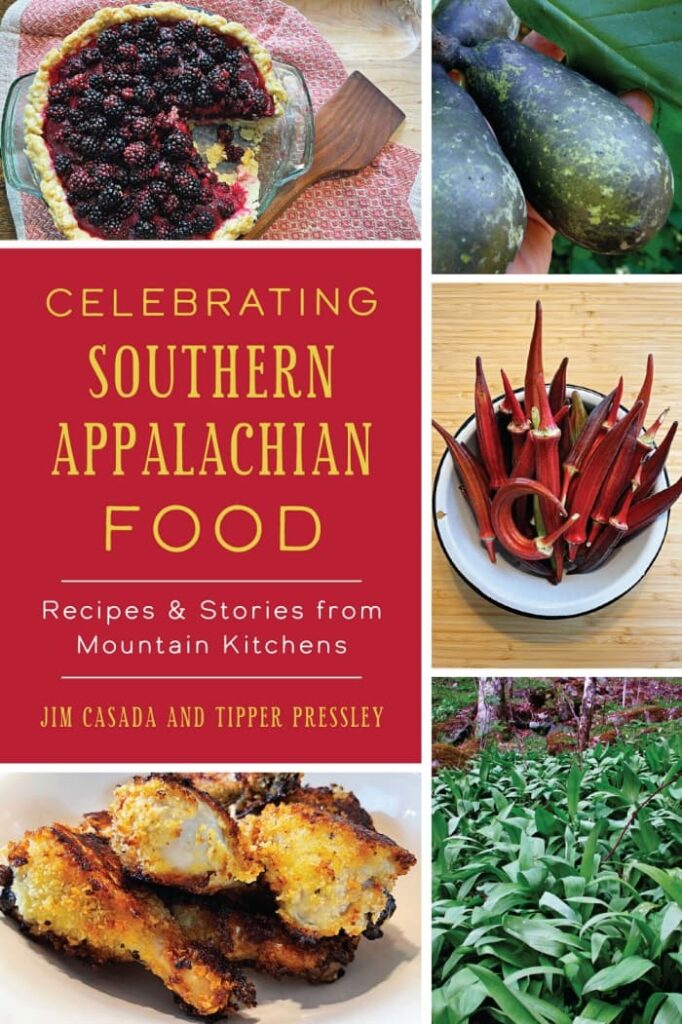
A few days ago I finished cobbling together the first draft of a book bringing together some of old-time mountain writer John Parris’s food columns along with a batch of recipes linked to the foodlore covered in those columns. Tipper Pressley, my wondrous webmaster who enables me to get this newsletter to your computer each month, will be helping me out with photography, a recipe or two, and her considerable wisdom as a mountain cook. She’s the woman who was my co-author on Celebrating Southern Appalachian Food, and she has both a daily blog and a Youtube vlog you can enjoy (just Google Blind Pig & the Acorn to get to these delightful and free offerings of mountain wisdom and ways).

Some of the recipes below come from our book while others are found in another work of mine, Fishing for Chickens: A Smokies Food Memoir. Both books are available through my website, www.jimcasadaoutdoors.com.
My recent publications, in addition to my weekly columns in the Smoky Mountain Times, include “Lt. Col. J. H. Patterson: A Life on the Lunatic Express,” Sporting Classics, February, 2026, pp. 36-39, 94-96; ”Elgin Gates: A Legendary Big Game Hunter,” “Sporting Classics Daily,” March 10, 2026; and “March Madness: Musings on Spring Tonics,” Columbia Metro, March, 2026, pp. 104-08. Beyond that, I’ve wrapped up a few magazine assignments and participated in no small degree of plain piddling. In my world, some of my best thinking gets done while piddling, and if possible it lends itself even more to the delights of reminiscence.
************************************************************************************
RECIPES
In the rural world of yesteryear, at least in the part of the country where I grew up, vitamin-rich green crops were in large measure absent from diet beginning with the first hard frost and thence through a multi-month span of winter until greening-up time arrived. By that point folks, while still passin’ fond of kraut, pickled beans and corn, fruit leathers and sauces from dried fruit, not to mention taters and onions, pumpkins and candy roasters, had a mighty craving for some fresh green food. That meant the first sprouts of a bunch of edible wild plants were not only tasty but provided much-needed doses of vitamins (A and C in particular). The offerings below all focus on nature’s early spring bounty.
SOUR GRASS
A week or so ago I was listening to a morning radio talk show while driving somewhere, and a co-host of the show on WBT out of Charlotte, a woman named Beth Troutman, mentioned having eaten sour grass when she was a kid. No one at the station, not her co-host or support personnel, seemed to have a clue as to what she was talking about, and only after she almost begged for someone to text or call did she finally hear from a listener familiar with the plant. Sometimes known as lemon clover, thanks to having three leafs and a slightly sour or lemony taste, it is an edible plant (leafs, flowers, and seed pods all can be consumed). It also goes by other names such as wood sorrel and three-of-hearts (each individual leaf of the trifoliate plant is shaped like a heart).
As a kid I often munched on it while running around in the early spring. It had a refreshing taste and I had heard Grandpa Joe mention it was “good medicine.” It also had a couple of peculiarities sure to appeal to a kid who was crazy about nature, and in that sense I’m still a kid. As night approaches or even on a day of dark clouds, the leafs of this member of the oxalis family fold up. The seed pods, when almost fully mature, will burst asunder in the same fashion as touch-me-nots (jewel weed). How could an eternally curious youngster fail to like a plant that was edible and had all these “extras?”
When it comes to sour grass as food, give it a try in a mixed wild green salad, or for that matter, put a bit of it in your plate of store-bought greens. You’ll be delighted, and chances are excellent that you’ve got sour grass growing in your yard or somewhere nearby.
POKE SALLET
Gather a mess of tender poke sprouts (they are best when 3 to 5 inches high) and rinse thoroughly to remove any dirt. Place in a pot and bring the water to a rolling boil, then cool to a simmer before pouring the poke sallet and water into a colander to drain. Repeat the process at least once and preferably twice. The reason for doing this is that poke weed is exceptionally rich in Vitamin A, so much so that it can be toxic unless you use this cook-and-drain process to remove some of the vitamin.
Next place the drained poke in a skillet with a bit of melted butter or bacon grease. Heat until piping hot; add salt and black pepper to taste, and serve immediately. Some folks like to garnish with chopped boiled eggs or to break a couple of eggs into the greens when they are added to the skillet and stir until the eggs have cooked.
NOTE: A pone of cornbread or cathead biscuits goes mighty fine with poke sallet.
SAUTEED MORELS
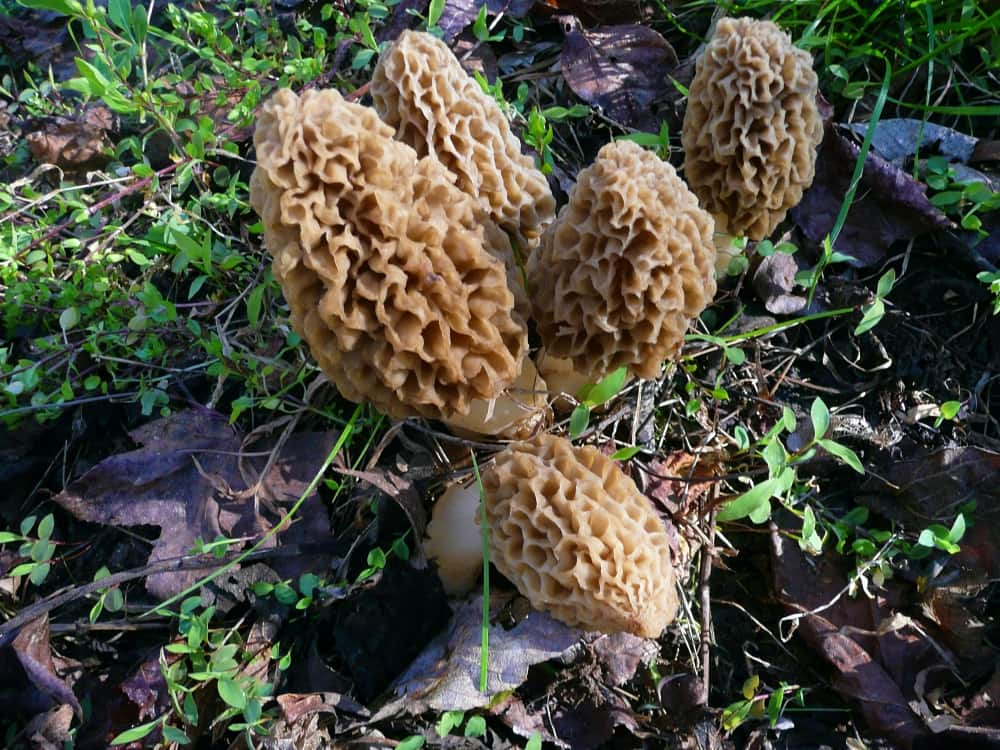
Morel mushrooms are a great delicacy, and when sautéed they retain all their delicate flavor. I have three favorite ways of preparing them in this manner. In each case, soak the mushrooms in salt water and then clean thoroughly. Dab dry with a towel or paper towels and slice in half. It is hard to beat introducing the mushroom pieces to simmering butter in a pan, sautéing until they begin to brown, and eating them right from the pan. Another approach is to beat up a couple of eggs and dip each mushroom piece in the resulting batter before putting in hot butter to cook. A third option is to crumble up saltine crackers, use the same egg dip, but follow with a coating of crushed saltines before putting them in the frying pan. Whatever your choice, it’s food for the gods.
Clean and rinse morels thoroughly after having let them soak in cold water for 15-30 minutes. Inspect carefully because critters like to crawl inside them and there’s always a bit of dirt with which you need to deal. Slice in half lengthwise and then pat dry with towels.
Put a few pats of butter (the real McCoy) in a large frying pan and melt it before adding the sliced morels. Simmer until the morels are cooked. They will shrink quite a bit and, thanks to the fact they hold considerable moisture, you’ll have lots of a juice/butter combination in the pan. You might want to save this flavorful broth to use in a morel soup or chowder (see below) or I like to dip toast points in it.
Eat the morels piping hot as an appetizer or as a side dish to scrambled eggs.
NOTE: Morels are as uncertain as March weather, and they can “pop” out any time from late March until early May, depending on where you live and the arrival of a few warm spring days in any given year. Also, they are about as unpredictable, year to year, as the month of March. That’s why folks in some regions of Appalachia call them “merkles,” which is mountain talk for miracles. For rest assured, when you do find them in abundance you’ve stumbled on a culinary wonder. If you aren’t that blessed, store-bought mushrooms work, but as Grandpa Joe used to say when comparing Chinese chestnuts to the blight-bedeviled American chestnut, “they ain’t the same.”
SAUTEED PURSLANE
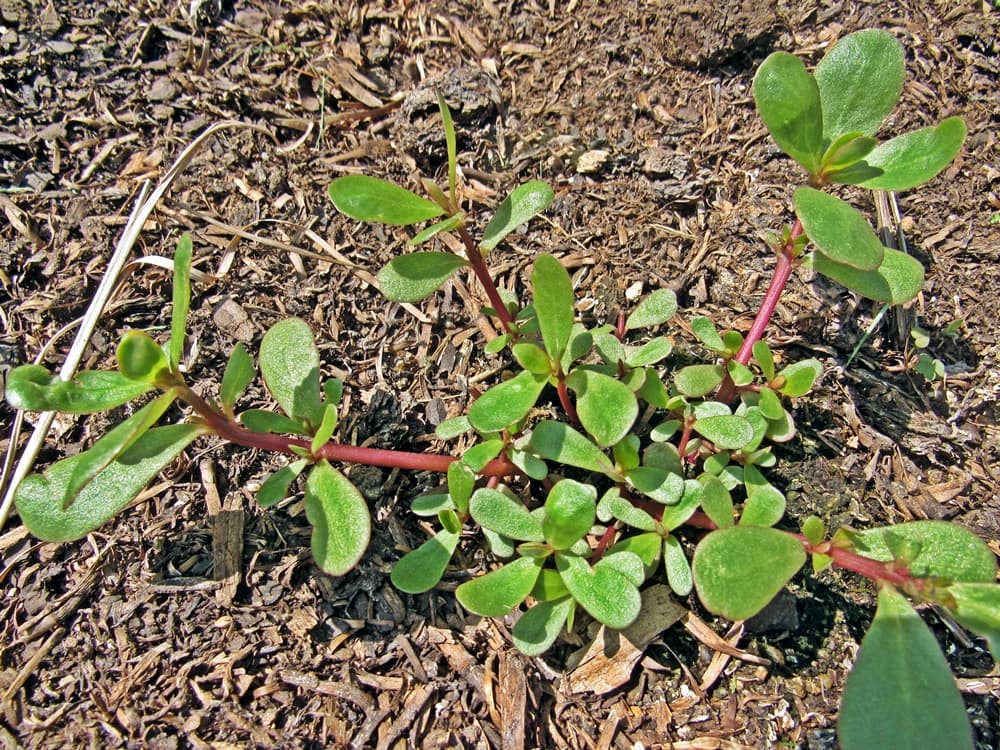
Purslane, often known colloquially as pigweed or hogweed thanks to the way pigs will devour it, is a readily available in most areas. The easiest way to utilize this free, nutritious vegetable which is often mentioned as a super food is to toss the tender, succulent leaves with other greens for a fresh salad. My favorite way to cook it is also simple and easy. Dice up an onion and cook in your favorite oil in a frying pan until it’s just beginning to brown around the edges. Throw in a minced clove of garlic and let cook for a minute. Next add some diced tomato and a handful or two of chopped purslane. Cook for 8 to 10 minutes and serve as a side dish. Other vegetables can be added depending on what you have available or personal preferences. I love to eat mine with cornbread, and it’s especially good over rice.
TIP: If you pick wild purslane away from home (it readily grows in home gardens) be sure it isn’t in an area that has been sprayed.
NOTE: The stems and flowers, as well as the leaves, are edible.
DANDELION JELLY
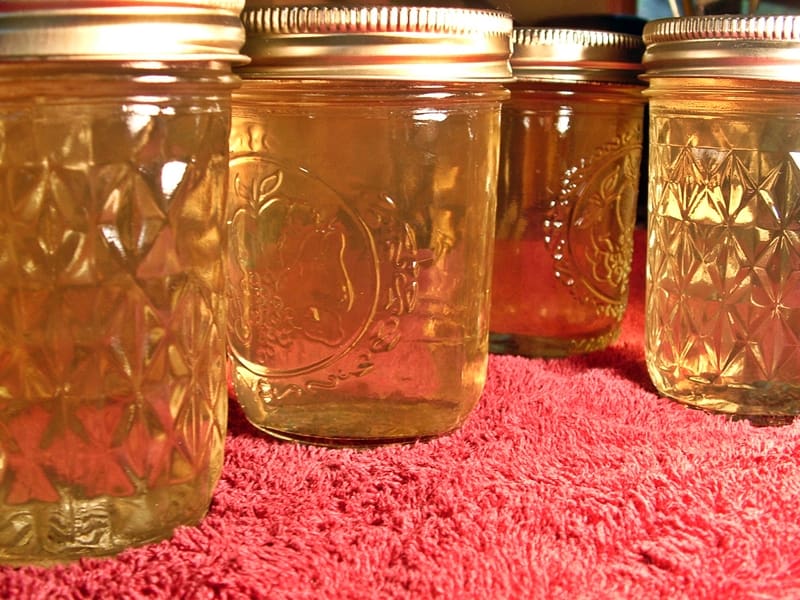
1 quart of dandelion flowers from area that has not been sprayed with chemicals
1 quart of water
1 box of Sure Jell or other type pectin
4 ½ cups of sugar
Sterilized jars, lids, and rings
Rinse flowers and add to quart of water. Bring to a boil and boil for 3 minutes. Drain flowers from liquid. Using a piece of cheese cloth works well to get the tiny pieces out. Put strained liquid in large pot. I typically end up with 4 cups of liquid after boiling and straining the dandelions. Stir in pectin and let mixture come to a full rolling boil. Once mixture boils add sugar and stir well. Cook mixture until it comes to another full boil. Boil for 1 minute. Quickly ladle hot liquid into sterilized jars and seal.
Tip: If you don’t have quite 4 cups of liquid water or fruit juice may be added to make up the difference.
DANDELION GREENS
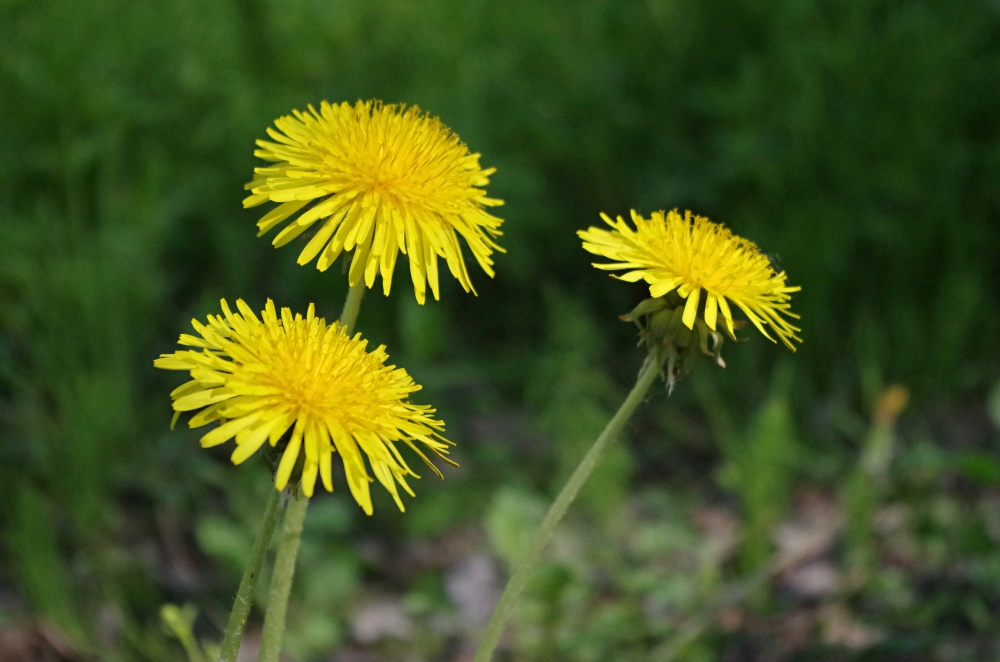
Gather young dandelion leaves in early spring, making sure you known they haven’t been sprayed. Chop off the bottom portion of stems that may be woody or tough. Wash leaves well and pat dry with a clean towel or paper towels. Saute diced onion in bacon grease until tender. Add dandelion greens and cook until wilted—about 4 to 5 minutes.
TIP: Like other greens, when heated while cooking dandelion leaves wilt down to significantly less space, so remember that when judging the amount needed for a meal.
VIOLET JELLY
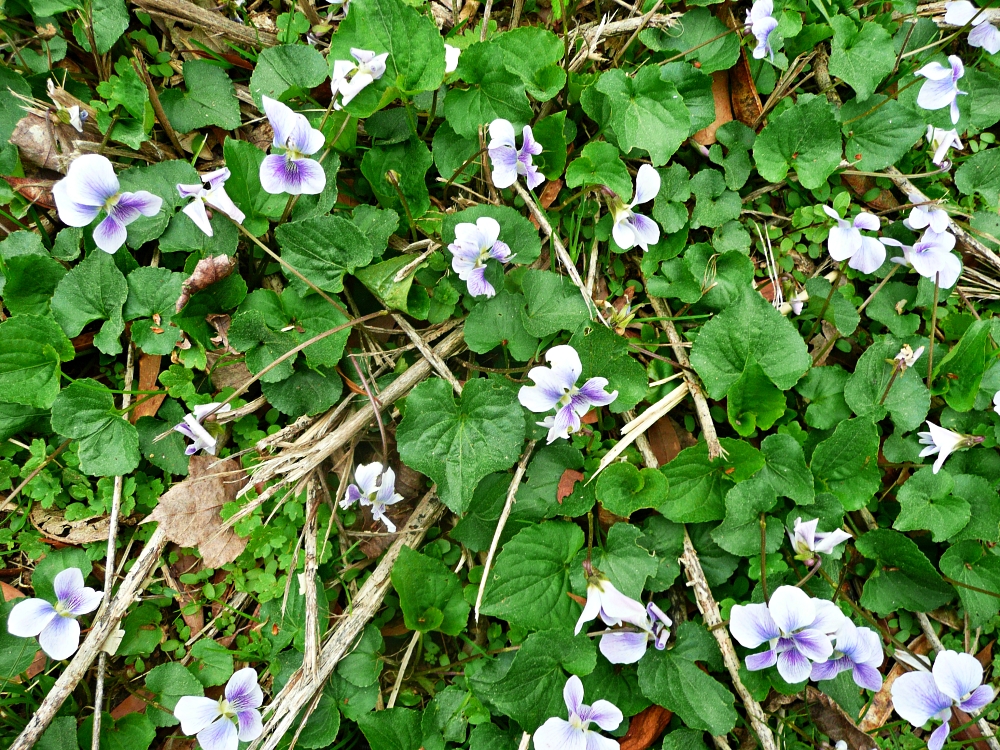
2 cups of violet blooms from area that has not been sprayed with chemicals
Water
1 box of Sure Jel or other type pectin
4 cups of sugar
Juice of one lemon
Sterilized jars, lids, and rings
Rinse blooms. Place in a glass bowl and pour 2 cups of boiling water over them. Cover bowl with plate and allow to sit on counter overnight. Drain violet blooms from liquid. Place violet juice, pectin, lemon juice in large sauce pot. Bring mixture to a boil. Once mixture boils add sugar and stir well. Cook until it comes to another full boil. Boil for 1 minute. Quickly ladle hot liquid into sterilized jars and seal.
Tip: If you don’t have quite 4 cups of liquid water or fruit juice may be added to make up the difference.
BUTTERED SPRING GREENS
4 cups any type of wild spring greens (lamb’s quarters, creasy greens, etc.)
2 tablespoons butter or margarine
Salt and pepper to taste
Hard-boiled egg, bacon bits, green onions and/or vinegar for seasoning
Sauté the greens in melted butter in a skillet under tender. Top with egg, bacon, green onions, and/or vinegar and serve immediately.
WATERCRESS SALAD WITH PARMESAN MUSTARD DRESSING
6 to 8 cups fresh watercress
½ cup good quality mayonnaise
¼ cup milk
¼ cup freshly grated Parmesan cheese
2 tablespoons Dijonnaise cream mustard blend
2 tablespoons fresh lemon juice
¼ teaspoon freshly ground pepper
Wash the watercress and trim away largest stems. Whisk together the remaining ingredients in a small bowl. Toss the greens with the resulting dressing. Mountain folks in yesteryear would not have had access to Parmesan cheese and Dijon mustard, but these two ingredients add zest and are a grand complement to the slightly peppery taste of watercress.