AN APRIL APPEAL
I’ve been offering this newsletter free for almost two decades. While it probably generates a bit of extra income for me in the form of book sales, should I do a cost/benefit analysis I have no doubt whatsoever that the results would reveal mighty paltry returns for the time spent in writing it; payment to my great webmaster, Tipper Pressley (and that amount isn’t what it should be); and the time spent in getting everything together each month. Mind you, I’m not complaining, and rest assured each time I receive an e-mail thanking me for some aspect of coverage or expressing appreciation for the way I’ve resurrected someone’s memory, I get mighty fine payment “in kind.”
This month though, I’m going to ask for donations. Doing so runs contrary to pretty much every fiber of my grain. I have always had a dread, one approaching what some pointy-headed psychologist likely would diagnose as a personality disorder, of asking anyone for money. I’m almost constitutionally incapable of doing so. Decades ago, when my daughter was a kid needing help in some fundraiser or the other or when my late wife allowed herself to be inveigled into serving as the neighborhood ambassador for some worthy cause like the March of Dimes or American Cancer Society, I would actually dig deeper in my own pockets rather than making phone calls or knocking on doors.
Maybe it all goes back to a traumatic experience in my early years in school. In that era there was always some type of class fundraiser going on. Seldom did a month pass when we weren’t given some pitch, to take home to our parents, for a little bit of money. Usually that resulted (and remember I grew up in an impoverished region of Appalachia where not only my family but virtually everyone had little in the way of what Grandpa Joe always called “cash money”) in parents sending their offspring back to school with a nickel or dime for whatever the need of the moment might be.
On one such occasion, however, I was seized by the talons of grandiosity, or as a local might have put it, a “mighty bad case of the big britches.” When the teacher announced the fundraiser and said she would welcome pledges right then and there, I spoke up and said: “My Daddy will give five dollars.” The teacher smiled and said something about that being really generous, and then said maybe I better talk it over with my parents to be sure. In my family five dollars was a significant sum of money, and for some context I’ll simply mention that the loan for the house I grew up in was for $2500, with Mom and Dad having somehow managed to cobble down a 10 percent down payment. The monthly amount they paid was $25, and in one singularly misguided opening of my pie hole I had committed 20 percent of that amount.
When I “informed” Daddy of my commitment I think it fair to say he had something of a hissy fit that mainly took the form of an extended lesson in financial realities that really lay beyond a small boy’s comprehension. To his great credit, and this was something of the measure of the man who was my father, he sent me to school the next day with a five-dollar bill. I might also note that the yellowbell bush growing alongside the west face of the house was short one of its sturdiest shoots and the back of my legs looked like I’d had a losing round in a wrestling bout with poison ivy. Suffice it to say I made no further commitments of that sort. It might also be noted that over the ensuing decades Daddy got back ample return on that “investment.” He absolutely delighted, once I reached adulthood and happened to be present when he had an audience, in retailing that singularly ill-advised moment of youthful exuberance. Maybe, just maybe, that’s why I hate asking for money.
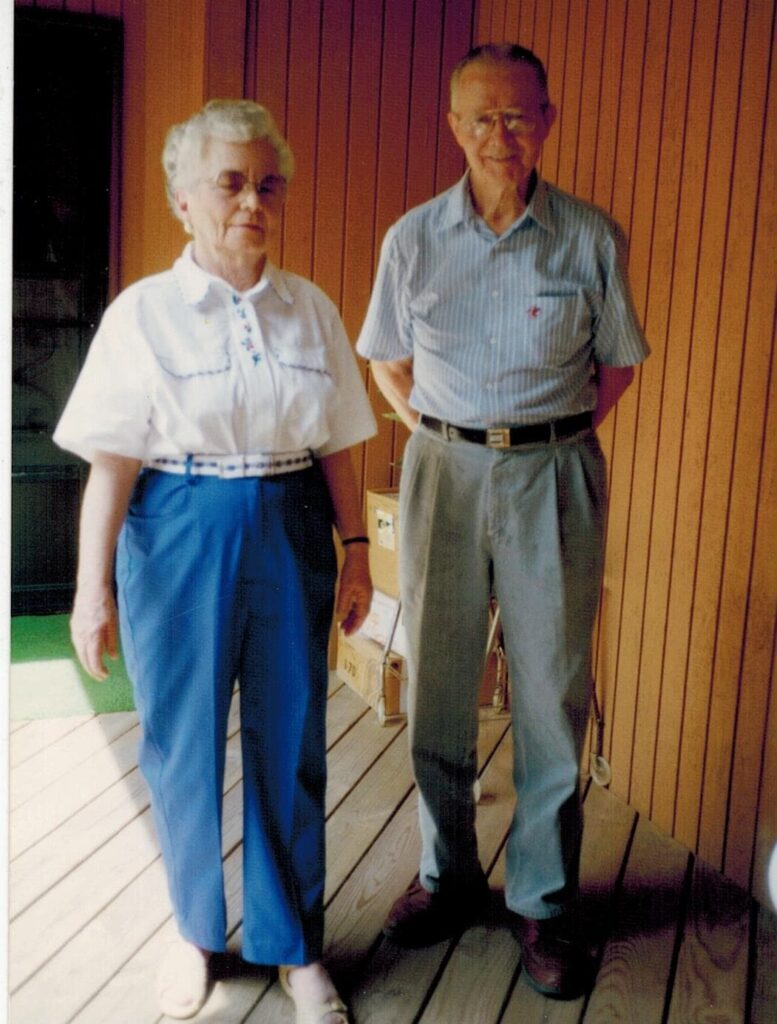
Anna Lou and Commodore Casada
Yet with all of that by way of background, I’m going to do precisely that and offer an explanatory tale. Eighty-five years ago in the early portion of another April, Momma and Daddy “slipped away” to South Carolina to get married. No one in their families knew anything about it until after the fact, and with a simple civil ceremony it was done. Mind you, they weren’t two teenagers caught up in the moment or an excess of hormones. Daddy was 32 years of age and Momma was 27. They had been young adults in the heart of the Great Depression, knew firsthand the realities of hard times then, and had grown up in circumstances of real economic difficulty. Just less than a year later I was born, the first of three children, and for almost all of my youth Momma was a mother of the stay-at-home variety.
Yet at the time my parents married, thanks to nothing more than sheer gumption and determination, she had acquired some secretarial type skills and actually had a position in a neighboring county that had her earning more than Daddy. Moreover, not only was she anything but a stranger to hard work, most of her life prior to marriage had been characterized by truly hard times. Yet her joy in all life’s variety and vicissitudes was endless. Adjectives aplenty come to mind when thinking about her outlook, but none is more fitting that the word merry. She always had a sparkle in her eyes, breathless excitement in her being for even the most ordinary of undertakings, and a constant joie de vivre. She was merriment personified.
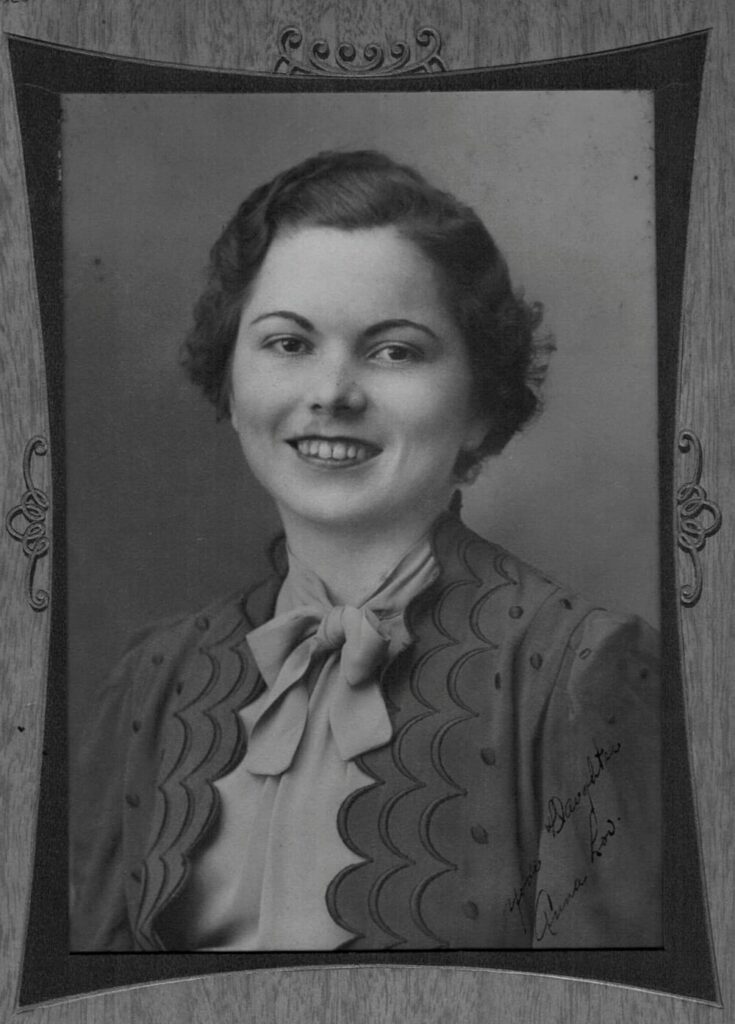
Anna Lou Moore Casada
Momma had a troubled childhood. Born in the lovely high country of North Carolina, she spent most of her youth far from her native heath. Her mother died when she was just beyond infancy, and her father apparently decided it would be best if relatives raised Mom. Her adoptive parents moved frequently, and it was always my impression that the resulting instability affected her a great deal. Although Momma never said much about it, and certainly the care and devotion she lavished on her adoptive parents in their later years would have suggested otherwise, clearly warmth and love were scarce commodities in her childhood.
Certainly once she was married and settled in a home stability was something she cherished. My father loved to relate the story of how, shortly after they married and bought the home that is still in the family, she told him: “I never want to move again.” Until the final days of her life, when Parkinson’s disease and dementia necessitated her residence in a nursing home, her desire was fulfilled. Through all those years of motherhood, a grandmother of five who got to be the kid she never was whenever one or more of those grandyoung’uns was around, there were constants—love of family, devotion to church and community, and somehow it seemed that sunshine was always her partner.
For present purposes though, it is another, strikingly different thread running through the fabric of her happy adulthood I want to mention. That was Momma’s love of reading, learning, and books. I’m not sure when awareness of her passion for the printed word first struck me, but there are several examples of it that reside as cherished heirlooms in the museum of my memory. The first, and the one of significance for this newsletter, came when I somehow managed to forget how to read over the summer between the first grade and second grade. Perhaps that suggests that my grey matter then and now pretty much equates to that found in a cuckoo clock, but at the time one thing was certain. Mom was mortified, and from that point forward she went to considerable lengths to make sure that not only did I retain knowledge of how to read but that plenty of reading material was always ready at hand.
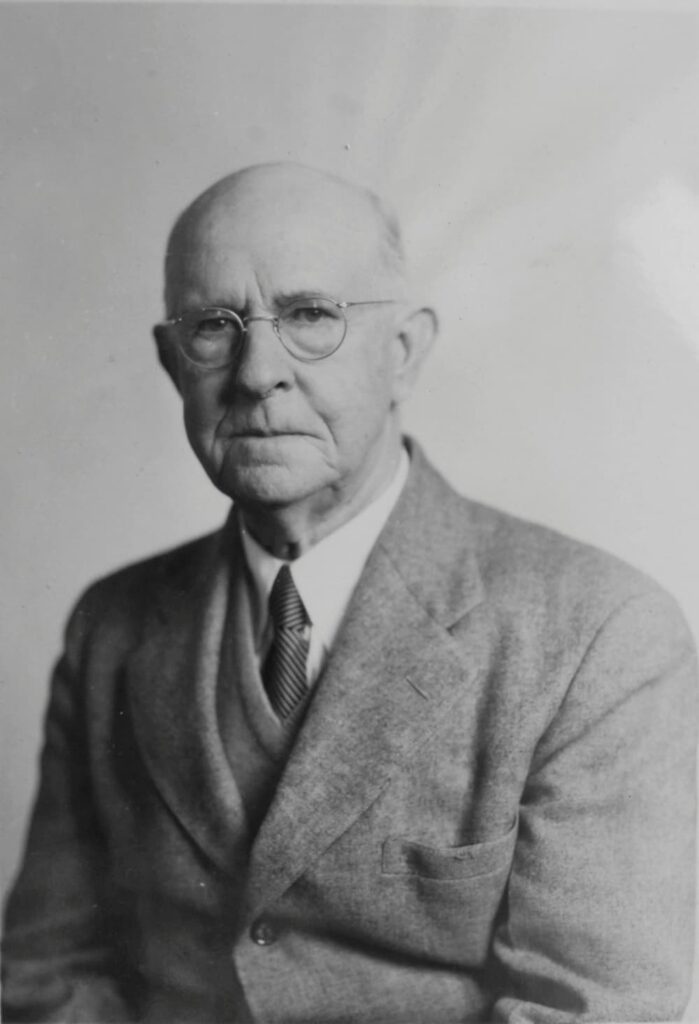
Stanley Black
Ours was not a home of many books for the simple reason they constituted an unaffordable luxury. Mom and Dad subscribed to the daily newspaper serving the area and to two magazines—Reader’s Digest and Saturday Evening Post. But—and it was a big BUT—there was the local public library. Founded by and named for Marianna Black with initial patrons offered choices from a decidedly sparse collection “housed” in three large suitcases, the collection grew rapidly in the immediate post-Depression era and right through the 1940s. Hours for readers expanded right along with the holdings, and by the end of World War II or just afterward the library had moved from suitcases to a portion of a community building constructed by local Civilian Conservation Corps workers.
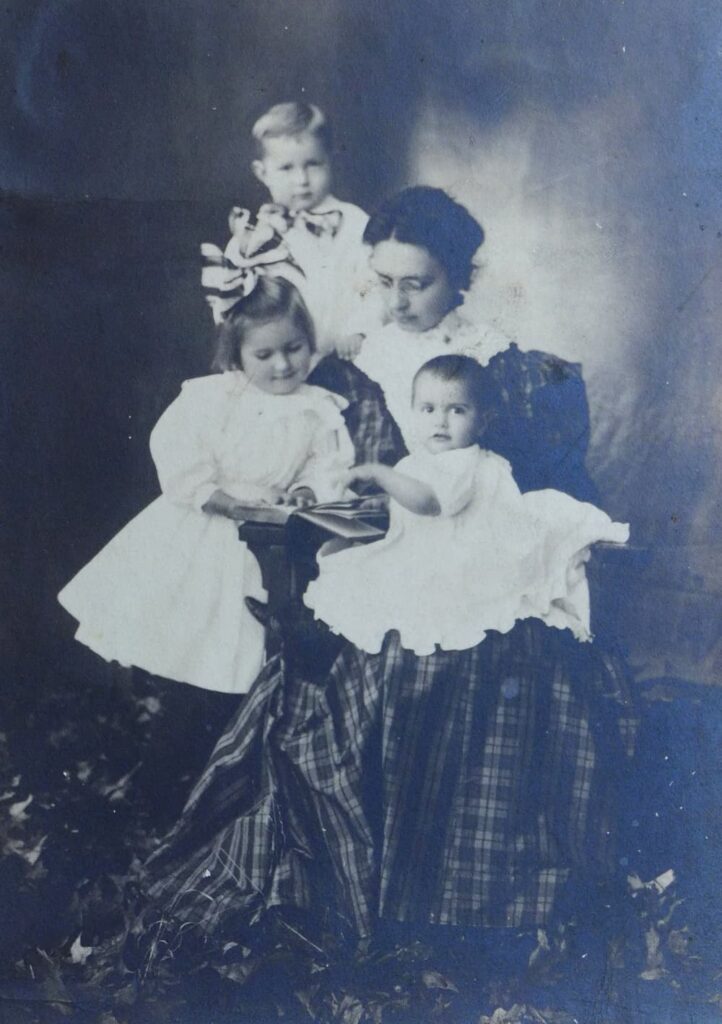
Marianna with Ellen, Stanley, and Louise
All of that was a bonanza for Mom, for me (the library was within walking distance of our home and not 30 steps off the sidewalk I trod daily going to and from school), and for the entire local community. Additionally, there was a special personal aspect to this generally fortuitous situation. Marianna Black and her husband, Stanley, a lawyer and president of a local bank that managed to weather the hard times of the 1930s although another local bank and many in the area failed, were our next-door neighbors. Frugal on a personal level to the point that their daily breakfast consisted of toast and egg (half a piece of toast and half an egg each!), they were wonderfully generous to their church, the community, and numerous civic and philanthropic organizations.
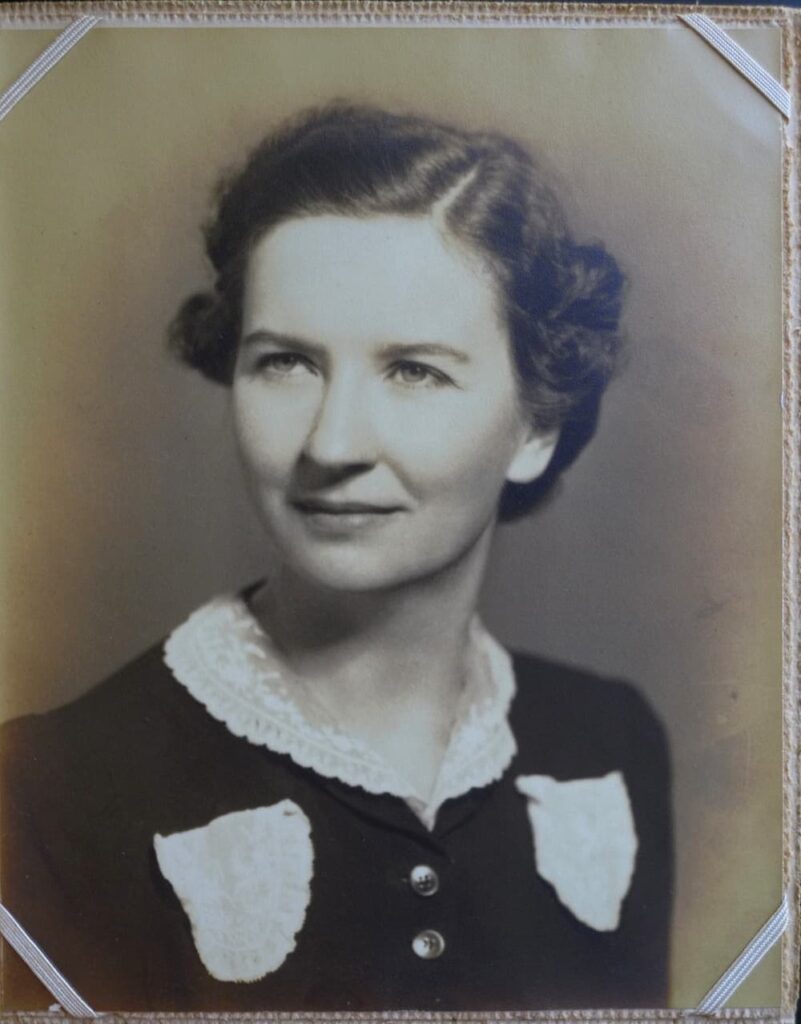
Dr. Ellen Black Winston
The pair left the little mountain community they adopted as their home and the place they raised four children far better for their presence, never mind that they were initially viewed as “outlanders” with all the considerable xenophobia characteristic of mountain people of Scots-Irish descent. Their children and grandchildren pursued markedly successful careers, with one daughter, Ellen, becoming the first U. S. Commissioner of Welfare under Presidents Kennedy and Johnson, a grandson failing to win a Nobel Prize in Economics only because he died mere months before the selection (his two colleagues in the achievement were recognized), and another grandson becoming a Wall Street banker. Of all the couple meant to the local community, the Marianna Black Library is the most enduring and important. For close to a century it has been a place of refuge from daily cares and a source of a most meaningful way of cultivating the mind.
By the time I reached high school, making up for any ground I initially lost by forgetting how to read, devouring books was a part of my persona. I had read and re-read every book in the collection dealing with the outdoors in any way and then branched out, with some helpful guidance from a couple of great teachers who were also inveterate readers, into mysteries, adventure novels by Zane Grey and others, short stories by Jack London and O. Henry, the wondrous works of Mark Twain, and biographies. With one glaring exception, Momma encouraged me every step of the way.
That blot on my literary escutcheon came when I somehow managed to check out a copy of Grace Metalious’ novel, Peyton Place. By today’s often sordid standards it’s pretty mild material, but it caused a sensation and scandal when first published in 1956. Suffice it to say that memory of the chewing out I got upon Mom discovering forbidden literary fruit in my hands lingers today in something other than pleasant fashion.
My literary explorations into forbidden territory notwithstanding, the Marianna Black Library had a wondrous role in shaping my boyhood, and thanks to one of those delightful bits of serendipity life sometimes throws our way, that close linkage continued. Once my siblings and I were grown and out on our own, Mom, ever a woman with an inspiring and inspirited work ethic, found full-time employment as the librarian at Marianna Black Library. She had little to no formal training, other than possessing typing and other secretarial skills, for the position. What she did have was a deep love for books and reading along with a winning way with people. The latter skill was especially on display when it came to interaction with youth, and even today, over a quarter century since her death and appreciably longer since she retired, someone will occasionally share a memory of how gracious she was to them in guiding their early footsteps along the path of reading enjoyment.
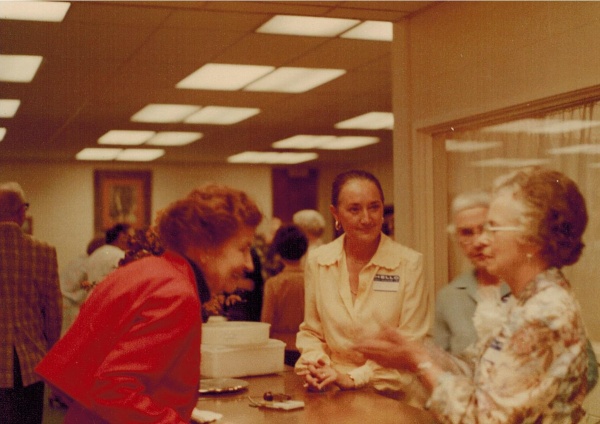
Momma is on the right (floral blouse and corsage) and the woman on the left she’s talking to is Dr. Ellen Black Winston, noted daughter of Marianna and Stanley Black.
Towards the end of her tenure of almost two decades as librarian, Momma oversaw the transition of the collection, which had grown exponentially in both book numbers and patrons reading those books, to a new facility. Now that facility has far outgrown its space, and thanks to the sort of public/private cooperation that is all too rare today, a major expansion is well under way. That brings us, after the various side trips down rabbit holes that seem to be a specialty of mine, to the real thrust of this month’s newsletter.
One feature of the new facility will be special rooms dedicated to specific purposes. Provided they pledged support had a specified level, individuals or families interested in such matters have had the opportunity to choose naming rights for those rooms. In my case that led, after plenty of family interaction and discussion, to a far deeper financial plunge than my extended family (brother, sister-in-law, sister, three nephews, a niece, my daughter and granddaughter) had ever made. Moreover, some of our friends, many of whom knew Mom and Dad but others simply drawn to the efforts of a small mountain community and a special project, pledged enough to underwrite the costs of a room dedicated to research in local history and mountain folkways.
The room will be dedicated to the memory of Momma (and Daddy) but I suspect it will end up simply being known as “The Remembering Room.” That’s fine, because the whole thrust of what we want to transpire is for folks to remember the mountain past along with having, ready at hand, materials to research that world we have already largely lost. Hopefully the room and the materials it holds will stem that loss of time, place, culture, and appreciation for mountain ways. We want them to remain alive, maybe even vivid, in the thoughts of patrons. After all, memories aren’t a memory unless there’s someone to hold and cherish them.
The room will have various types of research materials along with some physical memorabilia offering visible evidence of the creativity and handiwork of both parents—quilts, perhaps a crocheted tablecloth hanging from a wall that represents maybe a thousand hours of Momma’s painstaking work, Cherokee-style baskets Momma learned how to make, and examples of Dad’s wonderful work with wood. Those will be visual, personal links to the past but the essence of what we envision is a fine collection of reference materials enabling those using the room to make deep dives into local history. My brother has accumulated all sorts of pertinent links to official records and other primary sources and will make that available electronically in user friendly links such as his existing mymountainfolks.com. For my part, as a lifelong bibliophile I plan to provide scores if not hundreds of books from my personal collection, some of them quite obscure or rare, dealing with local history. The room will feature all the modern technological tricks to help those using the room.
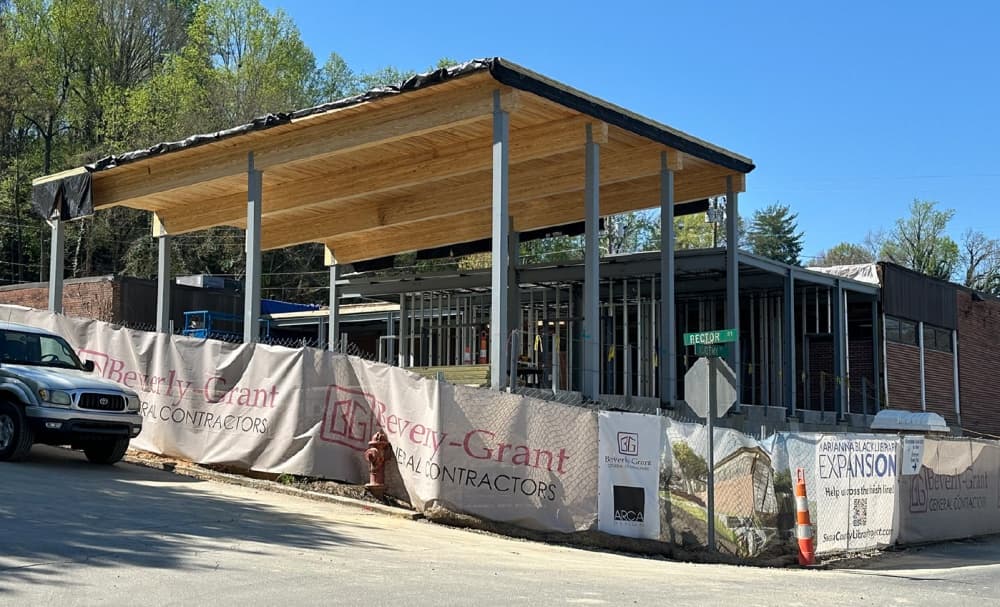
There are a couple of illustrations accompanying this—one gives some idea of where things presently stand and the second is an architect’s rendition of what the final appearance will be. I love the fact that the large open room, a sharp contrast to the almost claustrophobic area where I’ve given talks in the present facility, will enable one to gaze out over the little town and beyond it to the drainage of Deep Creek. Then, as eyes lift ever upward, they are enchanted as ridges climb, lovely footsteps designed by God, ever upwards to the spine of the Appalachians.
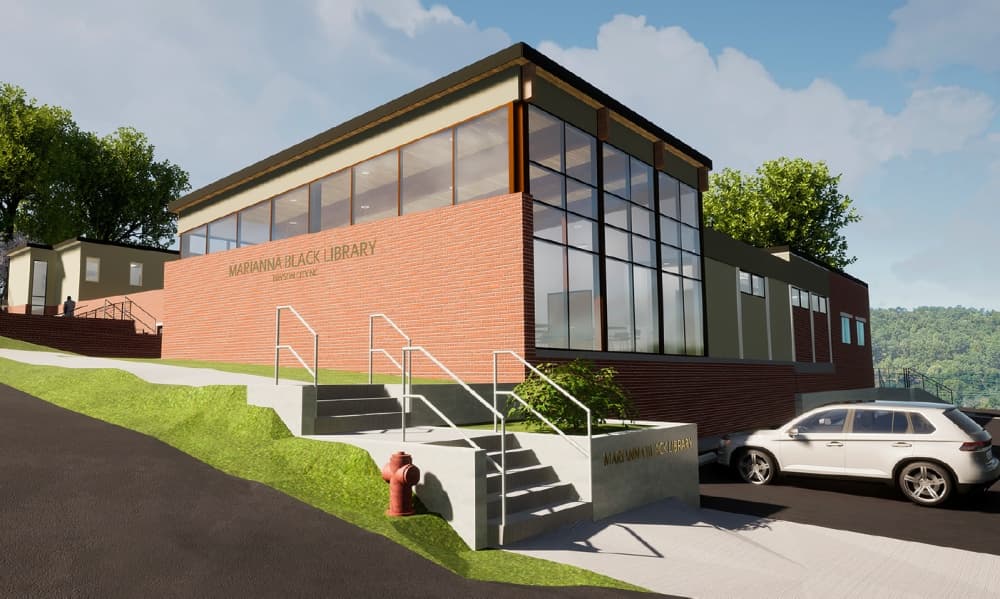
All of this leads up to a personal plea, as I mentioned at the outset, for help. If you can commit a dollar, five dollars, ten dollars, or perhaps appreciably more, any and all donations will be welcome. They mean one more name on the rolls of supporters and, far more significantly in my eyes, an indication that you care about the past and share some of my deep feeling for love of place. You can visit https.//swaincountylibraryproject.com/ to see some details about the project. As for donations, checks can be made to the Marianna Black Library Fund and sent to me c/o Jim Casada, 1250 Yorkdale Drive, Rock Hill, SC 29730 (I’d prefer that only because I want an opportunity to thank each person making a gift with a personal message) but you can also use Venmo or PayPal through the project’s donations page at https.//swaincountylibraryproject.com/donate.
I’ll offer a few final thoughts on this plea. Local folks have stepped up in admirable fashion, particularly when you realize that Swain County is very poor, has a taxable land base of less that 20 percent of its total space (most of the county is embraced by the Great Smoky Mountains National Park, Nantahala National Forest, or is under the waters of Fontana Lake) and fewer than 15,000 residents. I’m delighted to say that among the major donors are no less than five individuals or families I have known personally for much of my life. They are folks who cherish their roots just as I do. Beyond that, A woman named Ellen Snodgrass has taken the lead in the overall initiative in precisely the same sort of selfless fashion the Blacks (and for that matter, my parents) exemplified, and the head librarian, while an outlander like the Blacks, has held the post for well over two decades and done a grand job. I’m proud to be a tiny part of this and hope you think enough of this newsletter and my efforts at perpetuating a love of place, people, and outdoor perspective to join hands with my family and friends. Even if you can’t manage a gift, some words of support would be appreciated. I would like to think that others are supportive of my outlook on the importance of books, reading, remembrance, and libraries.
********************************************************************************
JIM’S DOINGS
In recent weeks most of my time, or at least that portion of it involving anything approaching meaningful work or creativity, had been directed towards bringing things together in the final steps of work on two books—“Profiles in Mountain Character” and “The Enduring Joys of Appalachian Food: Recipes and Remembrances from John Parris.” I’m at the point now of trying to draw together suitable photo support. In this connection my brother, Don, is doing yeoman duty in connection with the first book while Tipper Pressley is doing the same with the second. Both are as savvy with technology and all the things that can be done to enhance images as I am supremely ignorant, and without question the books will be better, much better, for their input.
Beyond that, the little local newspaper for which I’ve written a “Mountain Musings and Memories” column for some two decades, the Smoky Mountain Times, recently changed ownership, but thus far I remain a part of the publication’s weekly offerings. Otherwise, some recent efforts include ”Elgin Gates: A Legendary Big Game Hunter,” “Sporting Classics Daily,” March 10, 2026;“March Madness: Musings on Spring Tonics,” Columbia Metro, March, 2026, pp. 104-08; ”Parker Whedon: The Last of the Old-Time Turkey Hunters,” “Sporting Classics Daily,” March 19, 2026; and” Lt. Colonel J. H. Patterson: A Life on the Lunatic Express,” “Sporting Classics Daily,” April 2, 2026.
**********************************************************************************
THIS MONTH’S RECIPES
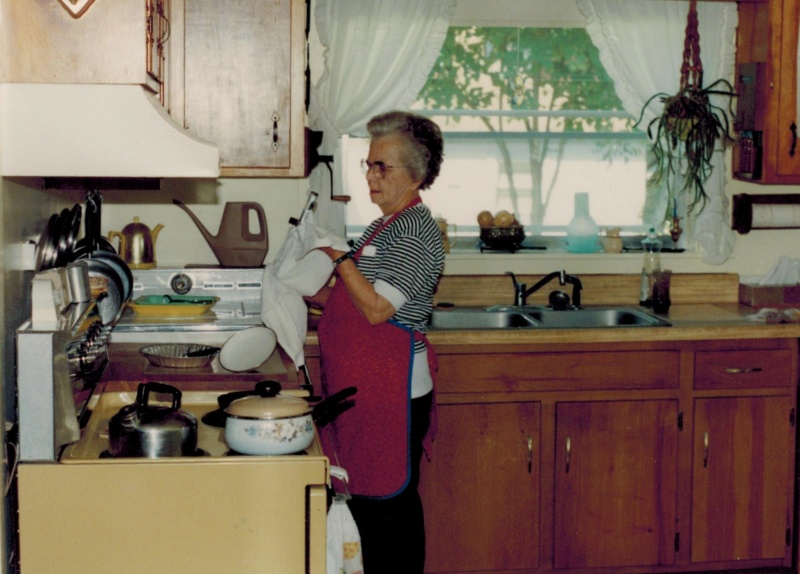
Since virtually all this newsletter involves memories of my mother and the manner in which she was linked to the Marianna Black Library, it seems appropriate to finish with a few of her favorite recipes. Most if not all of these I’ve shared with you at one time or another over the years, but here you get a sampling of what a superb mountain cook put on her family table when I was a youngster.
CORNBREAD THE CASADA WAY
“My way” simply means cornbread as it has long been made in my family, and with slight variations I think you’ll find the recipe which follows is fairly standard among the folks of southern Appalachia. Some key points, before we even get to the recipe, are: (1) Cook in a well-greased cast-iron skillet. (2) Grease the skillet with a piece of streaked meat or bacon before you pour in the batter. (3) Use stone-ground cornmeal. Store-bought stuff is ground at too high a rate and heat hurts flavor. Also, if you like a bit of crunch in your cornbread, and I do, stone-ground meal, even if sifted has more “body” to it. (4) Use buttermilk, not sweet milk. This recipe makes just the right size pone for a standard nine-inch cast-iron skillet.
1 extra large egg
1 1/3 cups buttermilk
¼ cup bacon drippings
2 cups stone-ground corn meal
Mix all the ingredients in a large bowl and whisk until thoroughly blended. Preheat your oven to 400 degrees and place the pan, well-seasoned by rubbing in a bit of the bacon grease or by running a piece of streaked meat across it after the pan is hot, in it for a few minutes. Then take out and pour the batter into the pan, return to oven, and cook until golden brown.
Tips:
If you have access to cracklings, add a handful to the batter when you stir it up and cut back just a tad on the bacon drippings.
For a bit more moisture and a nice texture surprise, add a third cup of frozen corn kernels (thaw them in advance) to the batter.
When you remove the cooked pone from the oven, place a couple of pats of butter atop it and, as they melt, spread them across the crust.
CHESTNUT DRESSING
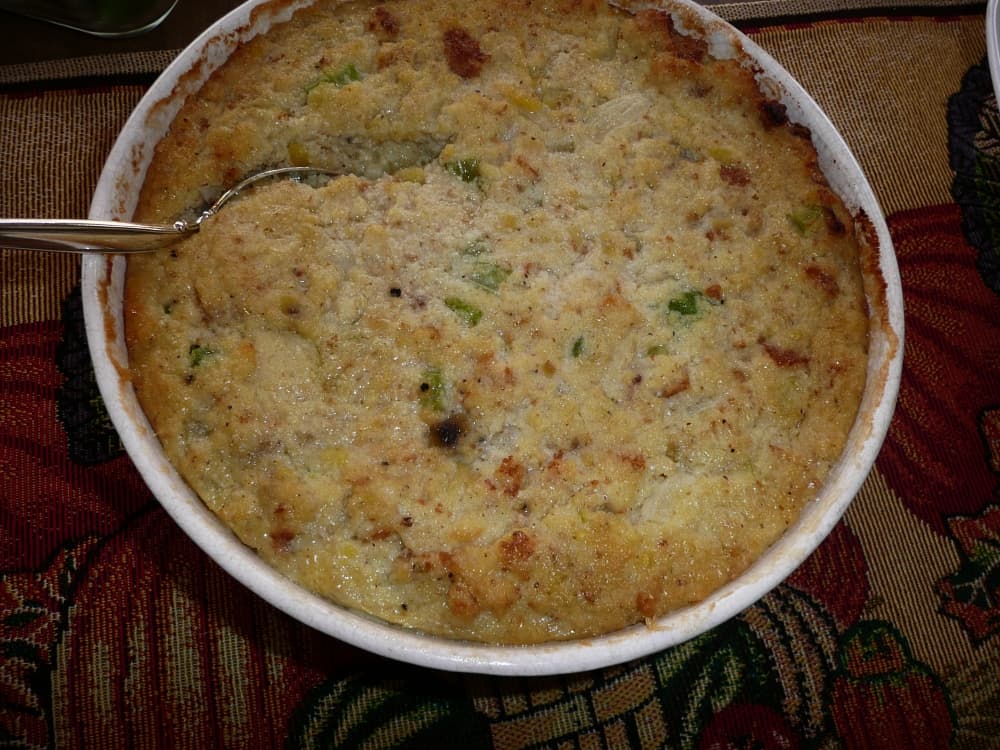
½ cup butter or margarine
1 cup finely chopped celery
1 cup finely chopped onion
1 cup cooked, chopped chestnuts (you can substitute pecans)
6-8 cups cornbread crumbs (homemade is better)
1 egg, beaten
2 (or more) cups chicken or turkey broth
Salt and pepper to taste (those who like sage can add it as well, but keep in mind it has a dominating flavor)
Melt butter in skillet and sauté celery, onion, and nuts. Cook slowly over low heat for 10 minutes; stir frequently as this burns easily. Add to cornbread crumbs in mixing bowl. Add beaten egg and broth, mixing well. Dressing must be VERY moist; add more liquid if needed. Season to taste with salt, pepper and (sage (omit sage if you wish, which I do). Bake in casserole dish at 350 degrees for 30-45 minutes or until golden brown.
Tip: Leftover dressing is just as tasty as when the preparation has just come from the oven, and it can be reheated for a side dish, adorned with gravy, or mixed with chopped up chicken or turkey and fried as cakes.
TRADITIONAL BUTTERMILK PANCAKES
Appalachian folks have long prepared various types of bread by cooking in a pan or on a griddle as opposed to oven baking. Griddle cakes, hoe cakes, and flapjacks are but a few of many examples. One enduring favorite is pancakes, a traditional breakfast foodstuff topped with sorghum syrup, honey, maple syrup, jelly, or jam and often viewed as a special treat. Store-bought flour produced especially for pancakes can be used, but if you have access to stone-ground buckwheat flour try it in this recipe for a delightful difference in taste and texture (and buckwheat is gluten free).
1 egg
2 tablespoons vegetable oil, bacon grease, or lard
2 cups pancake flour (quality of this type of flour can vary a great deal—one of the best is the buttermilk
flour from Pearl Milling Company that formerly carried the Aunt Jemima brand name)
1½ cups buttermilk
Mix ingredients in a bowl with a pour spout using a whisk. Stir until well blended and, if necessary, add buttermilk to obtain desired batter consistency (it should pour readily but still have a modest degree of thickness). Pour sufficient portions of batter to make 4-inch pancakes atop a griddle pre-heated to 375 degrees (you can also use a cast iron skillet but it will not hold as many pancakes and turning them is a bit more difficult). Allow to cook for 1½ minutes and then flip and cook for an additional minute. Make sure pancakes are browned on both sides and fully done. Makes a dozen pancakes—recipe can be doubled or tripled for larger groups.
TIPS: (1) Pancakes warm over quite well in a microwave. (2) Add chocolate chips, blueberries, slices of banana, bits of peaches, pitted and chopped cherries, or other treats to your batter. Alternatively, to make sure these are evenly distributed, incorporate into the top of each pancake on the griddle before turning it. (3) When serving, rather than topping pancakes with syrup, pour syrup into the bottom of a plate an place the pancakes atop it.
BACKBONES-AND-RIBS
Unless you know a butcher and can get him to custom cut for you, don’t count on finding this New Year’s staple on grocery shelves. You can find ribs, but invariably they have been cut away from the backbone. That’s too bad, because the bits of meat where the ribs meet the backbone give credence to the old adage “the closer to the bone, the sweeter the meat.” If you obtain only ribs, be sure to get the entire bone, for the end where the rib meets the backbone will soften in cooking and provide tasty marrow to suck. Cooking backbones-and-ribs, or whatever cuts of pork you manage to obtain as the closest possible substitute, is the essence of simplicity. Trim off excess fat, place in a crockpot with a bit of water, and slow cook for several hours. With the addition of salt and pepper to taste, you have some simple stuff fit for a king. If you have leftovers, chop up the meat, add your favorite barbeque sauce, and you’ve got the makings of fine BBQ sandwiches.
POOR MAN’S FRIED CHICKEN
Fatback is salt pork and is used often in Appalachian foodways. Although technically fatback and streaked meat are two different portions of a pig, confusion can reign supreme when you add other descriptions such as streak-o-lean, side meat, salt bacon, and the like. Throughout this work the terms fatback and streaked meat are used interchangeably. They are normally purchased in one of two forms–already sliced or in a thick hunk that requires slicing. Fry the meat in cast iron pan on both sides until done. To prevent curling, cut slits in edges or use a press to ensure slices lie flat and cook evenly.
While usually used to season dried beans and all sorts of other vegetables, streaked meat can be a main dish in its own. Soak it for an hour or more in water, drain and pat dry, then bread with flour before frying to a beautifully browned crisp. This “poor man’s chicken” goes wonderfully well in a biscuit, a slice of cornbread, or as a partner to fried or scrambled eggs.
ANNA LOU’S FRIED CHICKEN
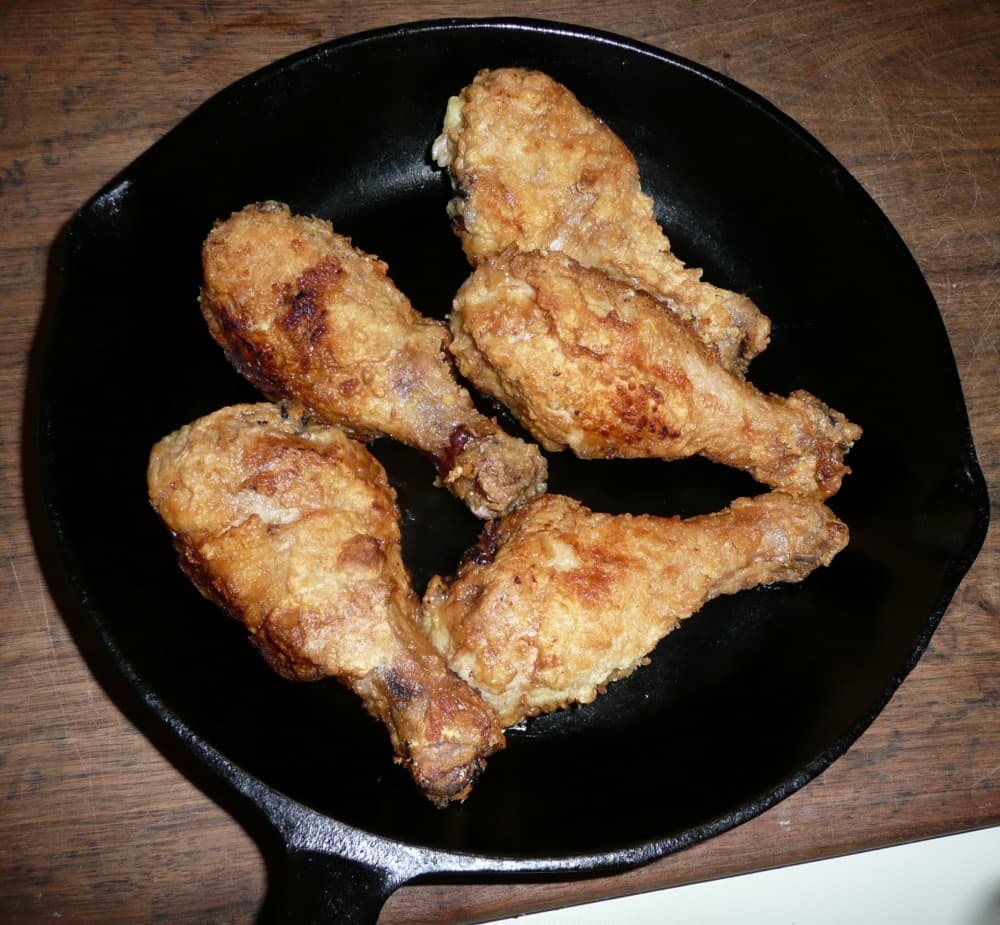
Every dedicated and skilled kitchen wizard has a few recipes that stand out as being truly special. Jim’s mother, Anna Lou Casada, was gifted with a wide array of culinary skills, but when it came to frying chicken she invariably outdid herself. It was the standard Sunday meat on the family table.
Cut one (or more) chickens into frying portions (legs, thighs, wings, and halved breast) and leave the skin intact
1 or 2 eggs, whisked
Salt and pepper to taste
Flour
Lard or cooking oil (cast iron skillet should have between an eighth and a quarter inch)
Drench each piece in the egg wash and then coat thoroughly with flour (mix salt and pepper in with the flour) before placing in piping hot oil in a large cast iron pan. It is important that the oil be so hot the chicken sizzles immediately on contact; otherwise it will soak up too much oil. Reduce heat once pieces brown and continue to cook slowly until thoroughly brown and done.
All of this seems normal enough, but it was Mom’s final step that made all the difference. Once she had all the chicken fried and placed atop paper towels to drain a bit, she would clean the cast iron skillet and put the fried chicken back in it. She then turned the oven on at low heat (200 degrees or maybe a bit less) and put the chicken in it. She normally did this just before heading off to church on Sunday. After church, once she had readied the rest of the meal, she would pop the skillet out of the oven and serve the chicken immediately. Being in the oven seemed to do two things—cook away some of the surplus grease and make the chicken so tender it almost fell from the bones and melted in your mouth.
Tip: For crustier chicken, do the egg wash/flouring process twice and use tongs, ever so gently to turn the chicken in the pan and transfer it to a serving plate.
ANNA LOU’S SQUIRREL
1-2 squirrels, dressed
Water to cover meat
1 teaspoon baking soda
1-2 tablespoons butter
Place squirrels in large saucepan. Cover with cold water, add soda, and heat to boiling. Remove from heat and rinse squirrel well under cold, running water, rubbing to remove soda. Return to pan and cover with fresh water. Bring to a boil; reduce heat and simmer until tender. Place squirrel in baking dish, dot with butter, and bake at 350 degrees until browned and crusty.
This was Momma’s favorite way to cook squirrel. You can prepare rabbit in the same fashion.
HAMBURGER GRAVY
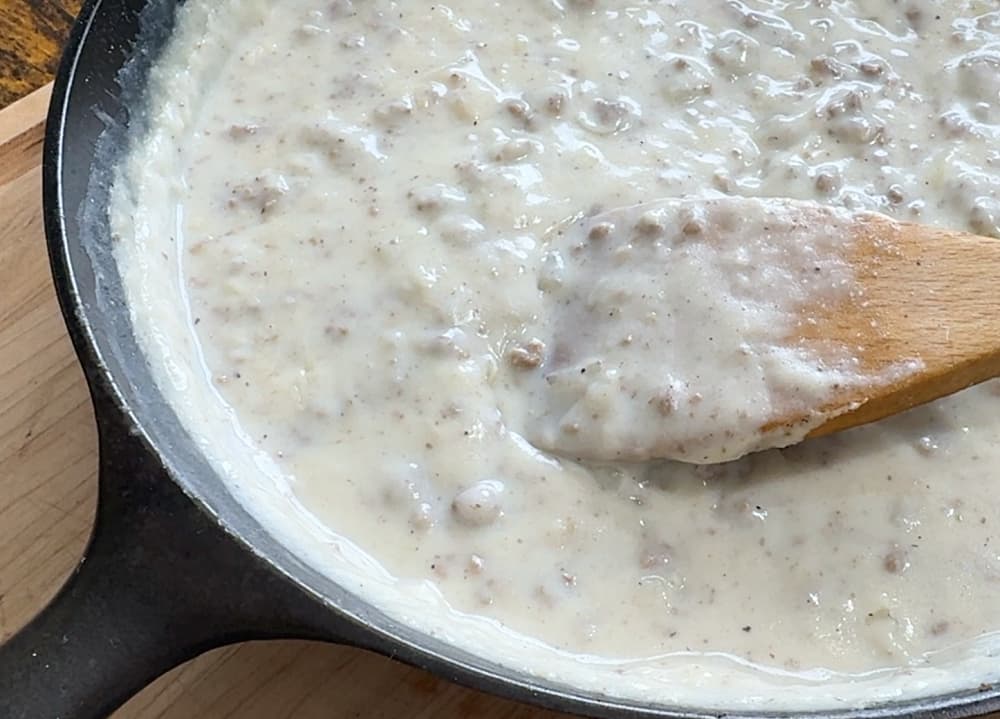
For many Appalachian families a few generations back, they were more likely to enjoy the flavor of beef in gravy than any other way. A half pound or so of the least expensive ground beef available (i. e., with the highest fat content) could be stretched a long way when made into gravy and served atop biscuits or crumbled cornbread.
Half pound of ground beef with 25-30 percent fat content
½ cup (or more) of all-purpose flour
1 cup of milk
Salt and pepper to taste
Fry the burger then drain the grease and set the meat aside. Using the hot grease as your base make a roux by gradually adding and browning flour. Then pour in milk a bit at a time, stirring constantly as the gravy thickens. When you approach the desired thickness for the gravy, sprinkle in salt and pepper along with adding the reserved burger. Heat everything, again using milk as a thinning agent as necessary. You can control the thickness of the gravy by how much flour and milk you use, and if the gravy is relatively thin a little burger goes a long way—and still keeps the taste of beef even though the mixture is mostly milk and flour.