AUGUST AIN’T ALL BAD
The title for this month’s newsletter comes directly from the source I’ve drawn on so often and lovingly in the past, my Grandpa Joe. A bit of a strange bird by pretty much any means of measurement, Grandpa had a deeply ingrained distrust of mankind in general and any type of interference in his life in particular. Mountain folks have a word for folks like him—“quare.”
One particular aspect of Grandpa’s pronounced eccentricity was that he simply could not and would not tolerate supervision or direction of any kind (except when it came from Grandma Minnie—that he grudgingly accepted). He would accept a job and work with a will, but only if you told him what you wanted done and left him to it. Try to look over his shoulder or micromanage and you would soon be seeking another person to do the desired labor. If anything, he was even more adamant about bureaucrats or anyone associated with the government in any form or fashion. Grandpa distrusted the lot of them, often muttered “they’ll larn” when something didn’t suit him, and he might have seemed on the surface to be a singularly negative old curmudgeon. Yet the older I get though the more I sympathize with his persistent pessimism and distrust of outside inference in daily life. I reckon maybe I’m becoming “quare” as well.
Yet in truth Grandpa had an optimistic streak a mile wide. “August ain’t all bad,” a comment I heard him make a number of times when he was wiping sweat from his brow or maybe had just been stung by a packsaddle while pulling a bunch of ears of corn, was a prime example of this. For a small boy who hung on his every word and followed him around like something in the middle ground between a disciple and an apprentice in training, the joys he could find in things that seemed anything but joyful brought me constant delight.
With that in mind, it seems fitting, given the time of year, to offer some of his many observations about August’s appealing aspects, never mind that it is a month often hallmarked by the heat and humidity, malaise and misery, associated with what are known as “dog days.” They are expanded a bit to include some musings of my own.
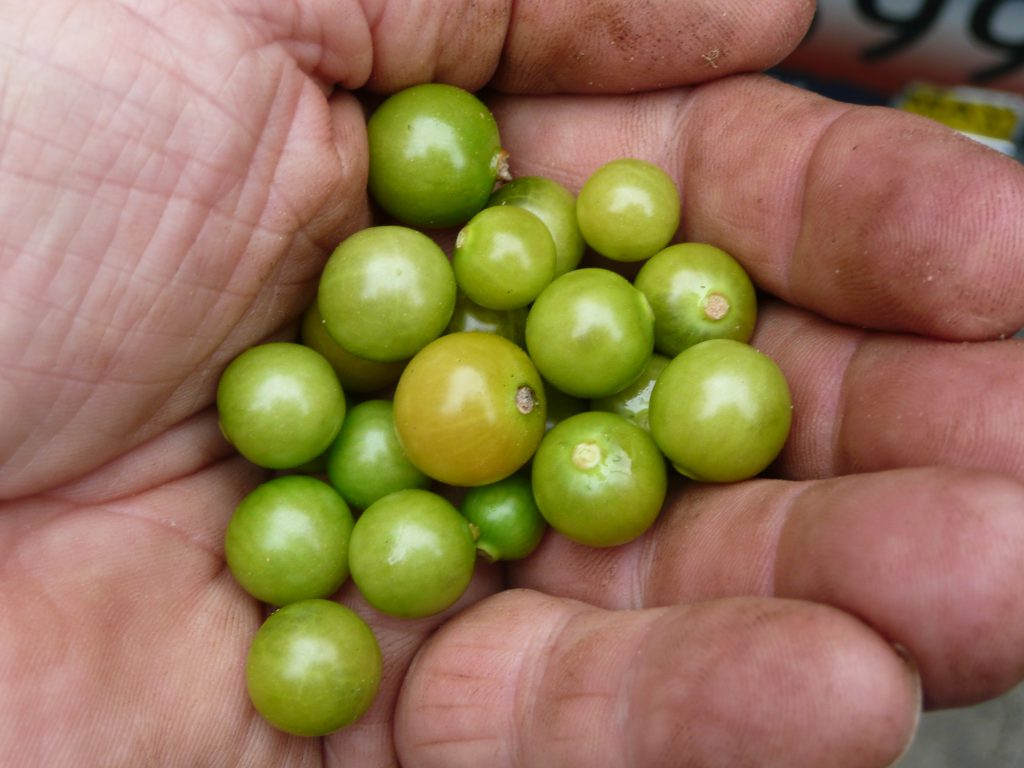
*You could walk down the rows of corn and scattered here and there would be ground cherries, a sweet-tart treat just waiting to be picked up, have the husk removed, and enjoyed as a delightful snack.
*It was watermelon time, and on a fairly regular basis Grandpa would bring out an old wash tub, partly fill it with water, put in an old-fashioned cannonball melon with skin so dark a green except for a fetching yellow where it had rested on the ground (the yellow coloration was one of the signs Grandpa used to determine a melon’s ripeness), and then use an ice pick to flake chips all around it. They came from block ice produced just up the road a bit at the “ice plant” at the mouth of Kirklands Creek. As the heat of the day waned or when Grandpa decided he had done enough work for the day, he’d slice the melon. I recall the sight and sound—a most satisfying crack as the perfectly ripened melon split wide apart with just a touch from a home-made butcher knife I now own and treasure. The blade came from an old cross-cut saw and the wooden handle was held in place with brass brads, but for all its crudity the knife was a mighty fine tool.
*We’d each carry a hefty slice glistening from juice to the back porch and enjoy a treat no four-star restaurant will ever match. Invariably there would be a seed-spitting contest as a part of the pleasure, and this was in a day and time when none of those indifferent pantywaist pretenders heralded as “seedless” melons had come on the market.
*At mealtime, either dinner or supper, certain menu items were as predictable as they were palatable–corn on the cob or creamed corn, a pone of cornbread, sliced tomatoes, green beans cooked with streaked meat, fried squash or okra, and crowder peas. If there was a meat dish it likely was some slices from the same chunk of streaked meat that seasoned the beans fried to the point they were crisp. If the timing was just right there would be a home-grown cantaloupe as well, and for dessert maybe a dish of cobbler, cookies Grandma had baked, or just a spicy pickled peach.
*Along with fine food there were other appealing things going on. It was a good time to sit on the bank of the Tuckasegee beneath a shade tree and hope for a catfish to bite. Or if a bit of excitement mixed with fishing was in the works, maybe we’d burn out a wasp nest or pour a bit of gas down a yellowjacket hole (well after dark) to get bait. There were slingshot frames to be made, lightning bugs to watch while stringing and breaking beans in the cool of the evening, or maybe enjoying a background chorus of katydids while Grandpa drew upon his endless store of tales. In short, Grandpa knew what he was talking about when he reckoned the month of August had plenty of positives.
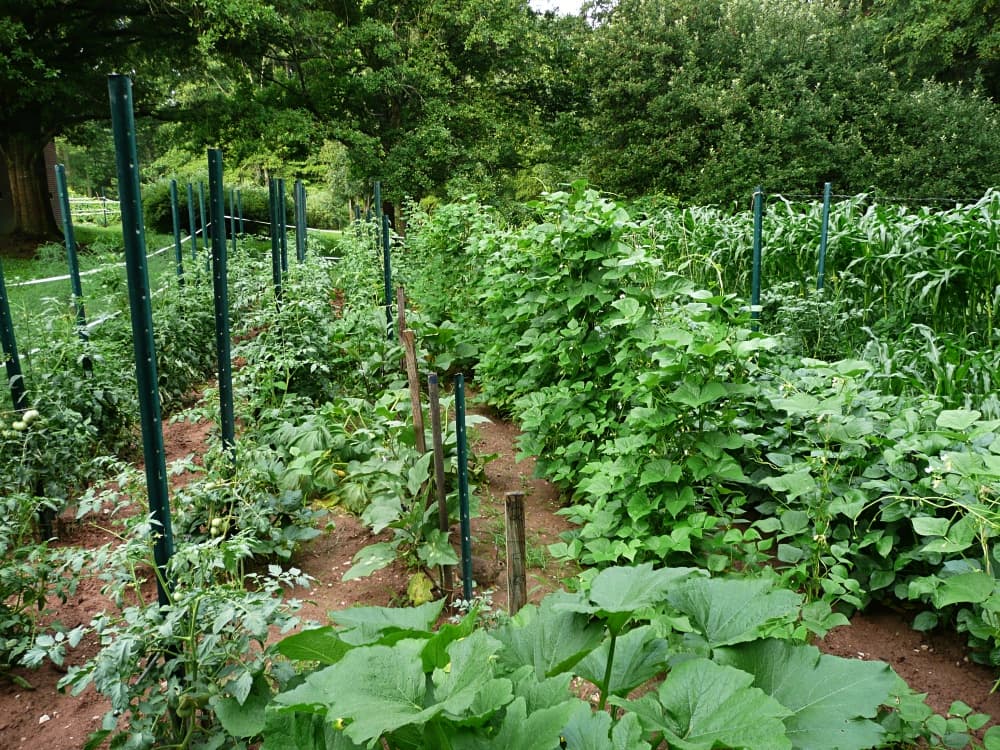
*August meant the garden and farm crops were pretty well “made” and laid by. There would be a bit of planting for cool weather crops to be done—sowing of turnip and mustard seed along with spinach, lettuce, and maybe a few cabbage sets (when things went right the Smokies provided the sort of weather that allowed those attuned to the land to raise cool weather crops in spring and fall). For the most part though, it was a time of waiting, maybe worry a bit about rain, do some daily harvesting of the bounty coming from early months of toil, and work in some recreation.
*Grandpa didn’t swim and I have no idea of whether he ever did, although my father was a strong swimmer. But it was a fine time of year for a dip in comparatively icy mountain streams and maybe even a bit of surreptitious nighttime skinny dipping at a pool connected with a local tourist establishment. A bunch of us boys always tried to get girls involved but unsurprisingly, despite multiple verbal commitments to the contrary, the fairer sex were perpetual “no shows.”
*There weren’t many doves in my boyhood highland homeland, but where I live now that’s another appealing aspect of August. It means opening day of dove season is only a few weeks off. Extending that mindset, the opening day of hunting for other quarries lies only a couple of months away. There were no deer to be hunted in my boyhood haunts (or perhaps more accurately, there were a few—very few—deer but not open season for whitetails) but small game was another matter. Sometime during August Grandpa and I would likely check the nature of the year’s mast and ponder the serious matter of the current squirrel population and where we needed to be come mid-October.
*******************************************************************
JIM’S DOIN’S
Although moonshining in the area of my raising was and long had been a fact of life, it was nowhere near as prevalent as Horace Kephart’s shameful stereotyping in Our Southern Highlanders would have the reader believe or as deeply ingrained in mountain life as a modern producer and purveyor of squeezin’s, Popcorn Sutton, suggested. Incidentally, I knew Popcorn and, for all that he has become almost a cult character, found him a decidedly unsavory personality. He was crude, vulgar, and to me, repugnant. In his own way, despite being a native, Sutton did just as much to misrepresent the average man of the hills as Kephart. Popcorn saw dollar signs in what he did, and he benefitted from portrayal of a lifestyle that I find shameful (I grew up in the county adjacent to his home and we were pretty much the same age), sordid, sorry, and anything but typical.
Maybe all that paragraph-long diatribe seems strange, but it is a lead-in to my own recent venture into moonshining of a decidedly different sort. After suffering for weeks with sometimes excruciating lower back pain, I finally bit the bullet and agreed to a steroid injection in my lower back. That’s how I did my moonshining. The “moon” was my behind, bare as the day of my birth, shining out from the table where I lay prone for the injection. What I hadn’t expected was that the entire process involved a cadre of women, with the physician who gave the actual injection likely being the oldest of them. She couldn’t have been much more than mid- to late 30s. The rest—a nurse assistant, a nurse, a woman for whom I don’t have a title but she part of the process, and a student observer—were younger. The simple fact of the fast, efficient injection is that I “mooned” five women, none of them half my age, with my derriere shining beneath a high intensity light and an X-ray machine. It was over and done, with little pain, in no time at all. As a lady friend with whom I have become quite close and who spent 55 years as a nurse anesthetist tells me, “they see such sights many times a day.” Maybe so, but it wasn’t commonplace for me and I was too busy being embarrassed to pay much notice to the injection pain (which was about like getting a flu injection). Incidentally, the injection seems to have helped—a lot. I’m getting around much better and feel comfortable walking without a staff. Most of the pain is gone as well.
On other decidedly different fronts, there’s been the usual daily routine of trying to produce words others will read. The book on Bryson City/Swain County in the “Images of America” Series being done in tandem with my brother is hopefully well along towards completion and should be sent to the publisher not too long after you read these words. The other two book manuscripts that have consumed so much of my time in recent months are now at the publishers. In other words, when it comes to book projects I’m more or less caught up. That means I can now turn attention to the biography of Archibald Rutledge I’ve worked on, periodically, for many a year. I’m also caught up on magazine assignments and in some cases actually a bit ahead for once. That means being able to look ahead to a trio of gatherings I always enjoy—the reunion of my high school class in September (back in my native Smokies), then an early October gathering of the S. C. Outdoor Press Association for its annual meeting (Greenwood, SC) along with an end of the month coming together of 30 or so old-time outdoor writers who simply enjoy one another’s company at DeSoto State Park in northeast Alabama.
As far as recent publications, as always there’s my weekly column in the Smoky Mountain Times. Other efforts include “The Heavenly Strawberry,” Smoky Mountain Living, June/July, 2026, pp. 7-9; ”The Grandfather Factor,” Sporting Classics, Spring, 2026, pp. 44-48; “Zane Grey: American Sportsman,” “Sporting Classics Daily,” June 9, 2026; “Those Were the Days: Where Is the Boy with the Slingshot?,” “Blind Pig and the Acorn,” June 25, 2026; ”Frank Young: An Angler for the Ages,” “Sporting Classics Daily,” July 2, 2026; “The Grandfather Factor,” “Sporting Classics Daily,” July 7, 2026; “It’s Versatile? Very!: The Lovely Blueberry,” Smoky Mountain Living, Aug./Sept., 2026; and “The Literary Legacy of W. Robert Foran,” “Sporting Classics Daily,” July 27, 2026.
****************************************************************
AUGUST IN THE KITCHEN AND AT THE TABLE
As the opening part of this newsletter suggests, for me August in long ago yesteryear was a mighty fine time for a greedy-gut boy with a ravenous appetite and two splendid cooks (Grandma Minnie and Momma) putting food on the table. Garden truck was at its peak, and such was the bounty of vegetables we seldom had meat during the summer except for the Sunday standard—fried chicken. The exceptions would be some canned sausage for breakfast from time to time and, more frequently, pieces of streaked meat fried to the point most of the fat had been cooked out and could be drained away (not thrown away—it had plenty of uses as seasoning or making into scrumptious gravy), leaving a crisp, salty, tasty accompaniment for the likes of big tomato slices or creamed corn. Grandpa Joe often put fried streaked meat atop a huge slice of tomato, anointed the pairing with milk gravy made from the grease produced when the meat was fried, and did something at which he was masterful—proceeded to eat with undisguised pleasure.
In that regard, he had a wonderfully expressive ending to every grace he said at the table. He’d offer appreciative thoughts on matters such as recent welcome rains, the bounty of the garden, or something similar, but his conclusion never varied. He would say: “You’uns see what’s before you. Eat hearty!” He then proceeded to do just that with considerable gusto and an appetite honed to a fine edge by hard manual labor.
**********************************************************************************
Given the general theme of this month’s newsletter, it’s only appropriate to finish with a selection of recipes utilizing bounty from what could almost be described as “the laying by month” or “the made month.” For August assuredly is the month of the year when gardens have made and been laid by, and it’s a time for enjoying the resultant pleasure on the table along with canning, drying, pickling, or otherwise preserving the richness for future consumption and enjoyment. The recipes below offer decidedly varied ways to enjoy garden bounty in summer’s season of plenty.
CREAMED (OR FRIED) CORN
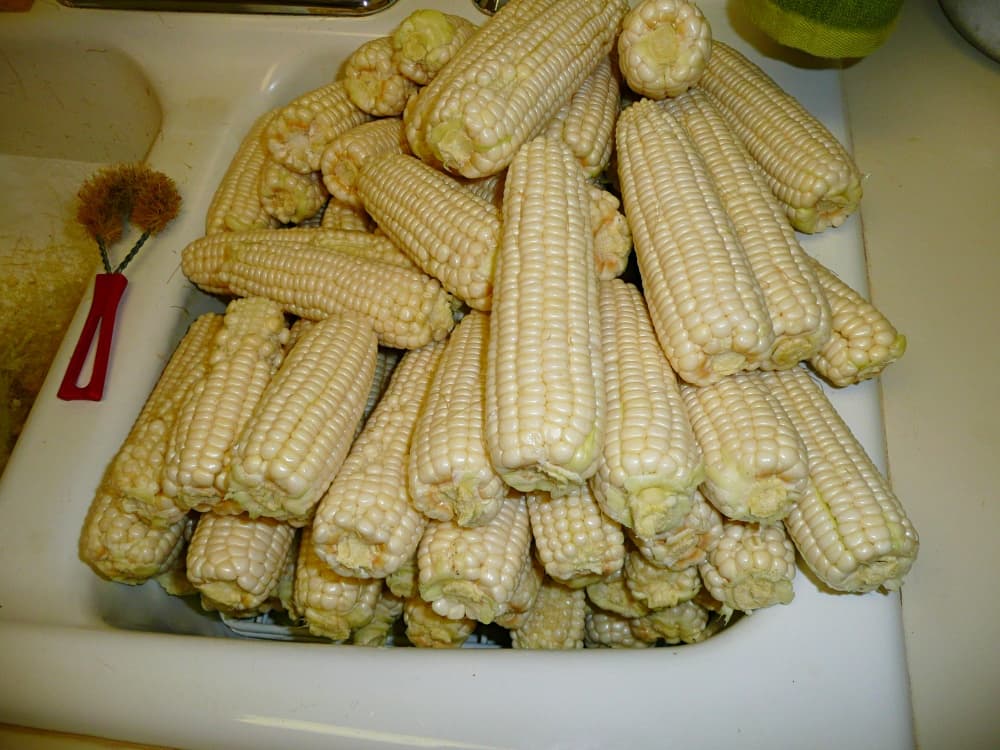
Some folks call it creamed corn and others fried corn, and the ingredients may vary a bit, most notably with the use of whole milk or even half-and-half or whipping cream. Call it what you may, there’s no argument about things when it comes to deliciousness. If the corn is at its prime, which is to say in the “milky” stage when cutting it from the cob brings a flow of liquid goodness to embrace the kernels, the dairy addition isn’t necessary.
Fresh corn on the cob—at least one ear for each person
Bacon grease
Sugar to taste—it’s really not necessary if using sweet corn but will help when working with corn that is still soft but beyond the milk stage (ears bought in a store almost always are)
Pinch of salt and dusting of black pepper (or leave this for each individual to apply to their portion)
Water
Cut corn off cob and fry in bacon grease. Add a little water to pan to keep the corn from sticking and if desired add sugar to taste. Cook corn while stirring steadily for 10 minutes or till done.
Tip: Butter may be used in place of bacon grease.
BAKED ACORN SQUASH
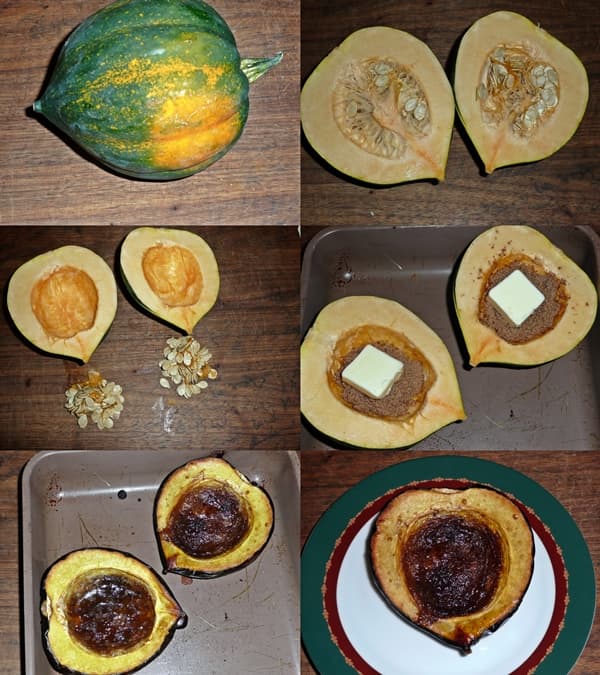
Easily grown in the home garden and readily available at the grocery store, acorn squash are much smaller than most types of winter or “keeping” squash. A single one is just right for two ample servings, and if planted at the proper time in late spring there will be mature ones ready for harvest by the latter part of dog days. They make a dandy summer treat as a side dish or even for dessert. This recipe is simple and requires little prep time.
1 acorn squash per two diners
¼ cup brown sugar per squash (substitutes include molasses, honey, cane syrup, or maple syrup)
Large pat of butter for each squash half
With a sturdy butcher knife cut the squash in half length-wise and use a spoon the scrape out the seeds and pulp. Lightly score the flesh of the squash, being sure you don’t cut all the way through. Place the squash halves on a cookie sheet or in a baking dish. Place pat of butter in the cavity and then pour the brown sugar over it. Bake at 400 degrees for an hour to an hour and 15 minutes or until squash is tender. Serve hot either as a sweet vegetable dish or dessert.
GROUND CHERRY SALSA
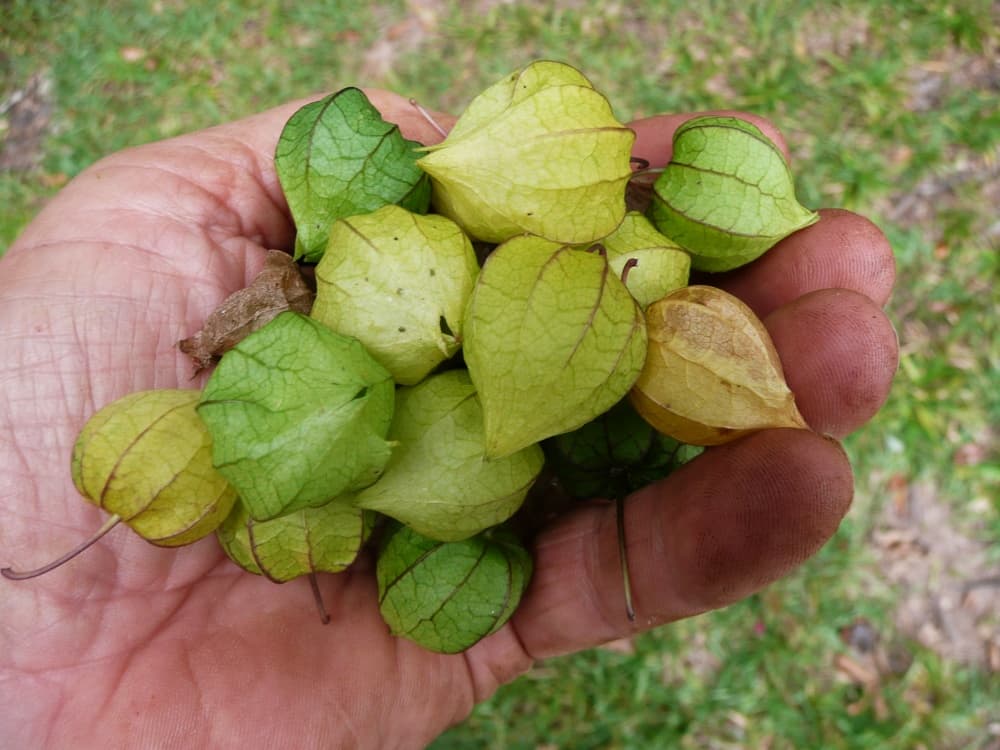
Some Mexican restaurants feature a green salsa (salsa verde) made with tomatillos but a first cousin to it, the humble ground cherry, is often a volunteer in Appalachian gardens that returns year after year. Oddly enough both are in the same family as deadly nightshade. At any rate, for those who have ground cherries, turning them into something other than a casual snack when doing late summer and early fall garden work is both logical and easy. If the husk-covered globes have dropped from the plant, whether yellow (an indication they’ll be sweet) or not, they are ready for salsa.
Just remove the husks, chop up or coarse grind the ground cherries, and mix them with your salsa ingredients of choice—tomatoes, onions, hot peppers, and the like. Incidentally, an ulu is a great tool for this, and if you don’t own one of these Eskimo or Inuit type knives I highly recommend acquiring one. Served with corn chips or toast points the salsa is scrumptious and oh so easy to make. Incidentally, mixed with some crowder peas or pinto beans while serving as a sort of substitute for chowchow is another taste treat. Similarly, maybe with some fresh corn cut from the cob thrown in for good measure, it works perfectly well with cornbread salad.
FRIED GREEN TOMATOES
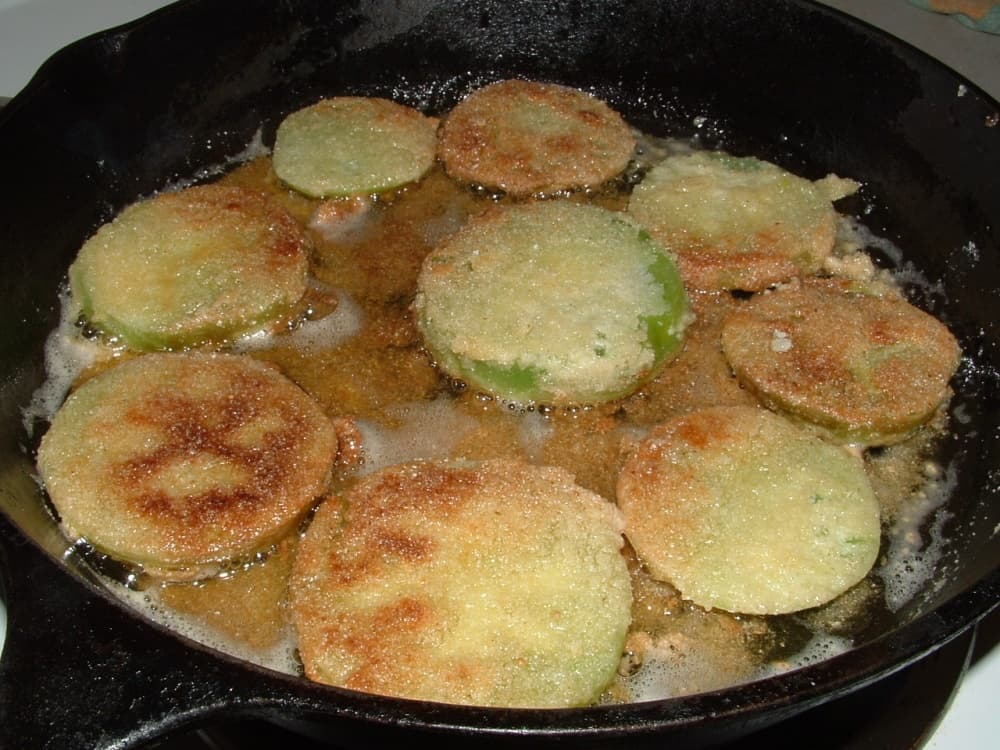
Seemingly a standard offering on the appetizer front in modern restaurants, fried green tomatoes were not associated with August in what you might style my growing up years. They were reserved for times following the first frost when all the tomatoes remaining on the vine were picked in the afternoon of whatever day Daddy or Grandpa reckoned that would happen. Yet they are scrumptious at any time and have a quite different taste and texture from the joy that is a vine ripened tomato straight from the vine. They also offer an excellent reason to set out a few more plants earlier in the gardening season.
Sliced green tomatoes
Cornmeal
Egg
Milk
Salt and pepper to taste
Cooking oil
Mix cornmeal, salt, and pepper together in a shallow dish and set aside. Mix egg with milk in a second shallow dish. Heat oil to medium high. Dredge tomato slices in liquid and then in the cornmeal mix and fry in hot oil until gold brown on each side. Drain and serve immediately.
TIP: Be sure oil is piping hot before putting the tomato slices in it.
SUMMER FRUIT SALAD
In my halcyon days of yesteryear the month of August brought home-grown melons to the peak of ripe perfection and peach trees, along with plums, pears, and maybe some early apples, also had fruit ready to be harvested. Whatever happened to be available could be worked up just prior to serving and make a most welcome addition to a meal of cornbread and a variety of vegetables. Just cut whatever fruits you have, with either watermelon, cantaloupe, or honeydew being a must (better still, have chunks of two or all three of them), add in slices of peaches, eating pears, plums, or maybe even some early apples. You have a fruit delight and a small drizzle of honey atop an individual serving is by no means out of the question. Whether served from a large “help yourself” bowl or in a compote dish as a side, this is just the right touch to accompany a dinner celebrating August’s garden bounty.