FEBRUARY AS I HAVE KNOWN IT
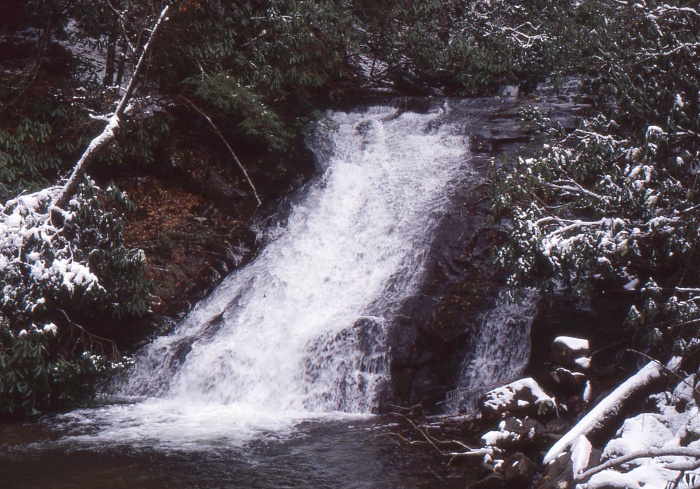
February is a mighty fine month for soups and stews, for looking back, for pondering how one’s life has been lived, for beginning to face the annual realities of filing taxes, for indulging in the pure pleasures of reading, for watching resolutions made with such good intentions only a few weeks back melt away in the sun that surely follows snow, and for indulging in the too often neglected art of just piddling around. Incidentally, by way of confession, I’ve become a master of the latter. Somehow I can manage to fritter away hour after hour doing little if anything anyone could possibly notice or would care about if they did.
I’ve come to understand and appreciate, and it is truer with each passing week, the perspective of my Grandpa Joe on the month of February, the world about us, and the vagaries of life in general. Mind you, I feel pretty confident the word “vagaries” wasn’t in Grandpa’s vocabulary and in all likelihood the same is true of “perspective.” Nonetheless, he was a walking storehouse of folk wisdom and common sense, never mind that he epitomized the type person mountain folks describe as “quare” (eccentric, strange, or maybe a bit out of plumb) and had doubts, verging on flat-out distrust, about mankind in general. He had no use for much of anything associated with bureaucracy, politics, or government, and while he was religious he was also so opinionated that no denomination exactly fit his outlook. Yet for me, as his admiring sidekick, his thoughts on life were pure gospel and his company a joy beyond compare. Time and at least some degree of increased wisdom have slightly altered my views of him. Still, the fact remains that he was a great storyteller, flowing fount of folk wisdom, and flat-out wonderful companion for an impressionable, irrepressible young boy.
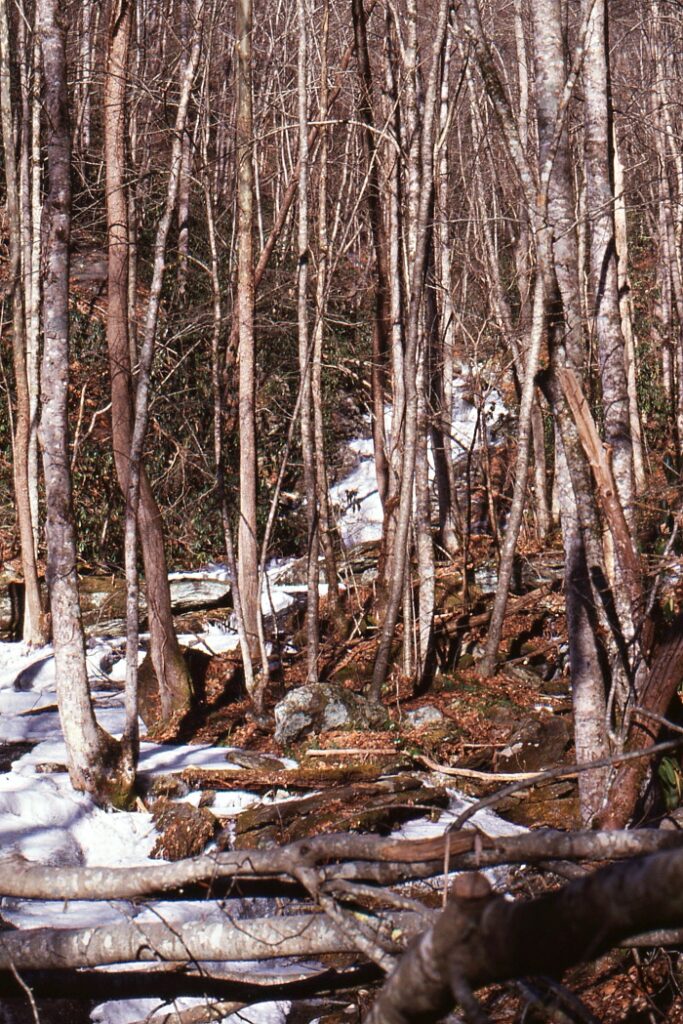
I always think about him in February because of some of what he had to say about the month. He reckoned it was a good thing it was the shortest month of the year “because a body couldn’t stand any more of it.” Similarly, it was the time of year when he groused the most about having sundry ailments he grouped under the general term of being afflicted by “the miseries.” He’d call February the meanest month and while doing so would scrooch (yeah, I know you won’t find this word in proper dictionaries but I’ve used it and heard it used all my life) up a bit closer to the fire. Depending on the time of day he might muse a bit about what Grandma Minnie had on tap for dinner or supper, and that was especially true if tantalizing odors drifted in from the sanctuary, refuge, and source of endless culinary wonders that was her kitchen.
Soon enough though he’d shake off the mollygrubs and turn to positive thoughts such as what seeds to order or buy locally for spring planting, how many peepers (baby chickens) he ought to get at the Farmers Federation for the next round of fryers and layers to supply Sunday preacher meat and daily eggs, or dreaming about some fishing adventure. He also had a simple yet engaging way of describing the sights, sounds, and smells of the world about him. My prose will likely be smoother and more orderly than his thoughts, but rest assured any facility I have with the written word was far outpaced by his descriptive abilities. All other considerations aside, you can’t use your hands or use a change in tone of voice to punctuate or add power to scribblings. On the other hand, he could weave magic with ever-moving hands that gave rare depth and body to his musings and verbal meanderings. What follows is my attempt to capture some of his thoughts in that regard (using my words, not his).
*February can be a quiet but cruel month, sneaking around quietly, like a wary fox, but deadly nonetheless. It’s a time of low spirits, rampant cabin fever, and mollygrubs run amok.
*That’s “disgruntlin’,” as Grandpa used to say, but it’s a time that invites a body to slow down, listen close and remember things you scarcely knew you’d forgotten.
*February mornings often start out iron-cold, with frosts big enough to track a rabbit and your breath hanging in the air like a wisp of smoke. Often though they yield to short, somber days well suited to contemplative walks and the solitude the season brings.
*Maybe in such rambles you’ll come across a bunch of robins busily and noisily signaling their presence as they work for their daily bread on the forest floor. Or if it’s really cold, you can appreciate the visual wonder of patches of puff ice or frozen skims hugging the edge of small branches or mud puddles.
*February, the littlest month, is a time to appreciate little things. Noticing the way the sun seems to linger a little longer and shine a little stronger than it did last week. Remembering some joyous moment from long lost youth that still tugs on the heart strings or reminiscing about a youthful girl friend from just a few years later. Maybe memory of her, embellished and polished by time’s passage, reminds you of a sweetheart who has somehow become lovelier over the years. Or perhaps that same memory brings back gladness in thoughts of a simple act of kindness by a parent or sadness because that loved one is long gone.
*February is often a time where spirits are low and things move slow. It can find you bone-deep weary, but there’s also a genuineness and honesty to it. Food tastes better. A steaming bowl of soup and a pone of hot cornbread can change a gloomy outlook with just the smell, and that first taste is pure culinary heaven. Or maybe it’s a pot of beans that have simmered all day, absorbing the wonders of a ham hock in a blending of flavors that seems like magic.
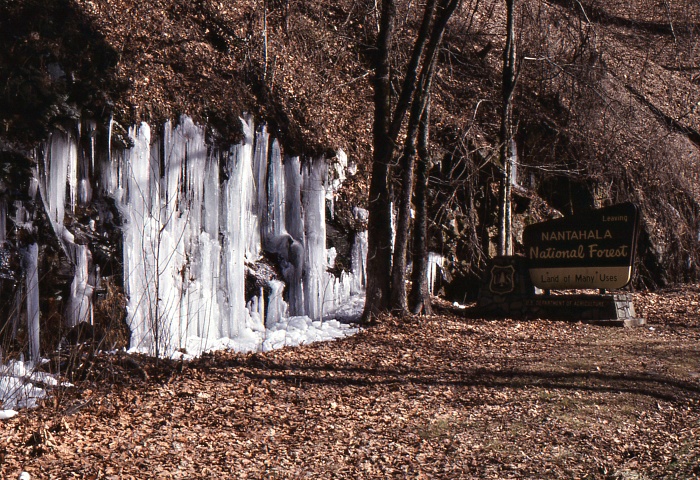
*More than anything though, beneath grey, grim skies and amidst spates of bone-chilling temperatures, February is a month for the quiet serenity of hope. Maybe you can’t see it, but already the sap is beginning to rise in sugar maples and silver birch. Days are lengthening. Birds seem a bit more inclined to sing. On the occasional warm day a turkey gobbler tests his vocal chords in anticipation of coming spring. These are hints, and for those seasoned in nature’s rhythms and the timelessness of changing seasons, a hint is enough.
*By the time February leaves us, and Grandpa would have said “not a minute too soon,” we welcome its departure. Yet in doing so it’s well to remember that it is a month that makes us tough, teaches patience, and provides readiness for better things to come. February doesn’t beg to be loved and seldom is. But like a stern teacher you eventually come to realize offered you real classroom blessings decades ago, the month engenders respect and rewards patience and persistence. In a world that seems hell bent on haste, those are mighty fine lessons.
*************************************************************************************
JIM’S DOIN’S
Things are pretty quiet on the home front, and that’s typical for this time of year. A high point for me at the end of January was my granddaughter, with a newly minted graduate degree and passage of national boards to become a registered occupational therapist, cooking me a birthday supper. It was scrumptious and of course as someone keenly interested in all things culinary I take considerable delight in her love of cooking. She also showed off her apartment, newly moved into and fully decorated (and neat as a pin, which you definitely can’t say about her Papooh’s home), right here in the place where I live. I’m of course absolutely delighted she has taken a job where I can see her fairly regularly and maybe even give a wee bit of guidance when it comes to things like local stores and places she can run.
Another source of good news, and it came the day after she had fed me so well, was word from the University of Tennessee Press that their editorial board had unanimously approved publication of my work, “Profiles in Mountain Character.” The book will offer detailed looks at the lives of three dozen individuals from yesteryear who are representative, in widely varying fashions, of life as it has been lived over the generations in the high country of the Southern Appalachians. The work’s four sections—“Branch-Water People,” “Pillars of Mountain Life,” “Tarnished Souls: Rascals, Rogues, and Renegades,” and “Outlanders”—touches on lives varying as widely as those of my Grandpa Joe and a wonderful old black lady from my boyhood, Aunt Mag, to a pair of murderers, the funniest man I’ve ever known, a couple of cult figures from the world of fly fishing, and a whole batch of just plain good mountain folks. I personally knew almost half of those covered and was able to talk with folks who knew almost all the rest of them. I hope you’ll find the book a dandy when it appears, and if you’d like to be notified when that happens (likely a year or even more down the road), just drop me an e-mail to that effect (jimcasada@comporium.net).
At present I’m busily engaged in pulling together another book. This one, already under contract, will feature the food-related work, in the form of columns and recipes, from one of my favorite writers of all, John Parris. He wrote a thrice weekly column, “Roaming the Mountains,” for the Asheville Citizen-Times for a truly impressive span of 42 years. This book, with the title The Enduring Joys of Appalachian Food: Recipes and Remembrances from John Parris, is under contract with Arcadia Publishing. That’s the same folks who published Celebrating Southern Appalachian Food that I co-authored with Tipper Pressley. I’m happy to note that this book will also have a tangible and meaningful link to Tipper. She’s helping me with supporting photography (in addition to being a popular blogger and vlogger, Tipper is a first-rate hand with a camera) and thoughts on recipes. All of the recipes offered below come from this work in progress. As with the book of profiles, if you want to be notified when this book appears, just let me know and I’ll make note of your interest.
We had a pretty substantial snow for this part of the world at month’s end. While it was a disappointment in the sense that it put the kibosh on a planned visit from my daughter and her help with a bunch of technology-connected issues that are simple for most and a grand mystery to me, not to mention us having planned the closest thing I know to a night on the town, I enjoyed watching the snow, seeing a world of pristine white, checking out animal tracks (in my case deer, rabbits, squirrels, lots of birds, and a lone wandering fox left signs aplenty), and savoring a hearty stew while flakes fell so heavily at times visibility was no more than 200 yards.
Nothing really special has happened on the publications front. Just my usual weekly contributions to the Smoky Mountain Times in the highland homeland of my boyhood and some articles in periodicals or on-line. These include “Indoor Winter Recreation in Days Gone By,” Carolina Mountain Life, Winter, 2025/26, pp. 69-70; “What’s A Meal Without Gravy?,” Smoky Mountain Living, Dec., 2025/Jan., 2026, pp. 6-9; “Savory Soups for Cold Winter Days,” Smoky Mountain Living, Feb./Mar., 2026, pp.6-9; and “Baker of the Nile,” “Sporting Classics Daily,” Feb. 1, 2026.
SPECIAL NOTICE ON SOME BOOKS
Turkey season lies not all that far away, and with that in mind I’m focusing on turkey books. First of all, there are a number of volumes, including both ones at bargain prices and highly collectible items, still available in the lifetime collection formed by Gene Smith, the longtime editor of Turkey Call magazine. If you are interested, just let me know and I’ll send you a Word file of all of them.
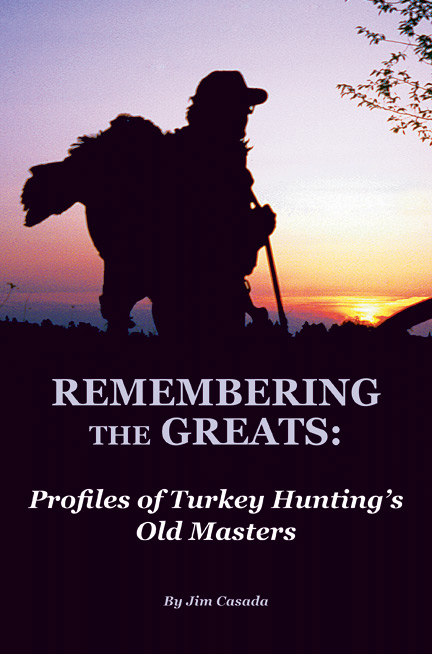
Secondly, as some of you will know, I’ve written a great deal on turkey hunting and have, for years, offered what is probably the country’s most extensive list of books on the sport for sale. You can access the full list of what I have to offer here. Until the end of March I’m offering 15% off on all the titles on this list. Also, copies of my own book in the field, award-winning Remembering the Greats: Profiles of Turkey Hunting’s Old Masters, are on a deeply discounted special price of $26 (and that includes free shipping).
RECIPES
The use of fat back (also known as streaked meat, salt pork, streak-‘-lean, side meat, middlin’ meat and a variety of other terms—all involve salted pork taken from fatty portions of the middle portion of a pig’s carcass, although any reader who has been part of a hog killing and processing (likely not many of you) will know that there are subtle differences depending on exactly where the meat came from on the hog—is pretty much ubiquitous in traditional Appalachian cooking. After all, pork historically is THE meat of the mountains and its use for seasoning vegetables and other dishes played a key role in mountain cooking. The first recipes below all recognize this fact.
On the other hand, chicken, or “preacher meat” as it was often known, fell into a special category. It wasn’t everyday eating but rather a meat reserved for special occasions, such as when a preacher came for after-church dinner or there was to be a big gathering such as homecoming or an all-day singing with dinner on the grounds. I might note that fried chicken, something my mother had flat-out mastered, was standard fare on the family table when I was a boy. The last three recipes focus on chicken.
PINTO BEANS WITH FAT BACK
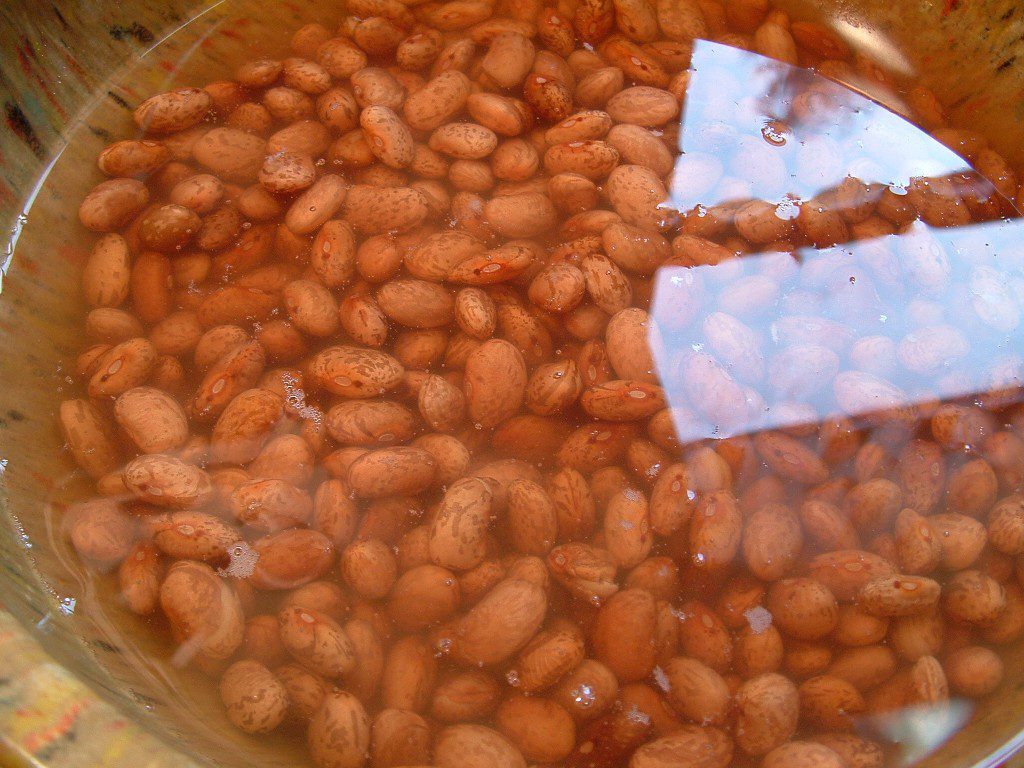
As Parris once wrote when interviewing a veteran mountain cook and restaurant operator in Robbinsville, Laura Phillips, “pinto beans served with cornbread and a lavish of homemade butter and glasses of buttermilk or sweet milk will leave you in a state of uplift.” In that regard, he fell squarely in line with the thoughts of the woman he was interviewing. “You can’t beat pinto beans,” she said, “no sir, you can’t.”
Pinto beans
Water
Salt
Pepper
Seasoning: streaked meat.
Pinto beans, often call soup beans, are one of the most common Appalachian foodstuffs. An humble pot of suitably seasoned pintos has literally kept the inhabitants of the Appalachian mountains alive and well for generations. The first step in cooking soup beans is to “look” the beans by going through them and discarding any foreign materials such as rocks or leaves. After looking rinse a few times and then cover with water and allow to soak overnight. Pintos need to cook for several hours to become soft, although the time factor can be adjusted according to whether you use a crock pot, cook atop a stove, or perhaps resort to a pressure cooker. Whatever is employed proper seasoning is vital and that’s where streaked meat enters the picture. Just add several thin slices to the pot of beans, keeping in mind that the salt in the cured meat will likely be all you need. Cook on simmer till done, checking periodically to see if additional water is required. Add red or black pepper, or a combination of the two, to taste.
Note: In place of soaking beans overnight, boil looked beans for 2 minutes remove pot from heat and allow to sit for an hour before cooking.
LEATHEREBRITCHES SEASONED WITH FAT BACK
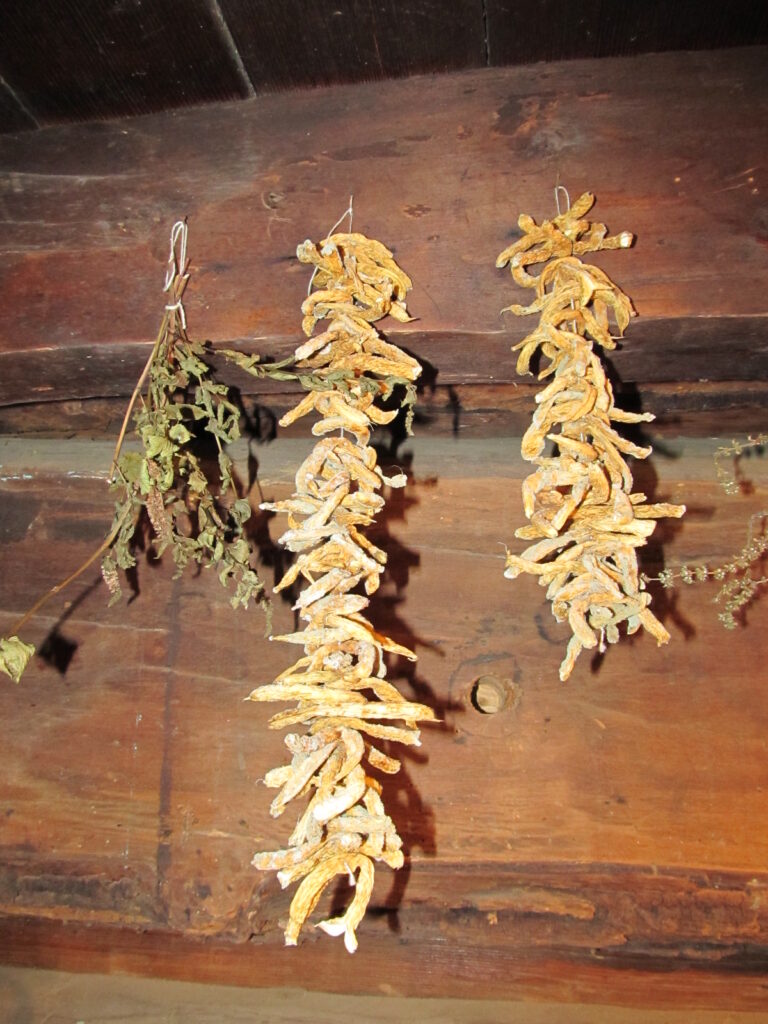
Leather britches (dried green beans)
Water
Seasoning: fat back
Salt
Pepper
Soak dried green beans overnight before cooking. Discard water and rinse. Add leather britches to pot and cover with water. Add salt and pepper to taste. Add a chunk of fatback or several slices of it to season the dried beans. Cook greens beans on low heat at a simmer for several hours until soft. Additional water will need to be added as the leather britches cook down over a long period of time. Since the leather britches are dried they will take much longer to cook than fresh green beans. Leather britches have a totally different taste than fresh or canned green beans. The drying process gives them a rich, slightly smoky flavor.
TURNIPS, GREENS, AND FAT BACK
Wash a big bait of greens fresh from the garden, being sure to rinse them multiple times to remove all dirt and grit. This is most easily accomplished in a kitchen sink or dish pan. If the greens are overly large, it is best to remove stems. Dice several turnips into small pieces with an ulu or chef’s knife. Place greens and turnips in a large pot with plenty of water. Throw in a couple of slices of fat back or other salt pork and bring to a boil. Reduce to a simmer and allow to cook until greens and turnips are done. Add salt to taste, keeping in mind that the meat will provide much if not all the needed seasoning. Serve piping hot. Be sure to save the pot likker. It makes for mighty fine eating whether you sop with it or crumble up your cornbread.
SIMPLE CHICKEN SOUP
1 chicken, cut into pieces (retain neck and giblets and leave the skin on)
Enough stock to cover the pieces in a large stew pot
Onion and other vegetables of your choice (carrots, green peas, celery, potatoes) or pasta noodles
Salt and pepper to taste
Bring the chicken, and stock to a rolling boil and then reduce to a simmer. Cook, adding water or stock if needed, until chicken is tender and easily pierced with a fork. Remove the skin from the cooked chicken and discard. Tear the chicken into strips or chunks and discard the bones. Add diced vegetables and seasoning and simmer until the vegetables are tender but not falling apart (carrots take longer to cook than other vegetables). Serve with biscuits and fruit as a side dish.
CHICKEN AND DUMPLINGS
1 hen
1 quart water
1 stick butter
Salt and pepper to taste
Place hen, water, butter, and seasoning in a large stew pot and cover. Bring to a boil and then reduce to low medium heat until tender, adding water as is necessary. Pull chicken from the bones.
DUMPLINGS
4 cups plain flour
1 teaspoon salt
1 egg
1 cup chicken stock
Mix flour and salt, stir in egg, and then add hot stock. Roll out the mixed result on a floured board and cut into 2- to 3-inch strips. Drop strips in boiling stock retained from cooking the chicken. Reduce heat to medium and cook for 10 minutes. Add chicken to dumpling and stock and serve.
CHICKEN PIE
1 medium to large chicken, cooked
½ cup plus 3 tablespoons butter
2 cups whole milk
2 cups plus 3 tablespoons flour
4 cups broth
1 egg
1 teaspoon baking powder
Cut cooked chicken into small pieces and place in the bottom of a greased casserole dish. Mix 3 tablespoons butter, 1 cup milk, 3 tablespoons flour, and 3 cups broth. Pour this mixture over the chicken. Then place 2 cups of flour, ½ cup butter, egg, baking powder, 1 cup of milk, and one cup of broth in a large bowl and whisk into a batter. Pour batter over chicken and bake at 350 degrees until the top is nicely browned.